
Bottom-water a small houseplant
Give a small potted houseplant an even drink from below, then drain it properly so its roots can breathe.
What will you learn?
Give a small potted houseplant an even drink from below, then drain it properly so its roots can breathe.
Tools
- 1 shallow basin; 1 timerSearch Amazon UAE ↗
Materials
- 1 small houseplant in a pot with open drainage holes; room-temperature water; 1 clean saucerSearch Amazon UAE ↗
Step by step
Photorealistic illustration · Waey
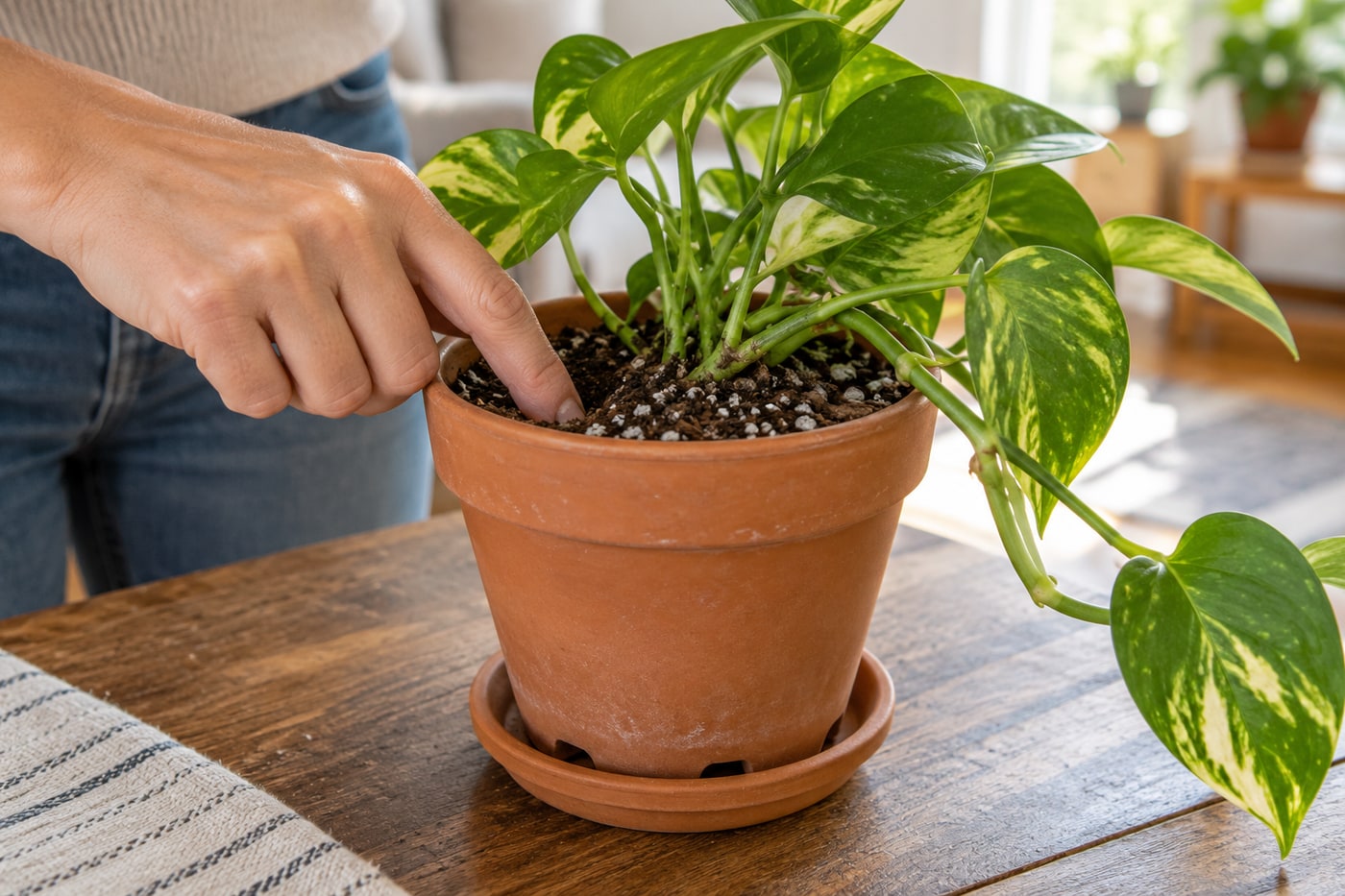
1. Check the soil and the pot
Feel the potting mix near the edge of the pot and compare the pot’s weight with how it feels after watering. For many leafy houseplants, dryness a few centimetres down is more useful than a calendar reminder. Check that the pot has drainage holes; a sealed decorative container cannot absorb water from underneath. If the mix is already wet, wait instead of adding more water.
Photorealistic illustration · Waey
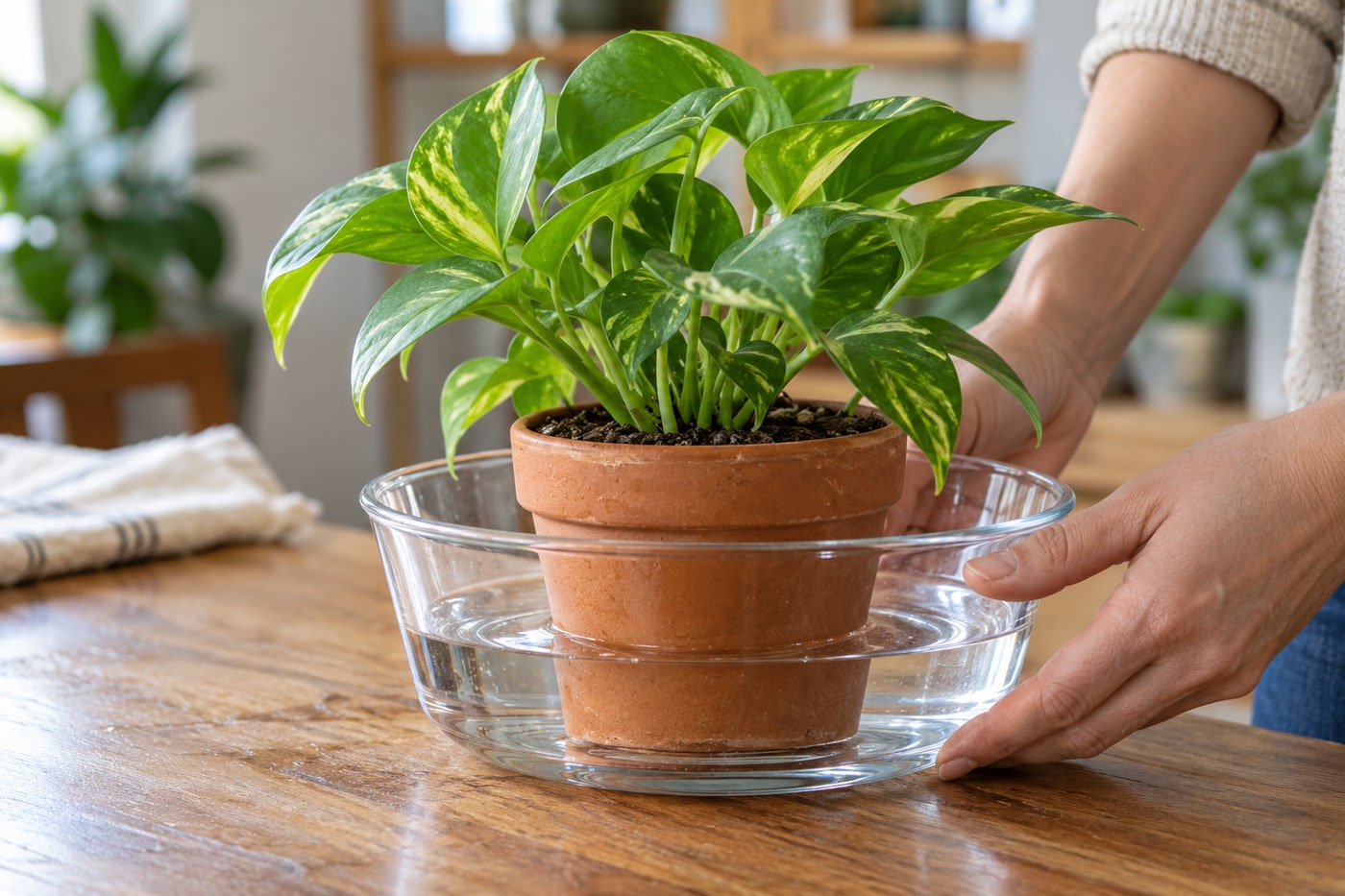
2. Set up a shallow water bath
Remove the nursery pot from its decorative cover and stand it upright in a clean basin. Add room-temperature water to cover the drainage holes, keeping the water well below the compost surface. Moisture can then travel upward through the mix without soaking the leaves. Water one plant at a time so runoff from one pot does not pass to another.
Photorealistic illustration · Waey
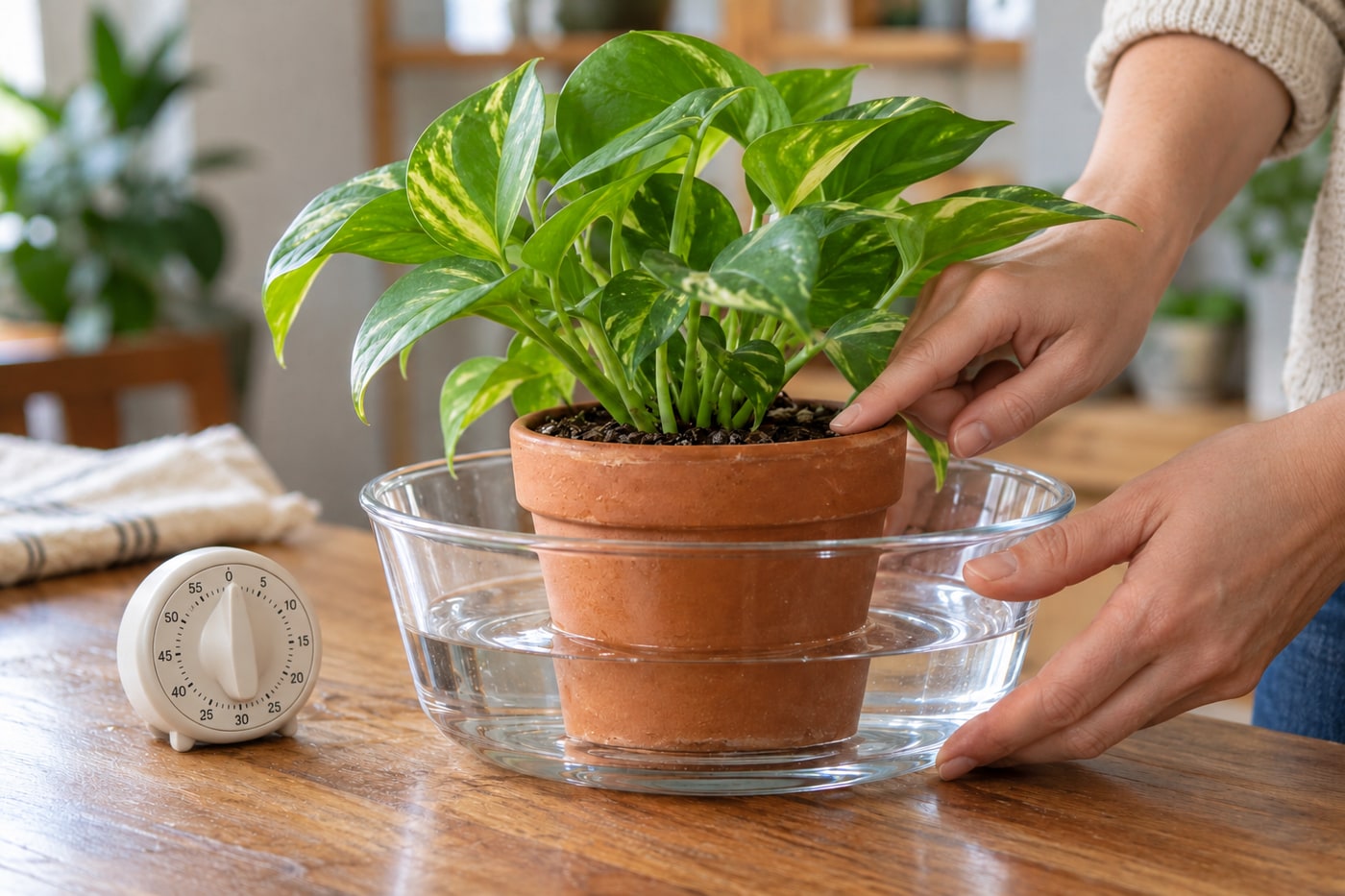
3. Let the mix take up moisture
Check the pot after about 15 minutes and again before 30 minutes. Feel the mix near the top: it should become evenly damp, rather than glossy or flooded. The time varies with the pot size and the mix, so use its condition as your guide. If it stays dry or the pot drains poorly, stop and check the potting mix rather than leaving it soaking for hours.
Photorealistic illustration · Waey
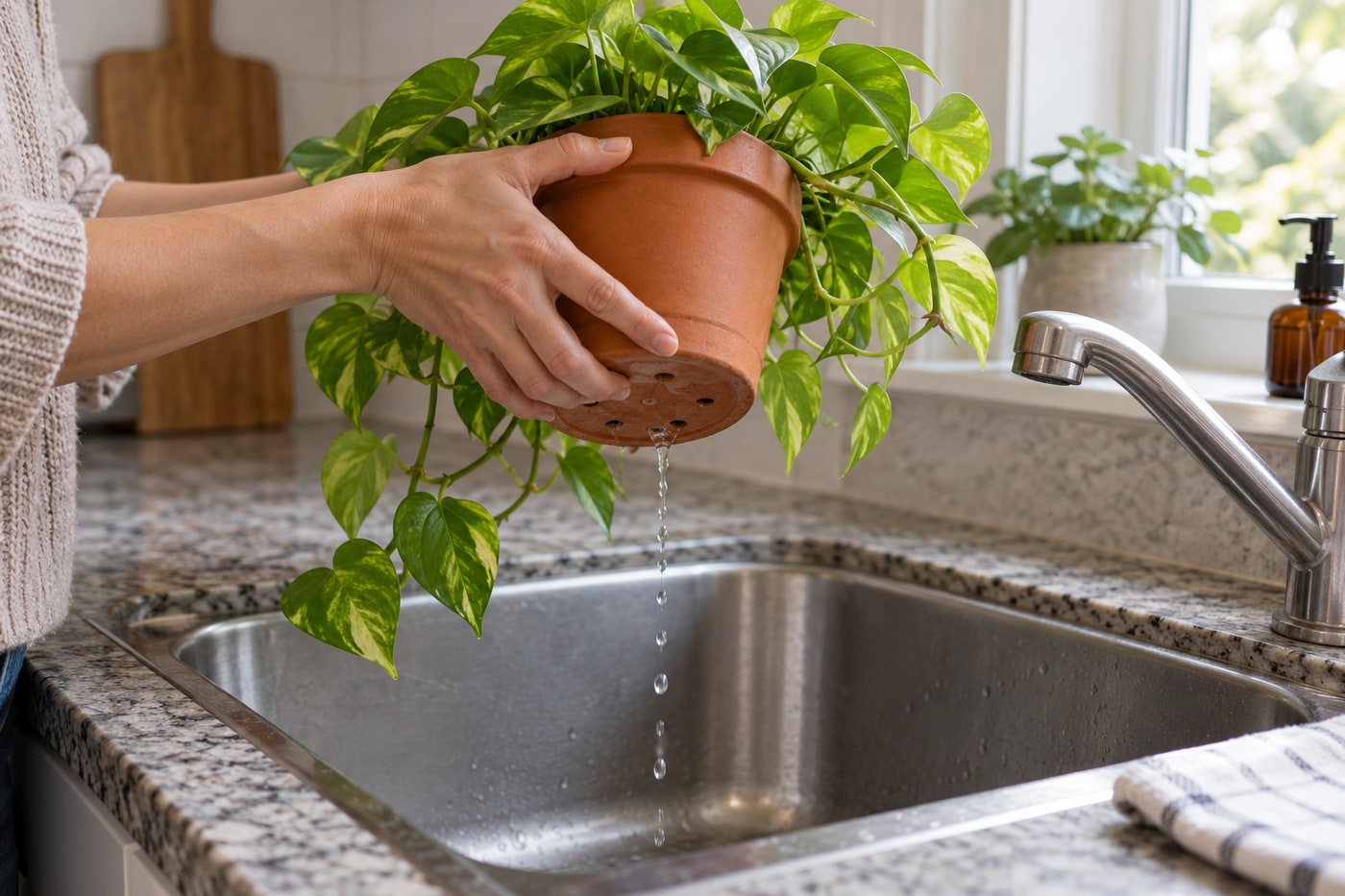
4. Drain before putting it back
Lift the pot out and let excess water drip freely into the sink or basin. Return it to a clean, empty saucer only when it stops dripping, then empty any water that collects later. This matters because roots need air as well as moisture. Recheck the mix before the next watering, and occasionally water from the top with free drainage to help flush accumulated salts.
Watch the method
Watch the method
Demonstrates bottom watering; use the written checks here to decide when your particular plant needs water.
Harli G · English
Watch on YouTube ↗Final checks
The pot feels heavier, the mix is damp and the saucer stays free of standing water. Yellowing or wilting in wet mix needs a care check, not another soak.
Sources
Photographs are credited beside each image. Generated photorealistic illustrations by Waey; linked videos remain with their creators.