
Organize fridge shelves for safer food storage
Arrange already chilled foods so raw meat stays contained below ready-to-eat items, labels remain visible and air can circulate. Check the fridge with a thermometer and keep date-based use decisions separate from how tidy the shelves look.
What will you learn?
Arrange already chilled foods so raw meat stays contained below ready-to-eat items, labels remain visible and air can circulate. Check the fridge with a thermometer and keep date-based use decisions separate from how tidy the shelves look.
Tools
- Fridge thermometer suitable for the appliance, used and positioned according to its instructionsSearch Amazon UAE ↗
- Paper inventorySearch Amazon UAE ↗
- Label penSearch Amazon UAE ↗
Materials
- Clean food-safe containers with sound lidsSearch Amazon UAE ↗
- Removable opening-date labelsSearch Amazon UAE ↗
- Already safely chilled food in sound packaging with original labels
Step by step
Photorealistic illustration · Waey
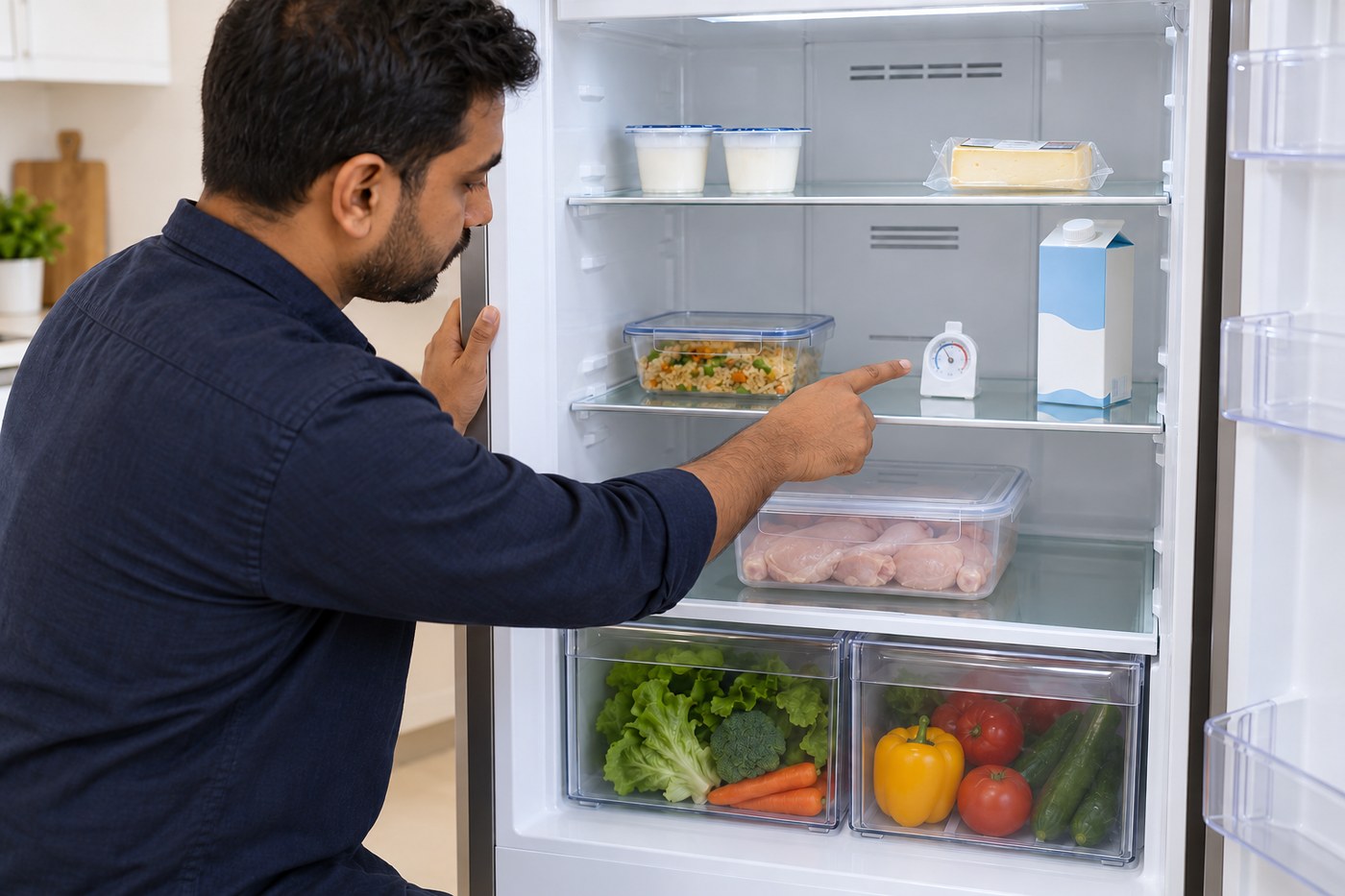
1. Check the fridge before rearranging food
Use a fridge thermometer and the appliance instructions to check the operating temperature, rather than treating a numbered control dial as degrees. Aim for 0–4°C without freezing the food. This fits within UK FSA guidance of 0–5°C and Canada’s limit of 4°C. Follow any stricter food-label or local guidance. Position the thermometer as instructed and allow its specified stabilisation time with the door closed. If the fridge is not maintaining its safe range, address that problem and follow official food-safety advice before reorganizing; a neat layout cannot correct an uncertain cold chain.
Photorealistic illustration · Waey
2. Read dates and plan one small section
Wash your hands and identify the foods that must stay chilled from their labels. Work on one small shelf group at a time instead of unloading the whole fridge onto the counter. Check use-by dates, damaged packs and any instructions after opening. Keep the original information visible; in UK and Irish guidance, use-by is a safety limit and best-before relates to quality. Date terms differ by country; follow your label and local food-safety guidance. Do not keep an out-of-use-by chilled item simply because it looks or smells normal.
Photorealistic illustration · Waey
3. Preserve opening information without extending dates
Keep foods covered and retain their manufacturer labels, including allergens and storage directions. Where needed, add the actual opening date on a separate label so the printed after-opening limit can be followed alongside the use-by date. Follow whichever limit requires earlier use; do not replace a printed date with today’s date. If you cannot establish when a perishable opened item was opened or how it was stored, seek appropriate food-safety guidance rather than guessing a fresh deadline.
Photorealistic illustration · Waey
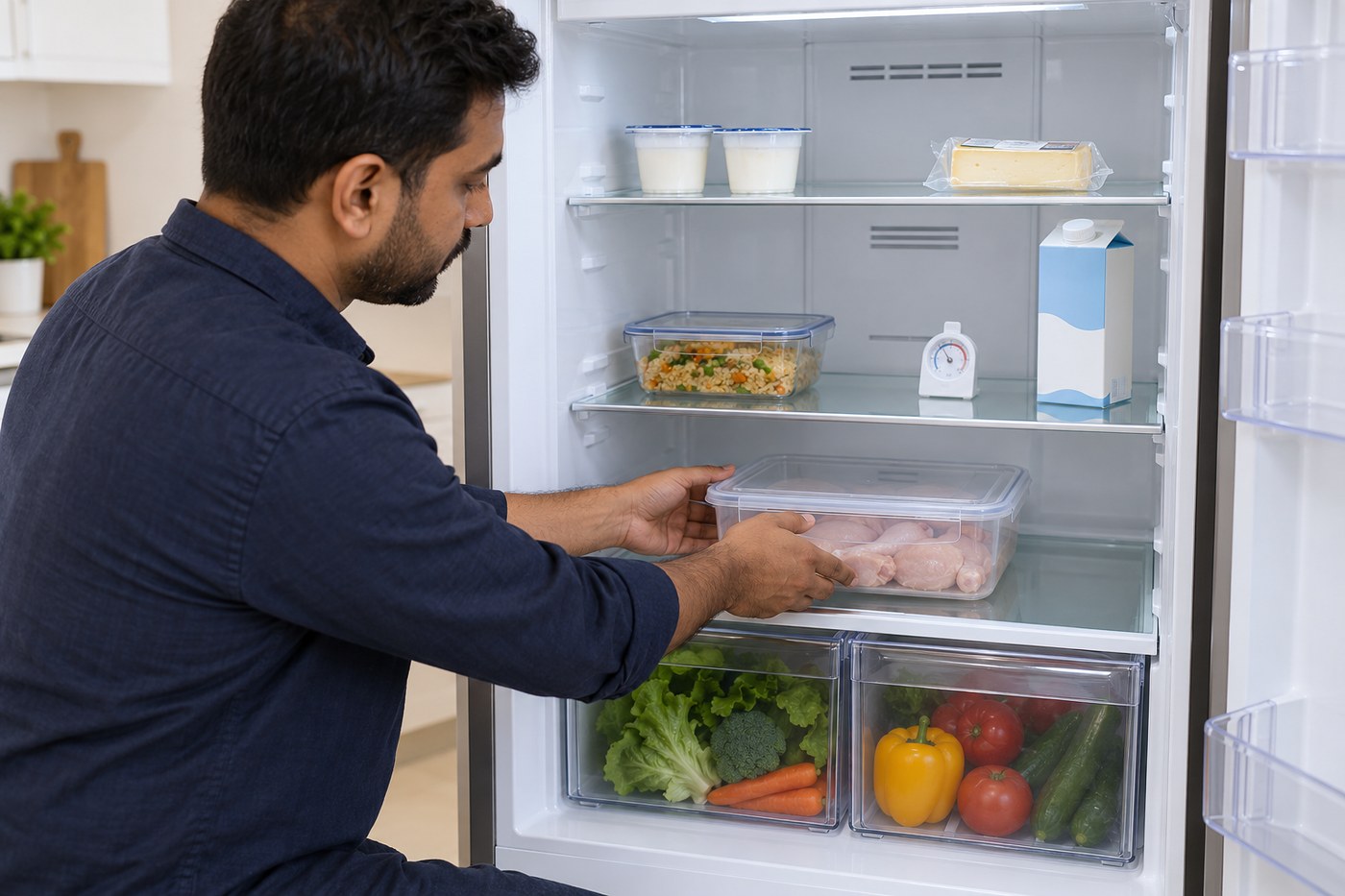
4. Contain raw meat below ready-to-eat food
Keep raw meat, poultry and fish in sound packaging or clean sealed food-safe containers on the bottom suitable fridge shelf, below ready-to-eat foods. Use an outer lidded container where needed to contain leaks, without hiding the original label. Keep the raw-food zone separate from salad and ready-to-eat items, including in shared fridges. Handle only the closed package, return it promptly and wash your hands before touching other foods or shelf areas.
Photorealistic illustration · Waey
5. Arrange ready-to-eat foods with space for air
Place covered ready-to-eat foods, dairy and similar labelled chilled items on shelves above the raw-food zone, following any special appliance compartments and food instructions. Leave gaps around packs and keep vents clear rather than filling every space. Within each safe food group, bring items needing earlier use toward the front without mixing raw and ready-to-eat zones. Keep produce in its appropriate drawer or location, and avoid heavy unstable stacks that hide labels or obstruct the door.
Photorealistic illustration · Waey
6. Close, recheck and maintain the arrangement
Check that lids are secure, labels can be read, nothing blocks the air path and the door closes fully. Return any small group still outside immediately and let the thermometer settle as its instructions require before checking the real temperature again. FSA domestic guidance recommends a weekly thermometer check; also check when settings or conditions change. Review dates regularly and deal with spills promptly using suitable cleaning guidance. Storage order does not make unsafe food safe or extend its labelled life.
Watch the method
Food safety coaching (Part 7): Chilled storage and display
Food Standards Agency examples of chilled storage in a catering kitchen. Follow the home-storage steps and temperature guidance above; the video does not verify your food or fridge.
FoodStandardsAgency · Caption metadata available; spoken language unconfirmed
Watch on YouTube ↗Final checks
Real thermometer reading in the chosen 0–4°C range; food labels and opening limits retained; raw foods sealed below ready-to-eat; airflow and door closure clear; no claim that layout proves freshness or cold-chain history.
Sources
FSA/GOVUK — Domestic chilling and stocking a fridge ↗
GOVUK — Best-before and use-by dates ↗
Safefood — Shelf separation and fridge airflow ↗
Fylde Council — Original FSA chilled-storage coaching video index ↗
Health Canada — Refrigeration at 4°C or below and sealed raw-food storage ↗
AI-generated representative photographic illustrations by Waey using only Waey-generated references. No third-party photographs reused. External video belongs to its credited creator.