
Remove light rust and re-season a bare cast-iron skillet
Restore a known, all-metal unenameled skillet with shallow surface rust through washing, thorough drying and a thin oven-baked oil coat. This is cookware care, not repair of cracks or unknown contamination.
What will you learn?
Restore a known, all-metal unenameled skillet with shallow surface rust through washing, thorough drying and a thin oven-baked oil coat. This is cookware care, not repair of cracks or unknown contamination.
Tools
- Steel wool reserved for bare-iron rust removalSearch Amazon UAE ↗
- Dish brushSearch Amazon UAE ↗
- Clean lint-free clothsSearch Amazon UAE ↗
- Dry heat-rated oven mittsSearch Amazon UAE ↗
- Domestic oven with stable racks, suitable for the specified temperature
- TimerSearch Amazon UAE ↗
- Metal drip traySearch Amazon UAE ↗
- Heatproof trivetSearch Amazon UAE ↗
Materials
- Known food-use bare cast-iron skillet with light surface rust
- Warm water
- Mild dish soapSearch Amazon UAE ↗
- Food-grade canola oil or another seasoning oil recommended by the pan makerSearch Amazon UAE ↗
Step by step
Photorealistic illustration · Waey
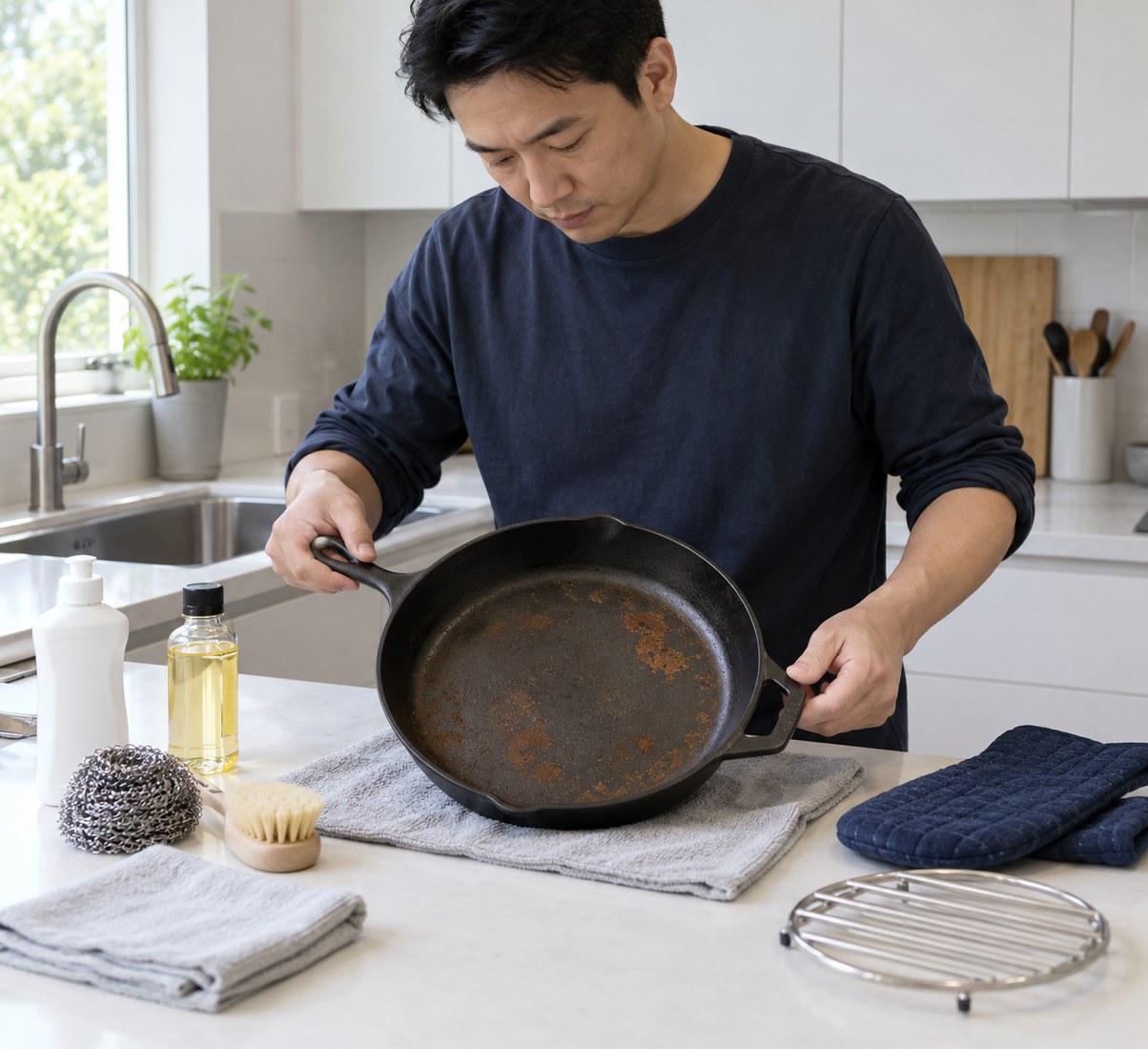
1. Identify the surface and reject damaged cookware
Start with a cool pan and confirm from its maker that the surface is bare seasoned iron. Black enamel can resemble seasoning, but must not be stripped with steel wool or treated as bare iron. Inspect the rim, base and handle junctions for cracks or deep corrosion, and confirm the pan has a known food-only history. Stop if identity or previous use is uncertain; heating cannot make unknown contamination reliably safe.
Photorealistic illustration · Waey
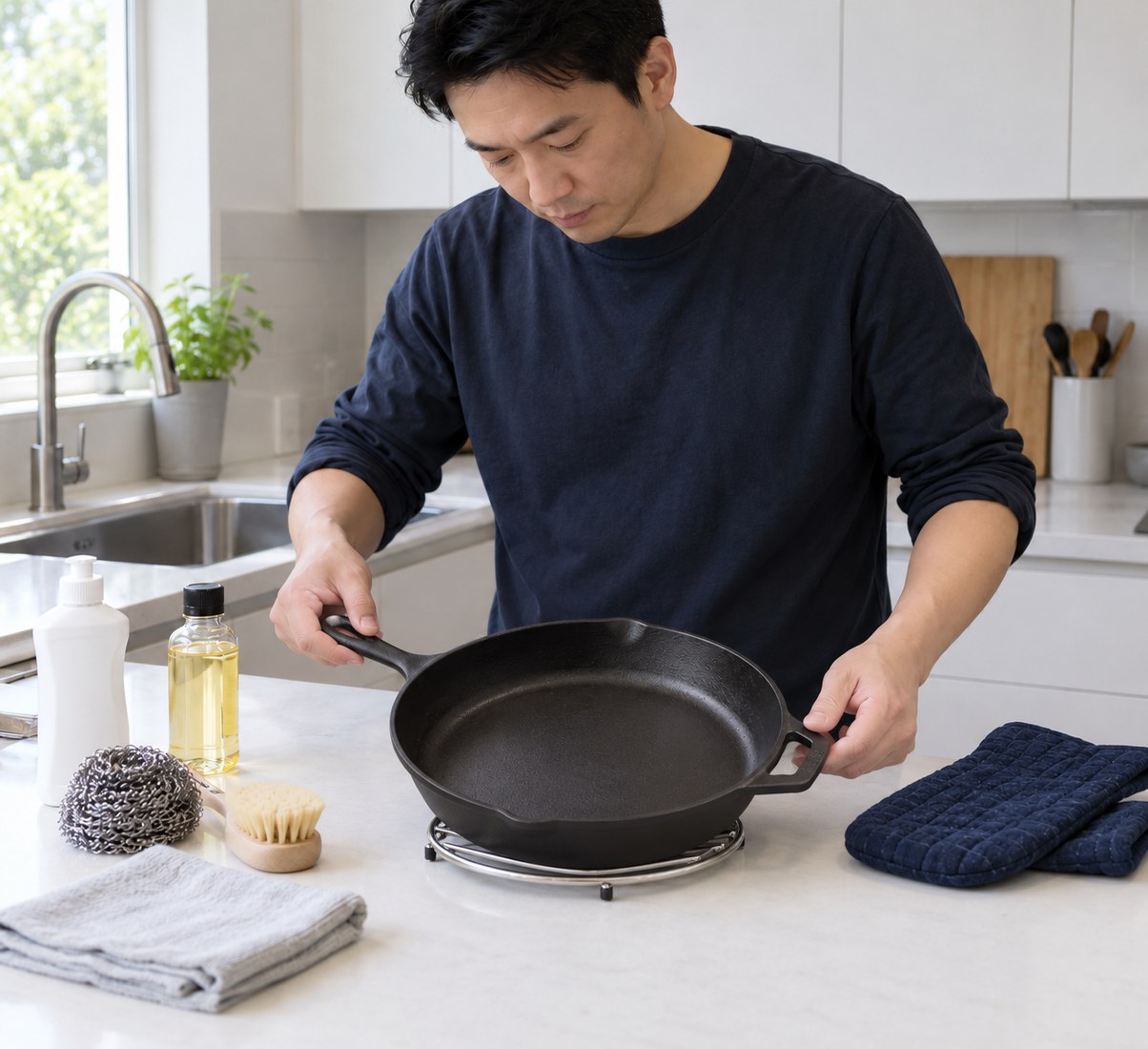
2. Prepare a clear washing and heating route
Clear the sink and a drying space before starting. While the oven is cold, check the skillet fits upside down on its middle rack without touching walls or heating elements, with a metal drip tray on the rack below. Follow the oven manual for tray positions and never line its floor. Prepare dry mitts and a trivet away from splash water, and remove cloths, paper and oil bottles from hot appliance surfaces.
Photorealistic illustration · Waey
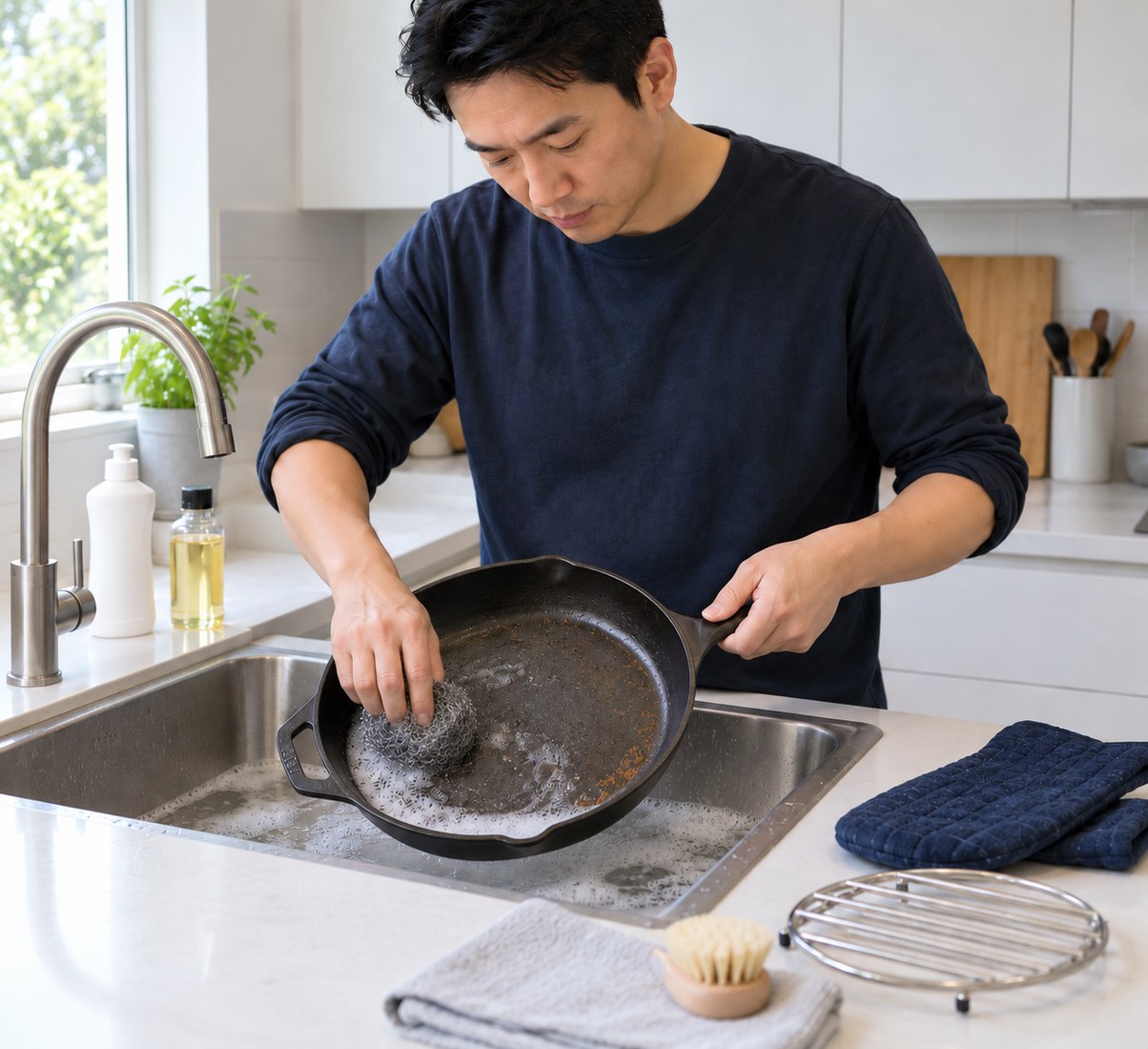
3. Scrub shallow rust and wash away debris
Support the cool pan securely in the sink and scrub the rusty areas with steel wool using controlled pressure. Follow with warm water, mild dish soap and a brush to remove loosened rust and grease. Some old seasoning may come away during restoration; you will rebuild its protection. Rinse thoroughly and inspect in good light. Persistent deep pits, cracks or extensive flaking metal are reasons to stop rather than keep grinding away material.
Photorealistic illustration · Waey
4. Dry completely without overheating the empty pan
Immediately towel-dry the cooking surface, underside, rim and handles. If the maker allows, a few supervised minutes on low stove heat can remove remaining moisture; stay beside the pan and turn the heat off promptly. Let the metal become safe to handle before the next step, using dry mitts while it remains warm. Do not test heat with bare fingers or plunge hot iron into cold water, which risks thermal shock.
Photorealistic illustration · Waey
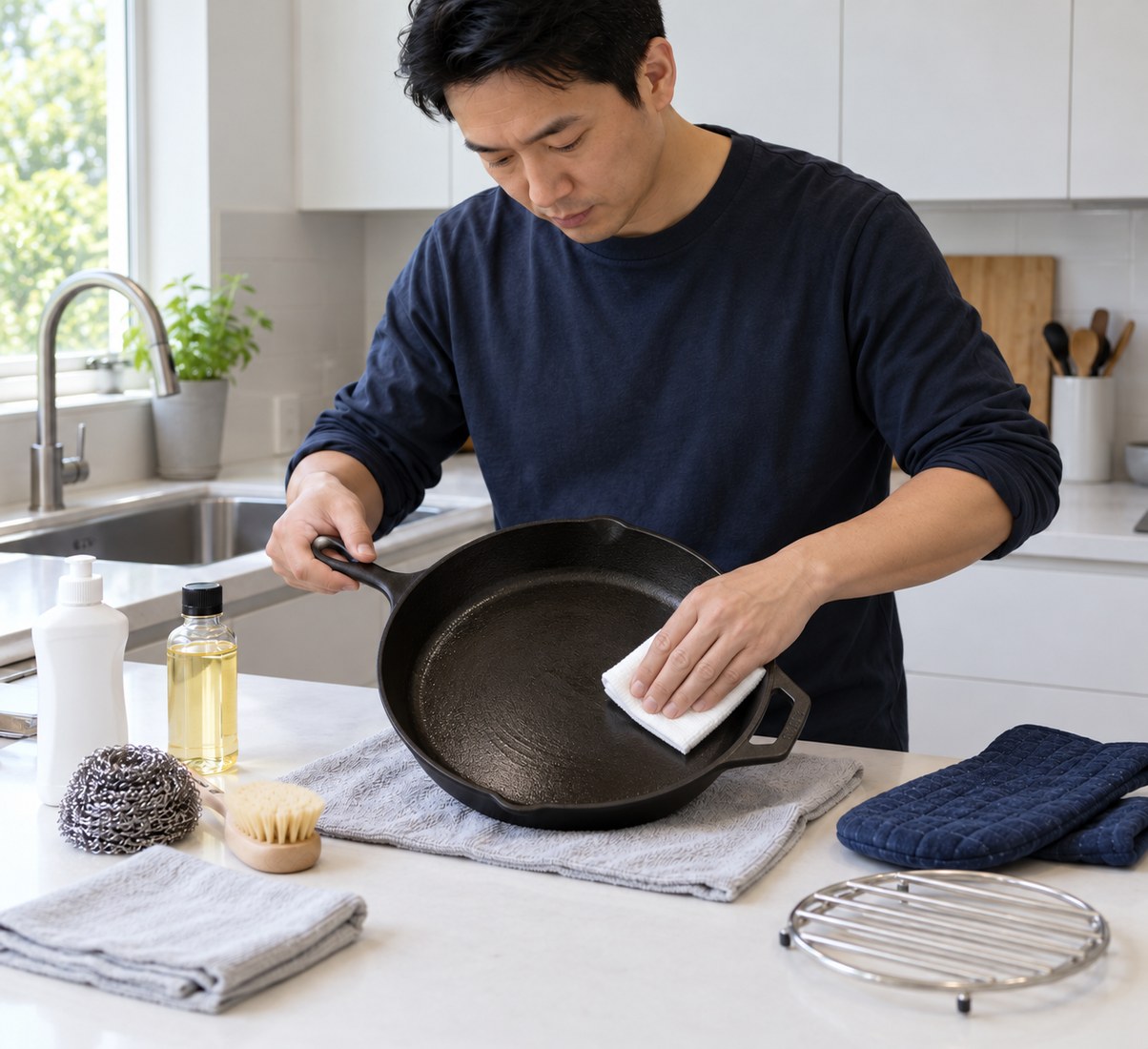
5. Apply oil and wipe away the visible excess
On a stable protected surface, spread a small amount of the recommended food-grade oil over the inside, outside and integral handles. Use a second clean cloth to remove excess until only a very thin, even film remains. There should be no bead, run or puddle when the pan is tilted. A thick shiny coat is likely to become sticky; more oil does not create stronger seasoning in a single cycle.
Photorealistic illustration · Waey
6. Bake for the specified time with ventilation
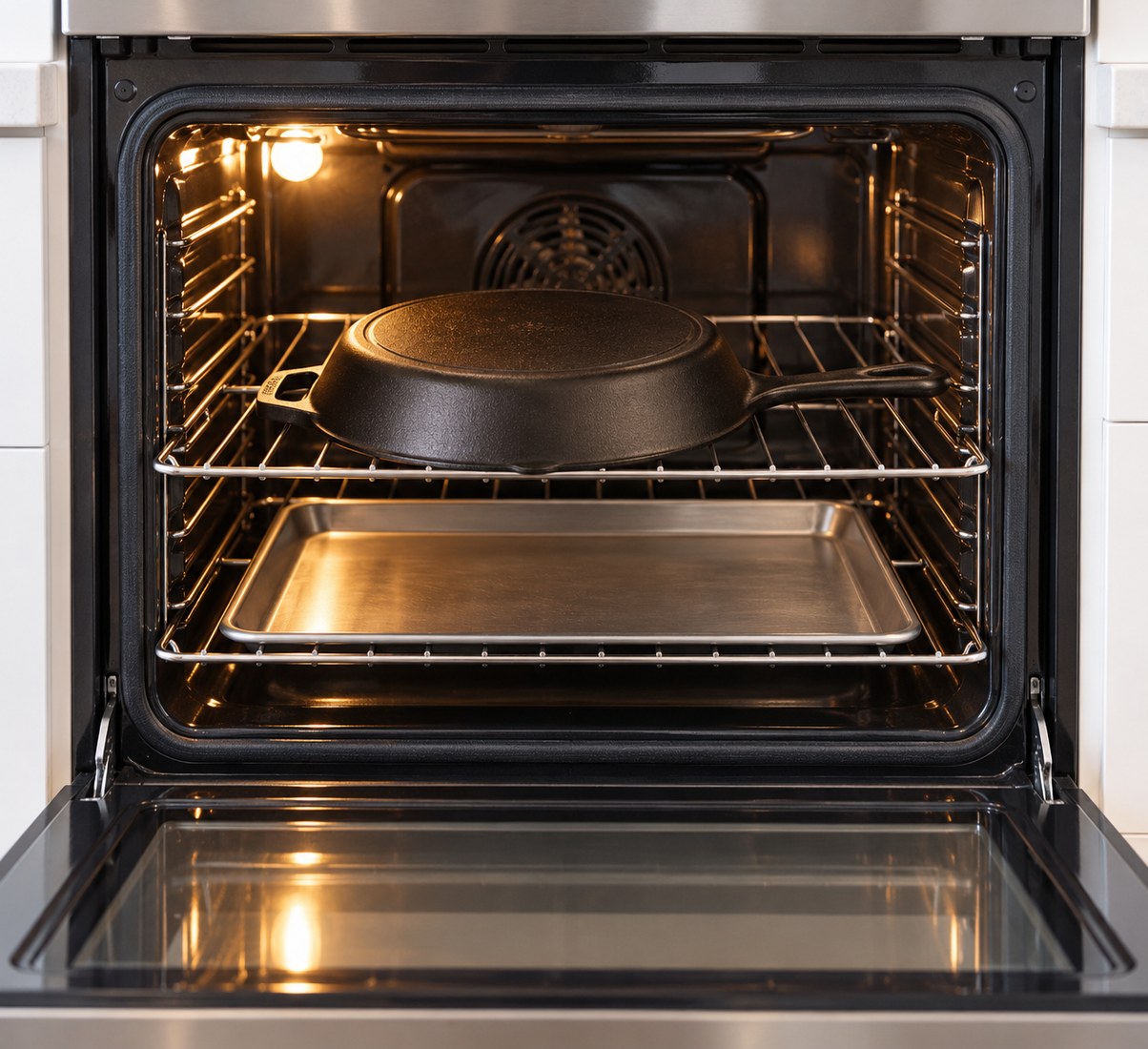
For the Lodge-style all-metal skillet method cited here, use a conventional oven at 450°F, approximately 230°C, provided the pan and oven instructions permit it. Position the pan upside down on the middle rack above the drip tray using dry mitts as needed. Close the oven door and bake for one hour once the oven reaches temperature. Ventilate and stay available to monitor. If heavy smoke develops, switch off the heat safely and let the oven cool before investigating excess oil.
Photorealistic illustration · Waey
7. Cool fully and assess the new surface
Turn the oven off and leave the pan inside to cool completely. Treat its handle as hot until confirmed otherwise without touching it directly; use dry mitts to move it onto the trivet. A sound coat feels dry rather than gummy and covers the previously rusty areas. If a section remains rusty, clean and dry that area again before another thin-coat cycle. Do not bury rust beneath repeated heavy oil layers.
Photorealistic illustration · Waey
8. Return to use and prevent another rust cycle
Before storing, inspect the whole pan for remaining rust, loose debris and tacky patches. Resume cooking with the maker’s normal gradual heating and suitable cooking fat; a fresh coat does not guarantee that delicate food will never stick. After future use, allow safe cooling, hand-wash, dry promptly and apply a very light oil film. Store in a dry place and avoid soaking or a dishwasher, both of which encourage renewed rust on bare iron.
Video demonstrations
Help! Did I ruin my cast iron skillet? (No, you didn’t!)
Lodge demonstrates rust scrubbing and drying. Follow the written instructions for the thin oil coat, oven temperature and baking time; this guide covers light rust on known bare food-use iron.
Lodge Cast Iron · Caption metadata available; spoken language unconfirmed
Watch on YouTube ↗So You Bought a Cast Iron Skillet, Now What?
Lodge demonstrates routine washing, rinsing and cloth drying. Use this for everyday care; it does not replace the rust-removal steps above.
Lodge Cast Iron · Caption metadata available; spoken language unconfirmed
Watch on YouTube ↗Final checks
Known bare food-use iron only; no structural damage or loose rust, a dry non-gummy coat, no trapped water and safe full cooling. Stop and consult the maker if rust repeatedly returns or damage becomes visible.
Sources
Lodge: restore and season a rusty cast-iron skillet ↗
Lodge: seasoned cast-iron cleaning and care ↗
Lodge: cast-iron myths, mild soap and rust ↗
Lodge: enamel is a separate care route ↗
US Fire Administration: cooking fire prevention ↗
Original generated instruction illustrations created for Waey. Videos belong to their credited creators.