
Clean a brushed stainless-steel kitchen sink
Wash away ordinary daily residue with mild dish soap and a soft sponge, following the visible brushed grain. Rinse thoroughly and dry the basin so water and detergent do not linger on the surface.
What will you learn?
Wash away ordinary daily residue with mild dish soap and a soft sponge, following the visible brushed grain. Rinse thoroughly and dry the basin so water and detergent do not linger on the surface.
Tools
- Clean soft sponge without a scouring layerSearch Amazon Australia ↗
- Clean dry microfibre clothSearch Amazon Australia ↗
- Separate soft damp cloth if neededSearch Amazon Australia ↗
- Household glovesSearch Amazon Australia ↗
Materials
- Mild dishwashing liquid approved for the sinkSearch Amazon Australia ↗
- Clean comfortably warm water
Step by step
Photorealistic illustration · Waey
1. Check the finish and clear the basin
Read the sink’s care information and confirm the brushed stainless finish before selecting a cleaner. Remove dishes, utensils and loose accessories so no knife or hidden grit remains under the sponge. Collect food scraps without pushing them into the drain. Leave fixed drain covers, overflow fittings and seals in place; this is surface washing, not plumbing service. Stop if water is leaking or a fitting or joint appears loose.
Photorealistic illustration · Waey
2. Remove loose grit and find the grain
Rinse away loose particles with clean water before rubbing the steel. Look across the dry upper edge from an angle to identify the fine parallel lines of the brushed finish. Plan short straight wiping strokes along those lines, checking each surface rather than assuming every face runs the same way. Use a clean sponge; trapped grit can scratch the sink even when the sponge itself is soft.
Photorealistic illustration · Waey
3. Wash gently with mild soap
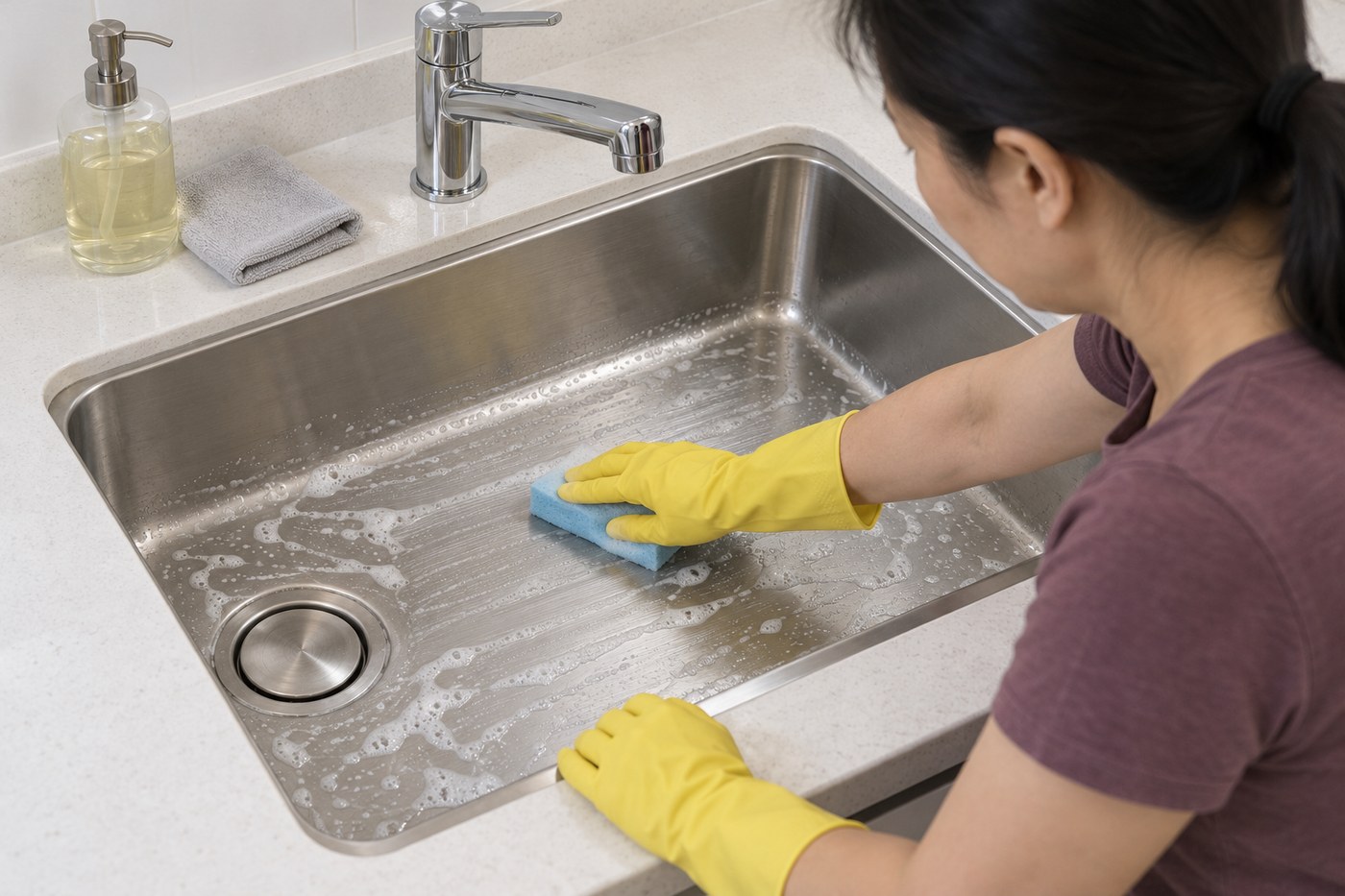
Wet the soft sponge and apply mild dish soap as its label directs. Wipe the basin floor, walls and accessible rim with light straight strokes following the local grain. Work in small sections and rinse the sponge when it picks up residue. Avoid circular scrubbing or repeatedly polishing one stubborn spot; extra force can change the appearance of the finish. Keep detergent on the intended sink surface rather than spreading it onto other materials.
Photorealistic illustration · Waey
4. Rinse the soap from every washed area
Rinse with clean comfortably warm water, reaching the corners and the area around the fixed drain cover without removing it. Keep splashes away from nearby electrical items and countertop joints. If using a cloth to carry rinse water, use a clean one and refresh it rather than wiping with the soapy sponge again. Continue until visible foam and slippery detergent residue are gone; do not leave cleaner to dry on the steel.
Photorealistic illustration · Waey
5. Dry along the brushed finish
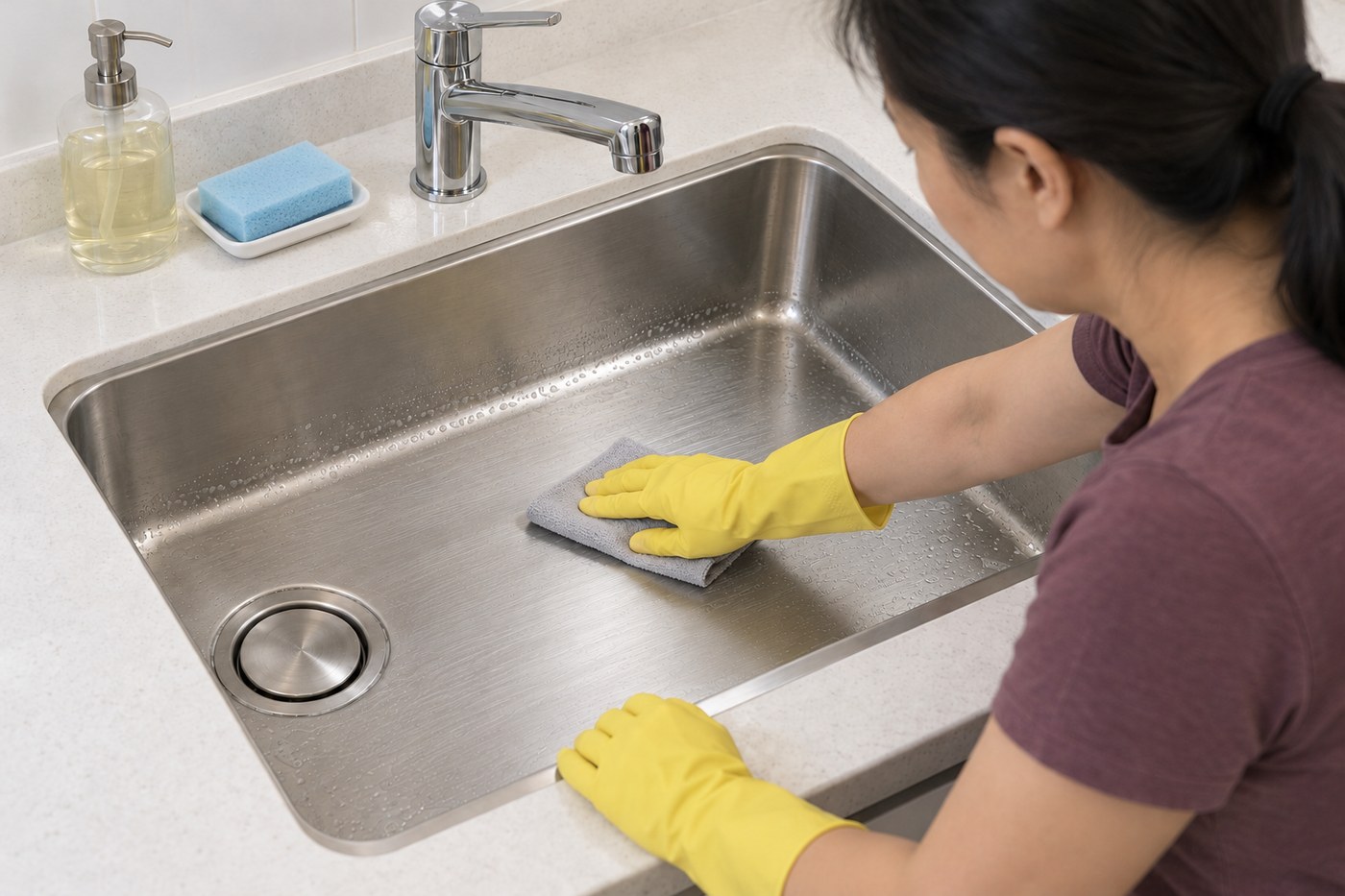
Use the clean dry microfibre cloth to lift remaining water from the basin, accessible rim and corners, working along the grain with light pressure. Change to a dry part of the cloth as it becomes wet. Check around the drain and rim for droplets rather than polishing hard for a mirror shine. Prompt drying reduces water spotting and mineral deposits; it does not remove existing deep scratches or prove that the sink is disinfected.
Photorealistic illustration · Waey
6. Inspect the result and keep the routine simple
Look for remaining food film, soap and pooled water, then clean and dry your sponge and cloth according to their care guidance. Repeat this gentle wash after ordinary use so residues do not sit on the steel. If persistent limescale, rust-coloured marks or an altered patch remains, ask the sink maker for a finish-specific treatment. Do not escalate by mixing acids, bleach or abrasives, or by sanding the area.
Watch the method
How to clean your Franke stainless steel sink
Franke shows stainless-steel care using a specialist cream. This is a related surface-care reference; follow the written mild-soap routine here, without polish, abrasive treatment or fitting removal.
Franke Home Solutions · Unconfirmed (no caption or audio-language metadata)
Watch on YouTube ↗Final checks
Ordinary residue and soap removed; grain-following gentle cleaning, no altered patch; basin and accessible edges dry; fittings undisturbed. Persistent stains or damage need the sink maker’s advice.
Sources
BLANCO — Daily stainless steel sink care ↗
AI-generated representative photographic illustrations by Waey using only Waey-generated references. No third-party photographs reused. External video belongs to its credited creator.