
Store a Honeywell MN4 portable air conditioner
Drain, fan-dry, clean the filters and pack the matched window kit before storing an MN4 upright in a suitable room.
What will you learn?
Drain, fan-dry, clean the filters and pack the matched window kit before storing an MN4 upright in a suitable room.
Tools
- Shallow drain panSearch Amazon Australia ↗
- Soft dry clothSearch Amazon Australia ↗
- Soft damp cloth for detached kitSearch Amazon Australia ↗
Materials
- Matched Honeywell MN4 and its original regional manual
- Clean water
- Optional diluted liquid dish detergent for dust filtersSearch Amazon Australia ↗
- Labelled accessory bagSearch Amazon Australia ↗
Step by step
Photorealistic illustration · Waey
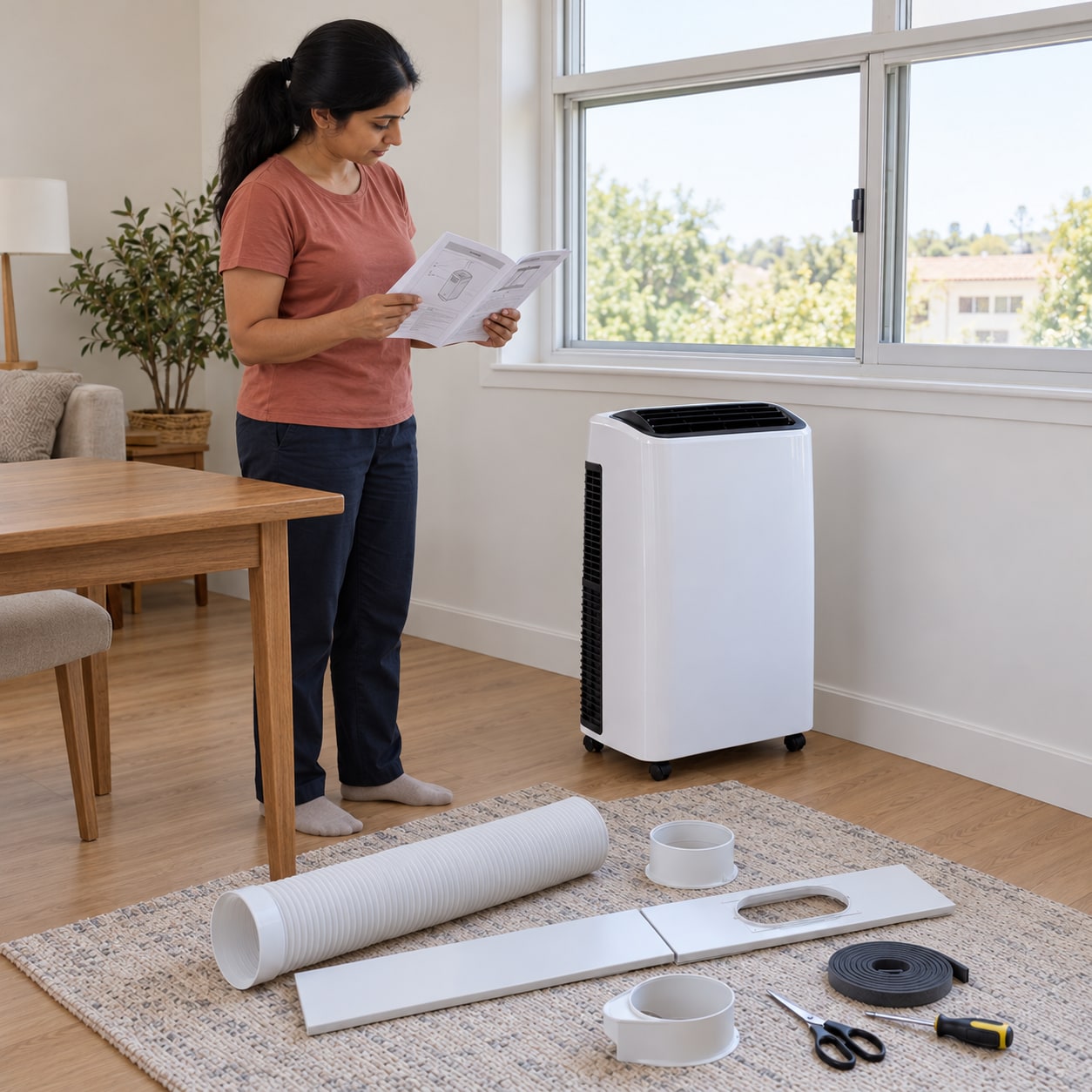
1. Check the model and storage space
Read the full MN4 model number and refrigerant information on your appliance label, then match its regional manual. This procedure follows the current MN4 manual with a lower drain plug and removable rear dust filters. Choose an upright, ventilated storage position meeting that label’s refrigerant-specific minimum room area, away from continuous ignition sources. Stop if the label, fittings or manual differ; do not guess the required room size.
Photorealistic illustration · Waey
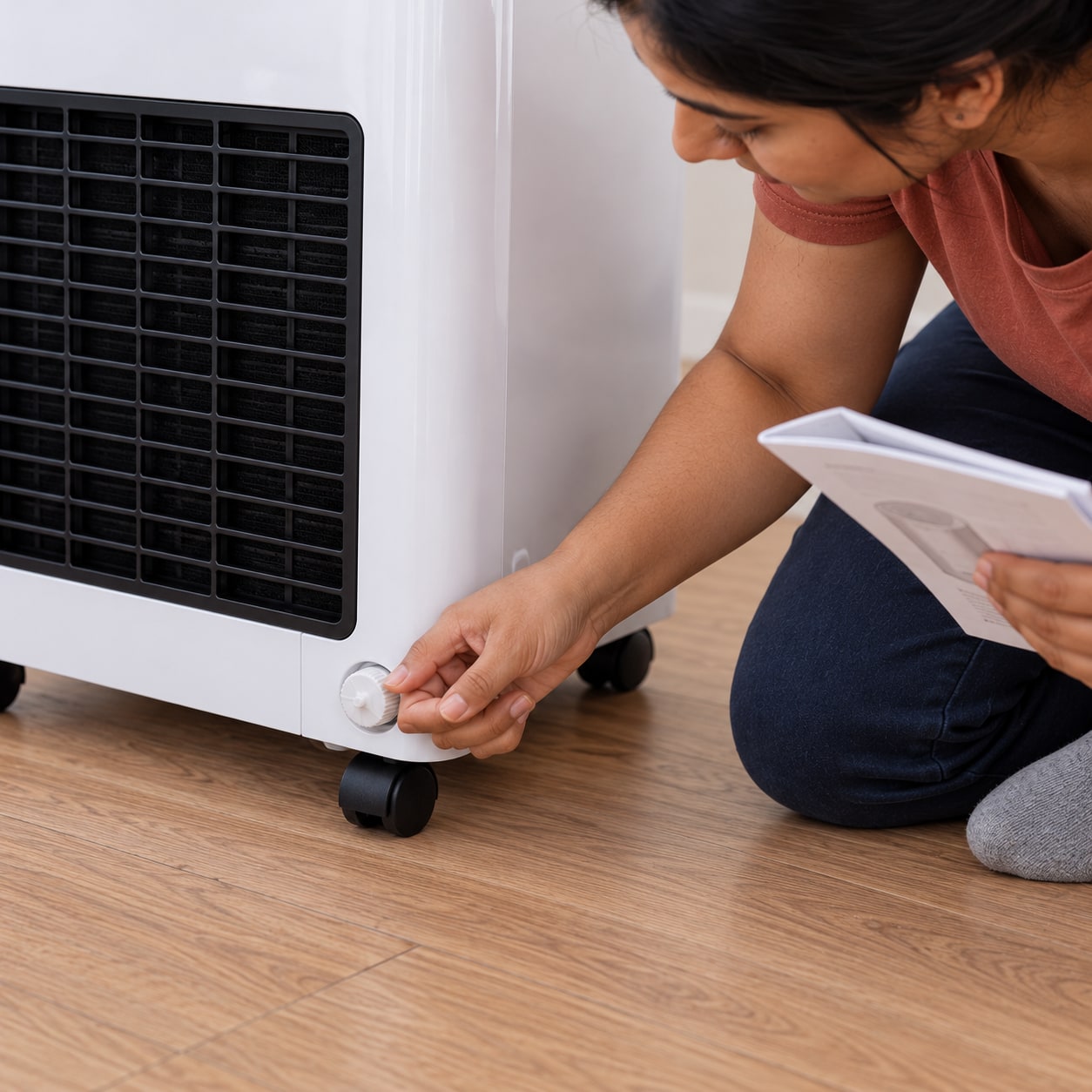
2. Unplug and empty the lower drain
Switch off, unplug with dry hands and keep the appliance upright on a level floor. Place a shallow pan beneath the lower rear drain, not the higher continuous-drain connection. Remove the plastic cap and rubber plug, and let residual water drain by gravity. Replace both securely before moving on. Do not raise or tilt the heavy unit, probe the port or pour cleaning liquid inside; get assistance if you cannot drain it safely at floor level.
Photorealistic illustration · Waey
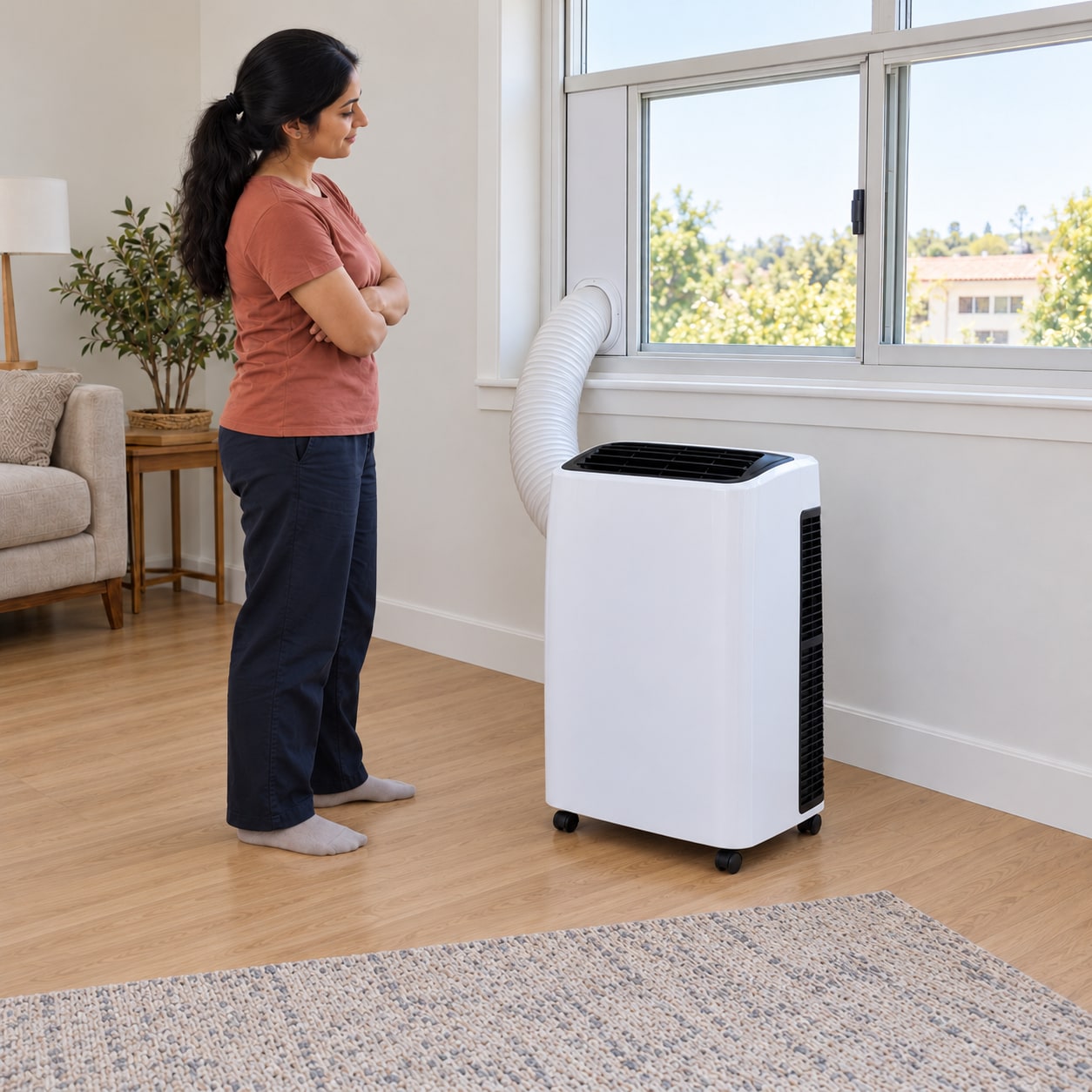
3. Run the fan-only drying cycle
Dry any spills and check the lower drain is sealed, both rear grilles are secure and the window kit remains connected. With dry hands, reconnect power and select FAN ONLY for 30 minutes, as the storage instructions specify. Do not select cooling or heating. When the cycle finishes, switch off and unplug again before touching filters or fittings. Never run this cycle with a rear grille removed or loose.
Photorealistic illustration · Waey
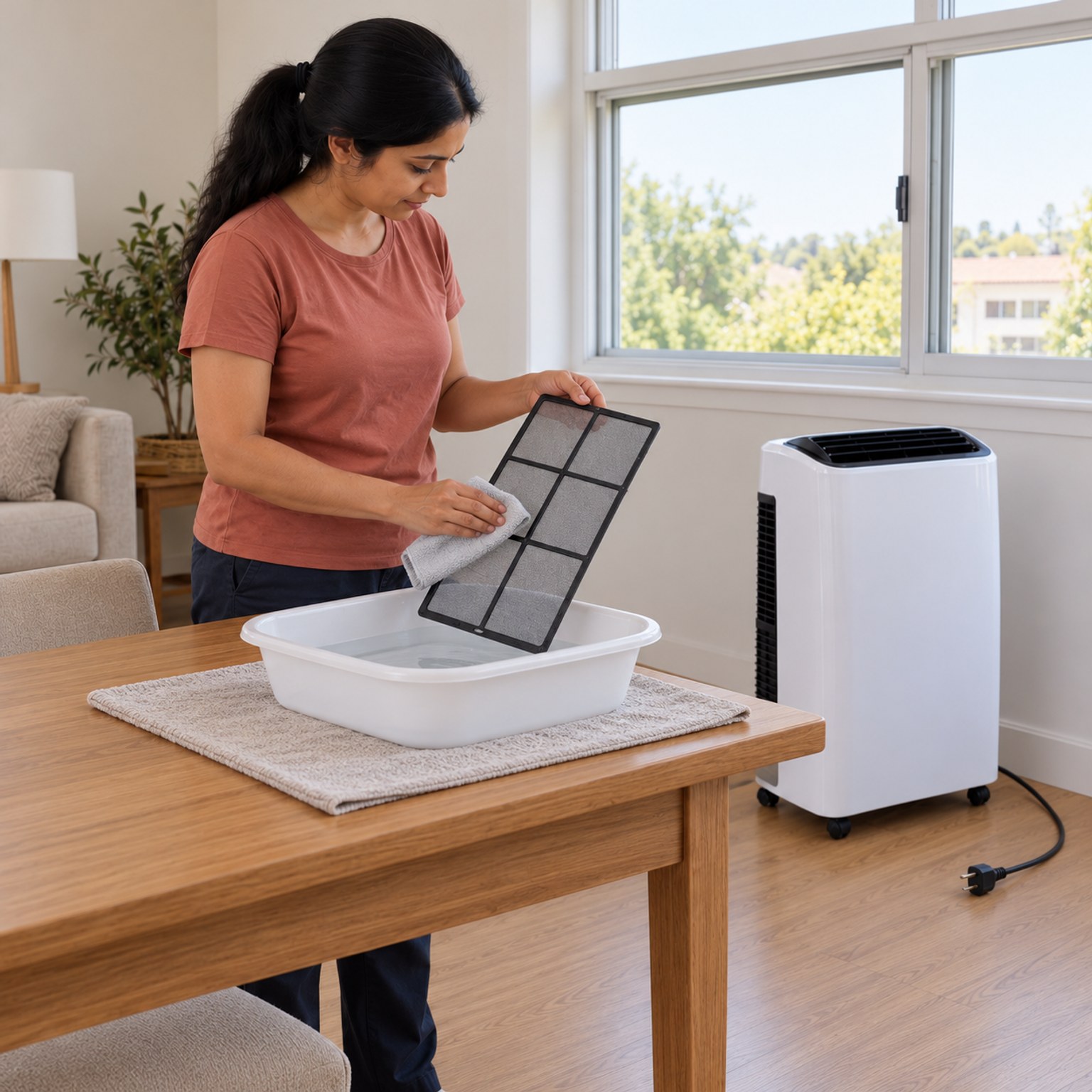
4. Clean and fully dry both dust filters
With power disconnected, remove the upper and lower dust filters using their matched release points. Keep hands clear of internal wiring and components. Gently wash the filters with water; the manual also permits diluted liquid dish detergent. Rinse, gently shake off excess water and leave them to dry completely. Do not heat them or apply disinfectants. Keep the appliance body away from the sink and wipe its exterior only with a soft dry cloth.
Photorealistic illustration · Waey
5. Refit filters and detach the window kit
Refit both fully dry filters and secure the rear grilles. On the matched MN4 kit, turn the rear hose fitting anticlockwise to unlock its knob mechanism, then slide it out. Turn the window adapter anticlockwise before pulling it away. Follow the real fitting if yours differs. Remove accessible window-kit parts from inside the room while supporting them; stop if removal requires leaning outside, handling glass or working at height.
Photorealistic illustration · Waey
6. Dry the kit and organise the accessories
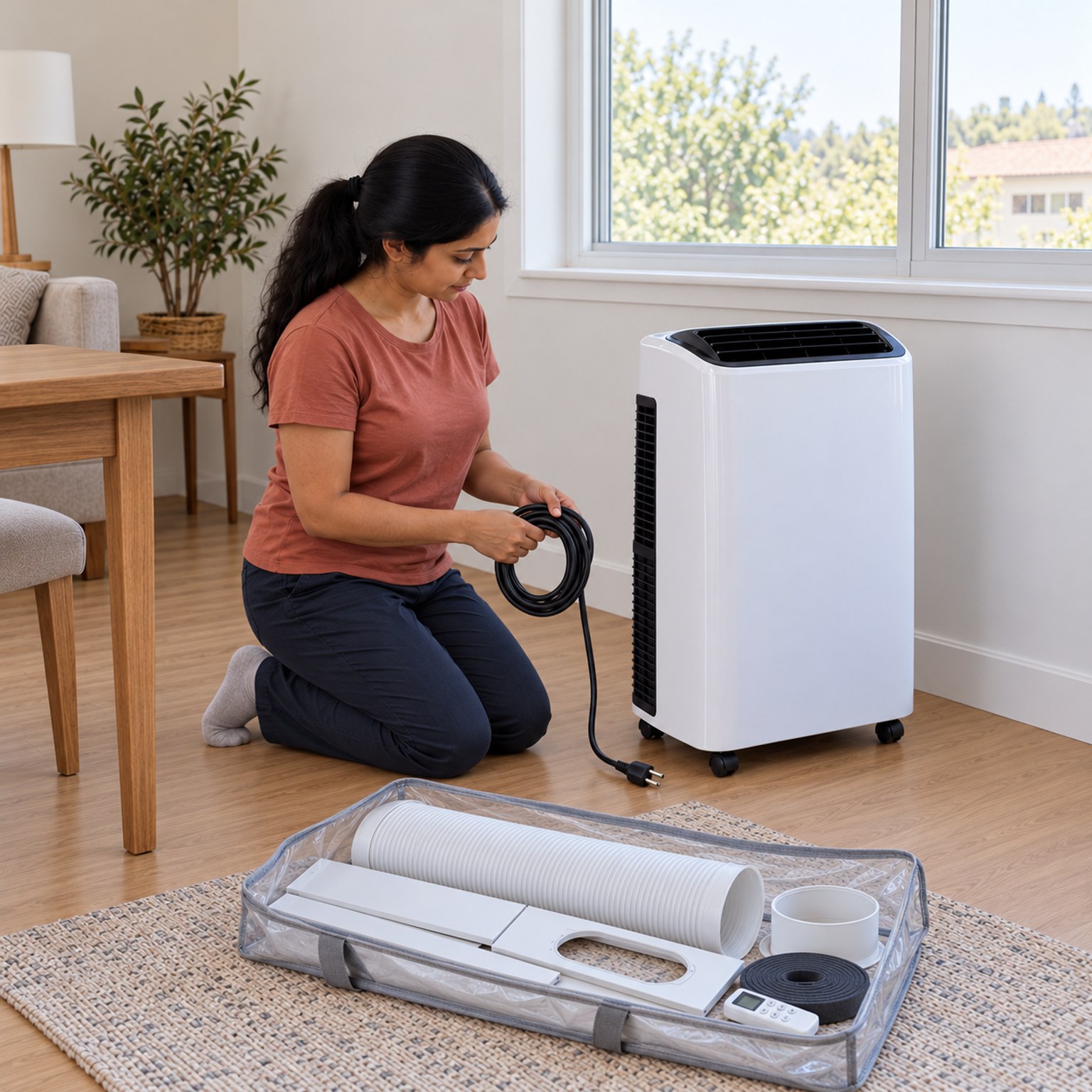
Wipe the detached hose and window-kit parts with a damp cloth and water if needed, then let every part dry before packing. Keep the adapters, fasteners, panels and remote together in a labelled bag beside the appliance, so the kit can be identified next season. This bag is for accessories only. Loosely coil the unplugged power cord without sharp bends, crushing it or pulling on its entry into the body.
Photorealistic illustration · Waey
7. Leave the unit upright in suitable storage
Check the lower drain is closed, filters and grilles are fitted, all parts are dry and the cord is protected. Keep the appliance upright in the ventilated, adequately sized room selected from its actual label and manual, protected from damage and away from continuous ignition sources. The current MN4 manual says not to cover the unit in plastic bags. Stop for damaged plugs, leaks or suspected refrigerant damage; arrange qualified service before reuse.
Video demonstrations
Honeywell Portable Air Conditioner (MN4CFS0)
Matched MN4CFS0 controls sampled at 0:35 and body at 0:50. Useful for identifying the control panel before choosing fan-only mode; does not demonstrate drainage, washing or seasonal storage. Follow your actual model label and current manual; no full audiovisual review.
eAccess Solutions Inc · No caption track listed; speech not fully assessed
Watch on YouTube ↗How to Drain a Portable AC: Fully vs. Partially Evaporative | Sylvane
Actual lower-drain water-flow close-up sampled at 0:55 on another portable-AC model. Useful only for recognising a lower manual-drain outlet. The shot shows water reaching the floor: do not copy that setup. Unplug and use a shallow catch pan, then replace the rubber plug and plastic cap as the MN4 manual directs. Port geometry, storage rules and fan-cycle duration come from the matched MN4 manual; no full audiovisual review.
Sylvane - Air Quality Experts · English automatic caption track listed; speech not fully assessed
Watch on YouTube ↗Final checks
Lower drain closed; filters/grilles dry and secured; kit dry; cord loose; appliance upright without plastic-bag cover in the label-compliant room.
Where to find supplies
Matched current MN4 seasonal storage only. Other model families, upper continuous drainage, refrigerant service, lifting/tilting, chemical flushing and elevated window work are outside this procedure. Follow the actual regional label/manual for refrigerant and room size; do not transfer older instructions permitting a plastic unit cover.
Sources
Five reviewed generated contexts across seven steps: three previously approved Waey images copied unchanged (manual/kit preparation, closed lower cap and connected window kit), plus two new original images (gentle detached-screen cleaning and dry upright uncovered storage with loose cord and disconnected plug). Same woman, rust shirt, dark trousers, room and white portable-AC family reviewed for continuity. Closed cap is not an actual drainage photograph; connected kit is not proof of fan mode or thirty minutes. Exact model, refrigerant/room area, filter release/geometry, drying, cap seal, plug standard/cord attachment and operating state require the real manual and physical checks. Manufacturer figures and video frames are private research and were never generation inputs.