
Pack wool knitwear for seasonal storage
Pack an already clean, completely dry wool jumper without stretching or crushing it. Cushion a loose fold, protect it in a cotton bag and leave it accessible for regular moisture and insect checks.
What will you learn?
Pack an already clean, completely dry wool jumper without stretching or crushing it. Cushion a loose fold, protect it in a cotton bag and leave it accessible for regular moisture and insect checks.
Tools
- Pencil for a separate paper tagSearch Amazon Australia ↗
- Clean cloth for preparing the empty storage areaSearch Amazon Australia ↗
- Suitable vacuum for the empty storage area onlySearch Amazon Australia ↗
Materials
- Already clean, completely dry, sound wool jumper
- White unbuffered acid-free tissue suitable for textile storageSearch Amazon Australia ↗
- Roomy clean dry100%cotton storage bag with smooth closureSearch Amazon Australia ↗
- Separate contents/date tagSearch Amazon Australia ↗
Step by step
Photorealistic illustration · Waey
1. Inspect before deciding what to pack
Start with a jumper that has already been cleaned according to its label and dried completely, including cuffs, neck and seams. Empty any pockets and remove detachable accessories. In good light, check for marks, weakened stitches, holes, larvae or webbing. Set aside anything needing cleaning, repair or pest assessment; do not hide a problem inside storage. Valuable, brittle or elaborately decorated pieces need individual professional advice rather than this everyday routine.
Photorealistic illustration · Waey
2. Prepare a suitable shelf and roomy bag
Choose an accessible indoor shelf in a clean, dry, dark cupboard, away from heat, water pipes and direct sun. Avoid damp basements, hot attics and floor-level storage. Clean the empty area and let it dry before bringing the jumper near it. Inspect the cotton bag for dirt, rough seams or catching zip teeth. Select enough room for a loose folded parcel; changing to a larger bag is better than squeezing the garment.
Photorealistic illustration · Waey
3. Make a loose, supported fold
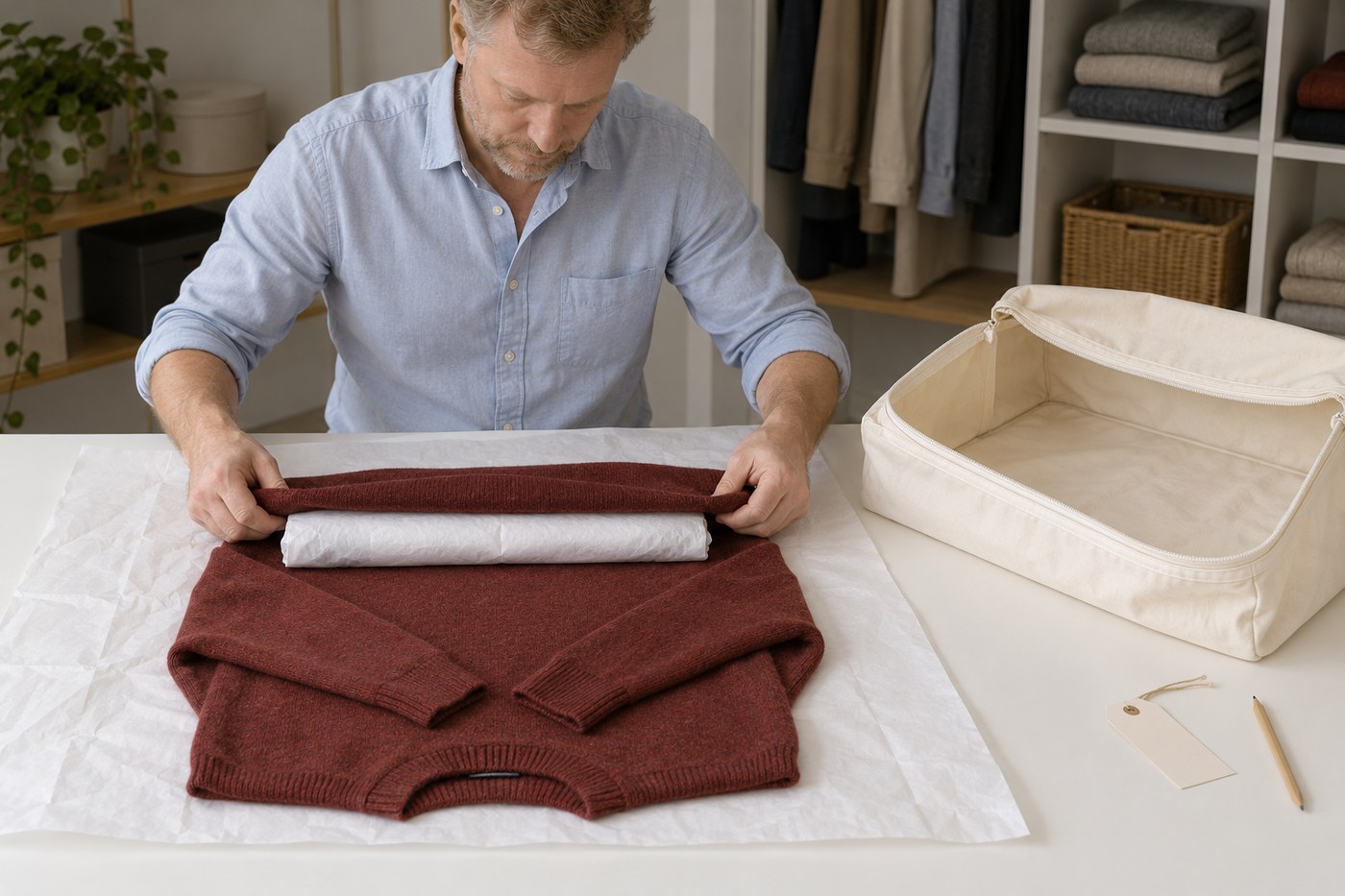
Lay white storage tissue on the table and place the jumper flat without pulling it into shape. Bring the sleeves loosely across the body. Form a soft rounded roll of tissue and place it inside the main bend as you bring the lower section toward the shoulders. Use only the folds needed to fit the bag and support the cloth with both hands. Avoid sharp pressing, tight rolling or hanging the knit from its shoulders.
Photorealistic illustration · Waey
4. Wrap lightly and place the parcel flat
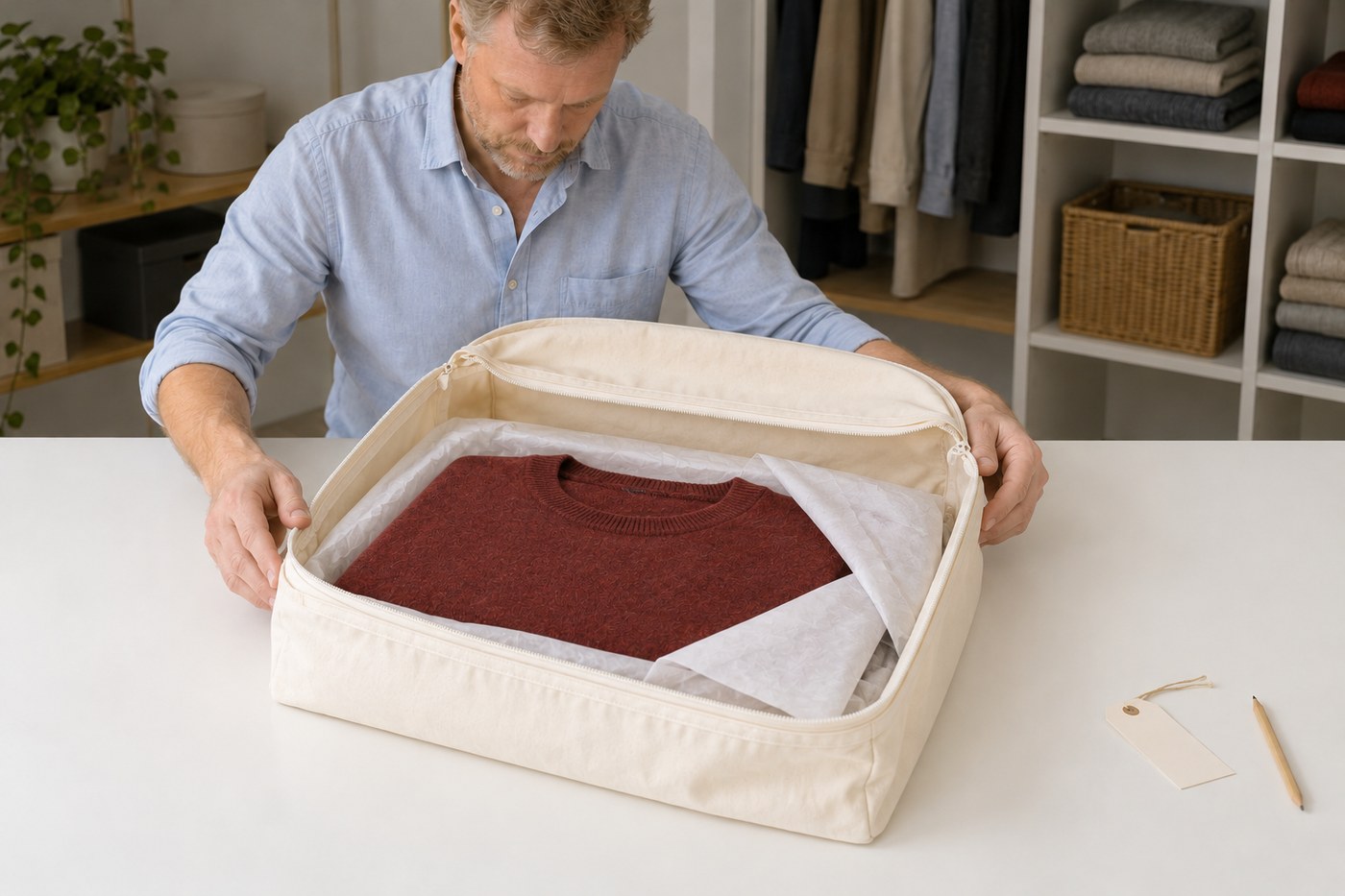
Bring the surrounding tissue loosely around the folded jumper so the knit is protected from the bag closure. Lift the supported parcel from underneath and lower it flat into the open bag. Do not push it down with a palm or pile heavy clothing above it. Keep tissue and fibres clear of the zip before closing gently. If the closure pulls tight, reopen and use a roomier bag rather than compressing the wool.
Photorealistic illustration · Waey
5. Label separately and store without crushing
Write the garment description, packing date and next check date on a separate tag away from the textile, then attach it to the bag handle or zip pull without piercing the jumper. Put the bag flat on the prepared shelf where it can be lifted easily for checks. Keep other stored items from pressing on it. Do not add scented blocks, mothballs or a vacuum seal to this simple cotton-bag method.
Photorealistic illustration · Waey
6. Inspect monthly and respond to changes
Set a monthly reminder to open the bag carefully and inspect the jumper, tissue and nearby shelf for moisture, musty smell, new holes, larvae or webbing. Support and unfold gently rather than tugging at a sleeve. If there is a problem, keep the affected item separate from clean clothes and seek suitable advice before repacking. If all is well, renew damaged tissue, vary the fold position slightly and return the loose parcel to storage.
Watch the method
Knitwear Care 101: How to Wash, Store & De-Pill Your Sweaters
The storage chapter starts at11:49 and shows folding and stored knitwear. Use the written tissue-supported cotton-bag method here; the video’s washing, shaving and pest-treatment advice is outside this guide.
Adeline Loke · English (auto-caption metadata; audio unconfirmed)
Watch on YouTube ↗Final checks
Clean and fully dry garment; loose supported folds; no caught fibres or tight closure; flat uncrushed bag in a suitable accessible location; contents/date label and monthly check scheduled.
Sources
Woolmark — How to store wool clothes ↗
GW University Museum and The Textile Museum — Storing textiles ↗
GW University Museum and The Textile Museum — Caring for textiles ↗
AI-generated representative photographic illustrations by Waey using only Waey-generated references. No third-party photographs reused. External video belongs to its credited creator.