
Wash and sort empty balcony pots
Remove old soil from empty pots, check for damage and store them cleanly before the next planting. This is routine washing, not a disinfection treatment.
What will you learn?
Remove old soil from empty pots, check for damage and store them cleanly before the next planting. This is routine washing, not a disinfection treatment.
Tools
- 1 nylon brush; 1 basin; glovesSearch Amazon Egypt ↗
Materials
- Empty pots and saucers; warm water; a little mild washing-up liquid; drying rackSearch Amazon Egypt ↗
Step by step
Photorealistic illustration · Waey
1. Empty and inspect each pot
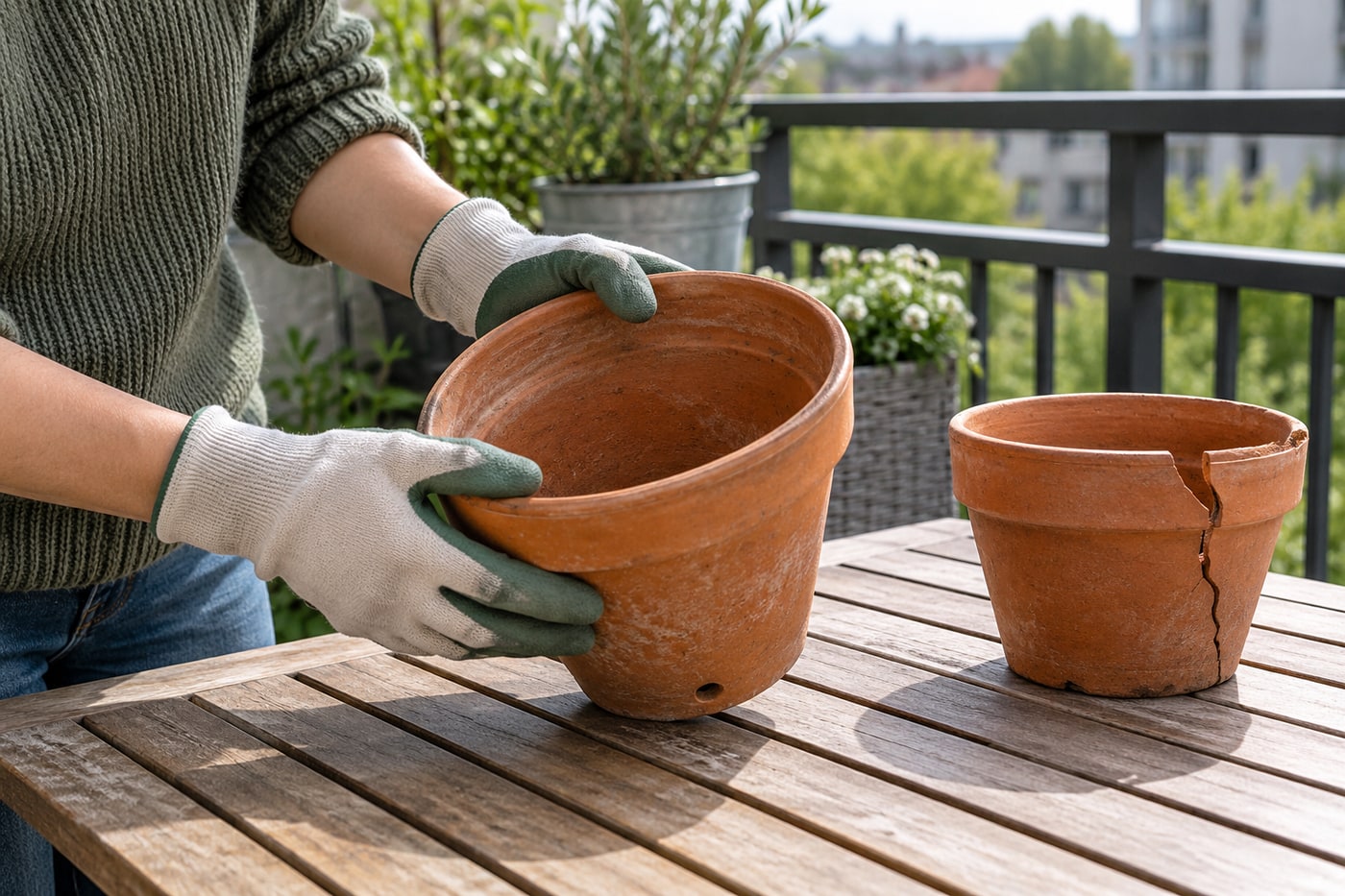
Put the empty pot on a low table and remove loose roots and leftover compost into a waste tray. Look closely around the rim, base and drainage holes for cracks or sharp chips. A damaged pot may break when lifted full of wet soil, so set it aside now. Keep pots that held diseased plants separate from the healthy group; washing alone does not make them safe to reuse.
Photorealistic illustration · Waey
2. Brush off the dry residue
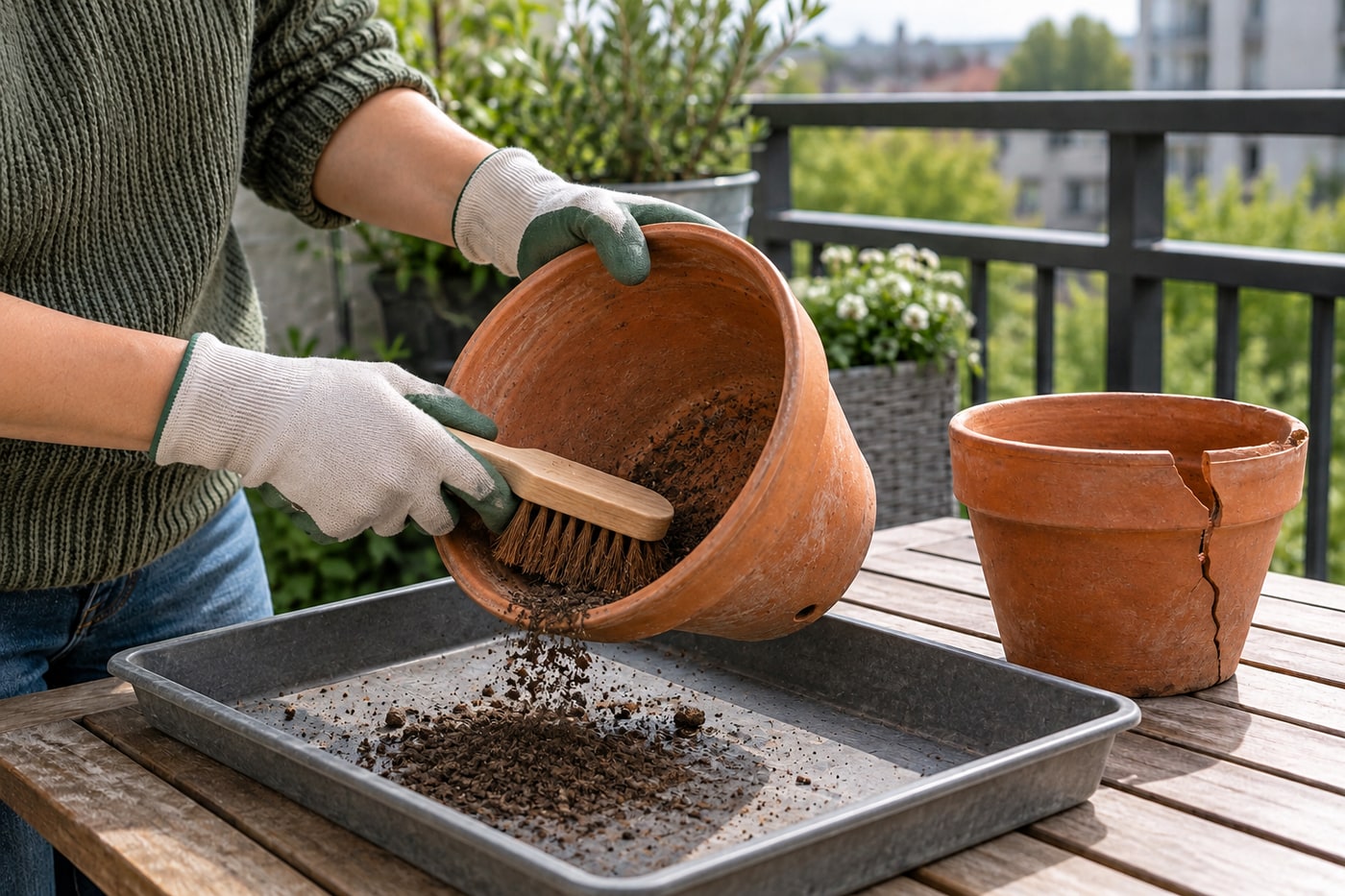
Brush loose soil from the inside, outside and drainage openings while holding the pot over a tray. Use light pressure rather than scraping with a knife, which can gouge plastic or create sharp chips. Removing most soil before washing keeps the water cleaner and makes stuck deposits easier to see. If a pot is very dusty, dampen the residue first so it does not become airborne.
Photorealistic illustration · Waey
3. Wash, then rinse thoroughly
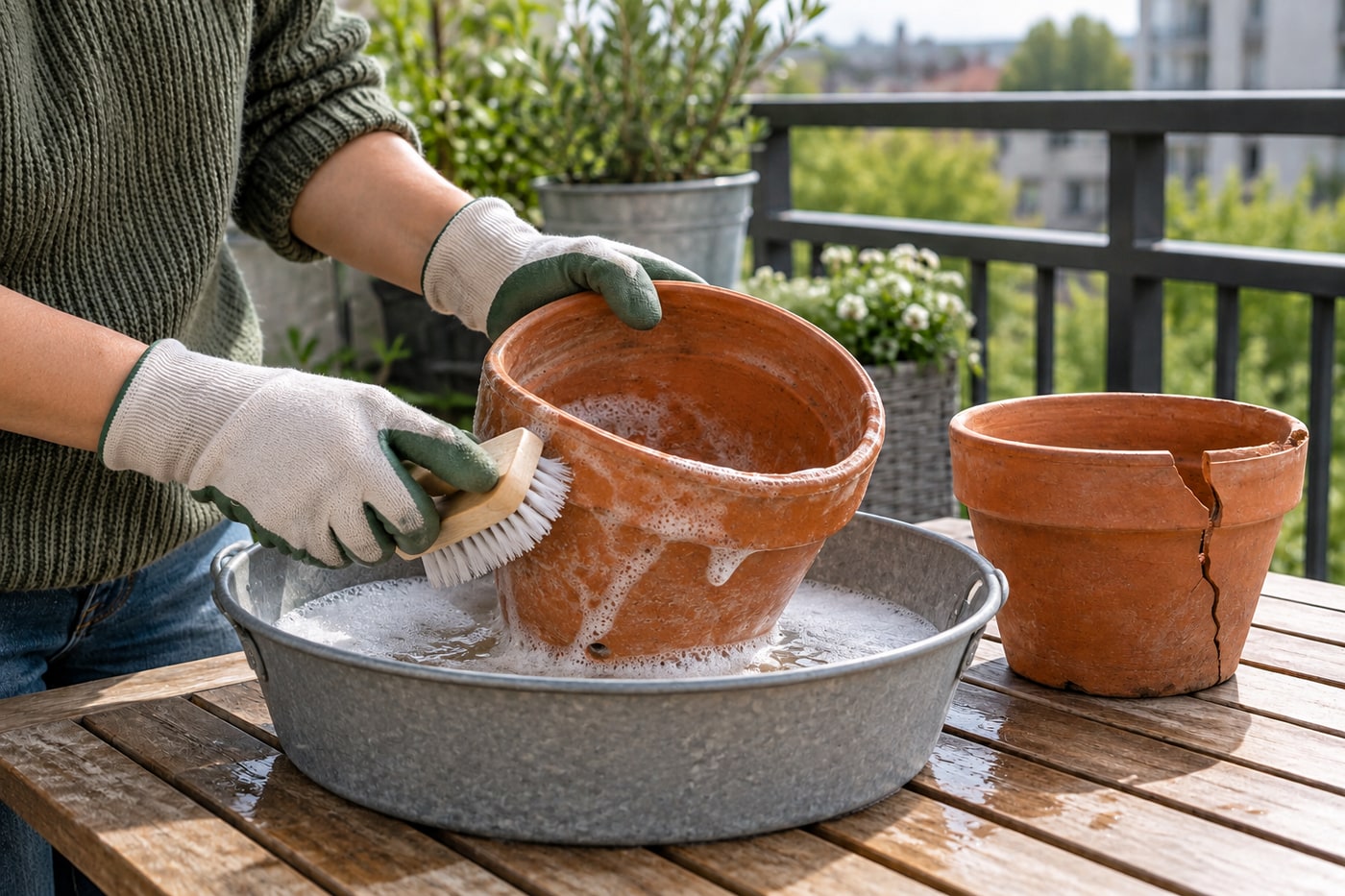
Use warm water with a small amount of mild washing-up liquid and scrub with the nylon brush. Work around the base and under the rim, where residue collects. Rinse with clean water until the surface no longer feels slippery and no soap remains in the holes. Do not mix cleaners or add bleach to the wash water; routine washing and disease disinfection are different tasks.
Photorealistic illustration · Waey
4. Dry and store off the floor
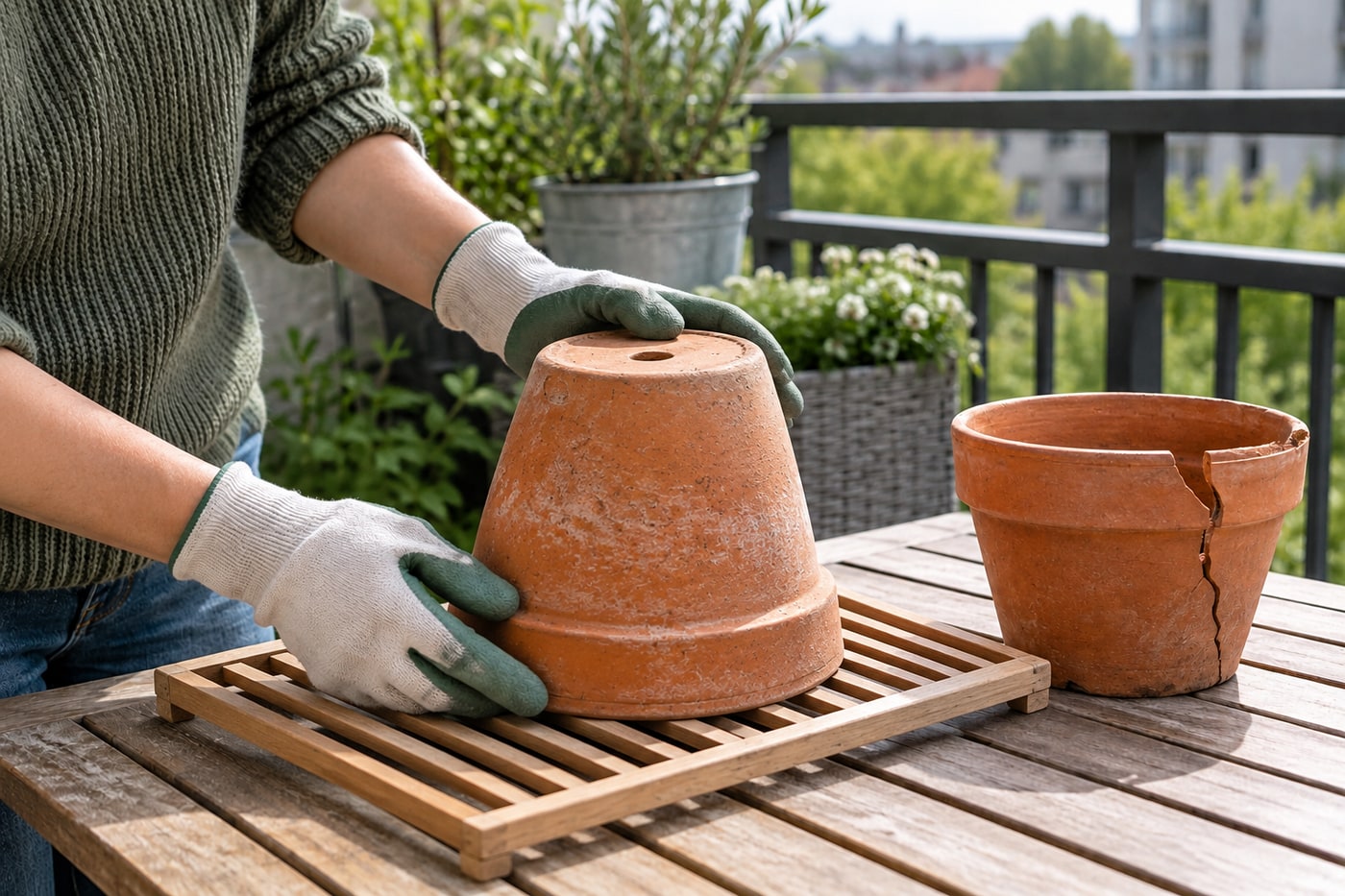
Drain the pots upside down on a rack and leave them until fully dry. Stack only sound, dry pots without forcing them together, and keep them on a secure shelf away from fresh soil and splashback. Dry storage makes the next inspection easier and avoids trapping moisture between nested pots. Before planting, check the drainage holes again and follow any required disinfection advice for the previous crop.
Final checks
The pot has no loose soil, soap film, cracks or blocked holes. If the previous plant had disease, do not treat a clean appearance as proof that pathogens are gone.
Sources
Photographs are credited beside each image. Generated photorealistic illustrations by Waey; linked videos remain with their creators.