
Wash lightly soiled microfiber cleaning cloths
Hand-wash an ordinary lightly soiled cloth when its care label permits, then rinse and air-dry it separately.
What will you learn?
Hand-wash an ordinary lightly soiled cloth when its care label permits, then rinse and air-dry it separately.
Tools
- Clean wash basin or bowl; suitable drying railSearch Amazon Ireland ↗
Materials
- Lightly soiled microfiber cloth; cool or lukewarm water; small amount of compatible detergent if the label permitsSearch Amazon Ireland ↗
Step by step
anncapictures · Pixabay Content License · Resized and JPEG optimized; original license retained
1. Check the care label and separate the cloth
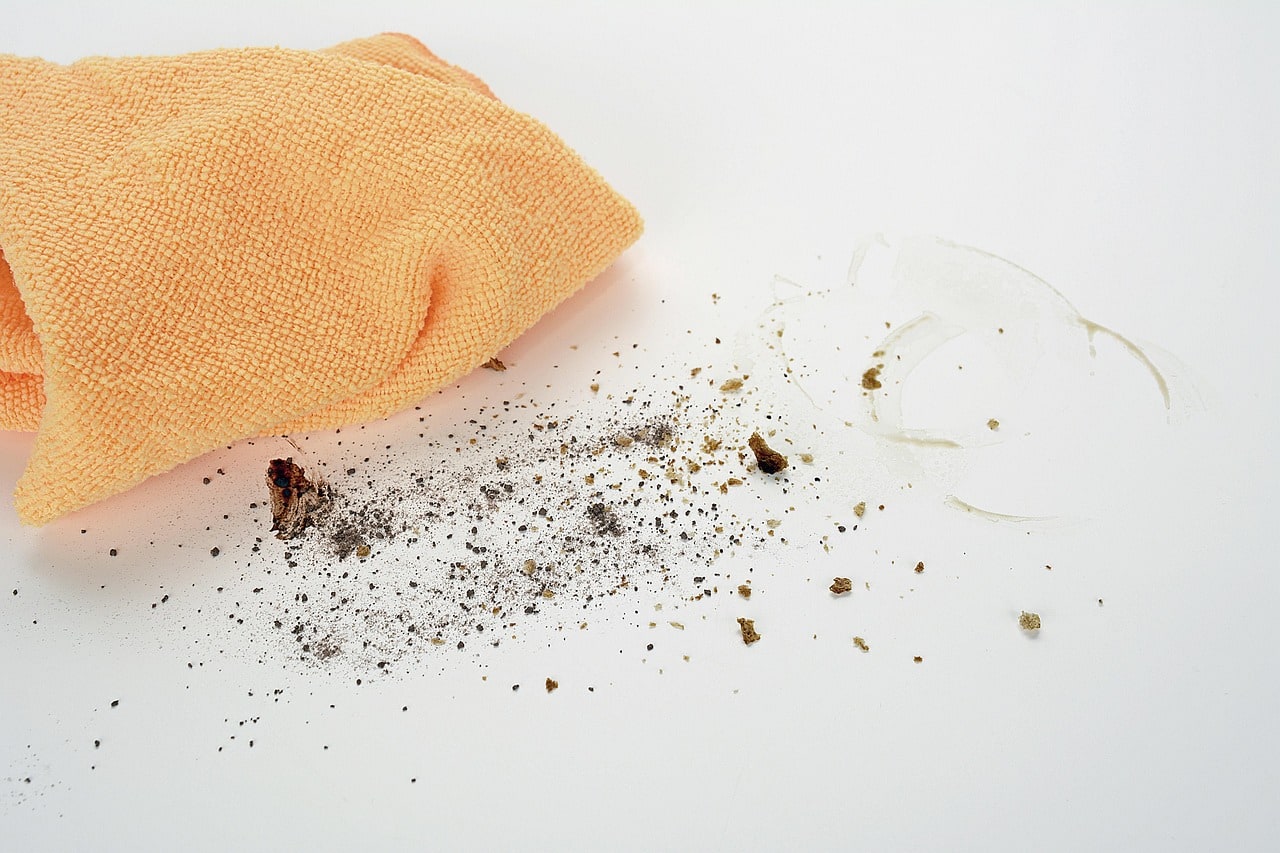
Read the cloth’s washing and drying instructions before choosing water temperature or detergent. Separate microfiber from cotton towels and other lint-shedding fabric, and keep cloths used for different tasks identified. Remove ordinary loose crumbs carefully into the waste without shaking dust toward your face or over clean food surfaces. If the cloth contains hazardous or hygiene-sensitive contamination, do not assume this light-soil hand wash is an adequate cleaning or disinfection procedure.
Waey / anncapictures · AI-adapted illustration · Pixabay Content License · AI-adapted action from credited reference; resized and JPEG optimized
2. Wash gently in permitted water and detergent
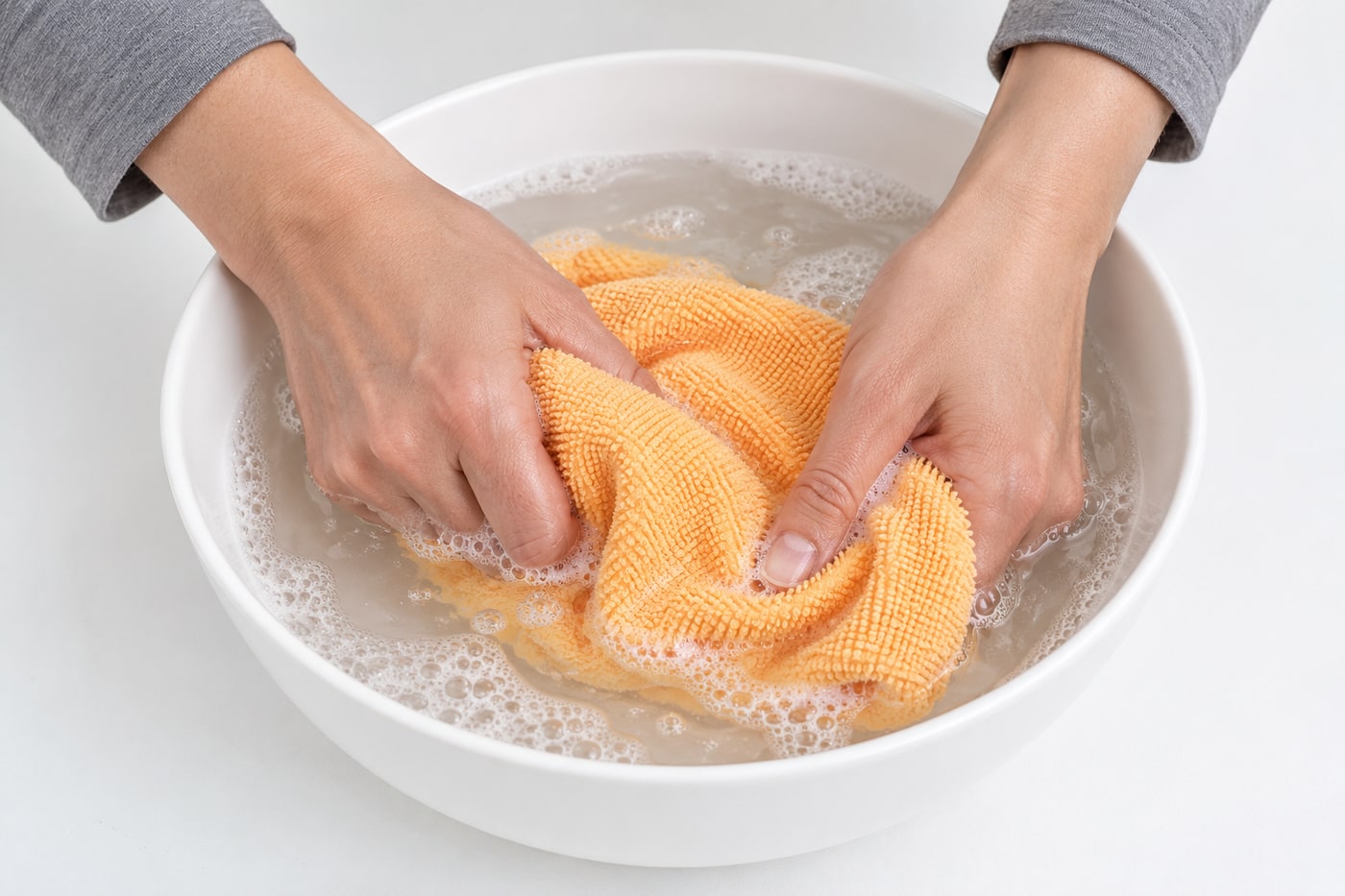
Fill a clean basin with the cool or lukewarm water permitted by the label. If a compatible mild detergent is allowed, use only the instructed small amount rather than making a strongly perfumed bath. Gently agitate the cloth and work a lightly soiled area between your hands without a stiff brush. Avoid fabric softener, which can coat the fibres and reduce performance. Stop if dye runs heavily or the material changes unexpectedly.
Waey / anncapictures · AI-adapted illustration · Pixabay Content License · AI-adapted action from credited reference; resized and JPEG optimized
3. Rinse thoroughly and remove excess water gently
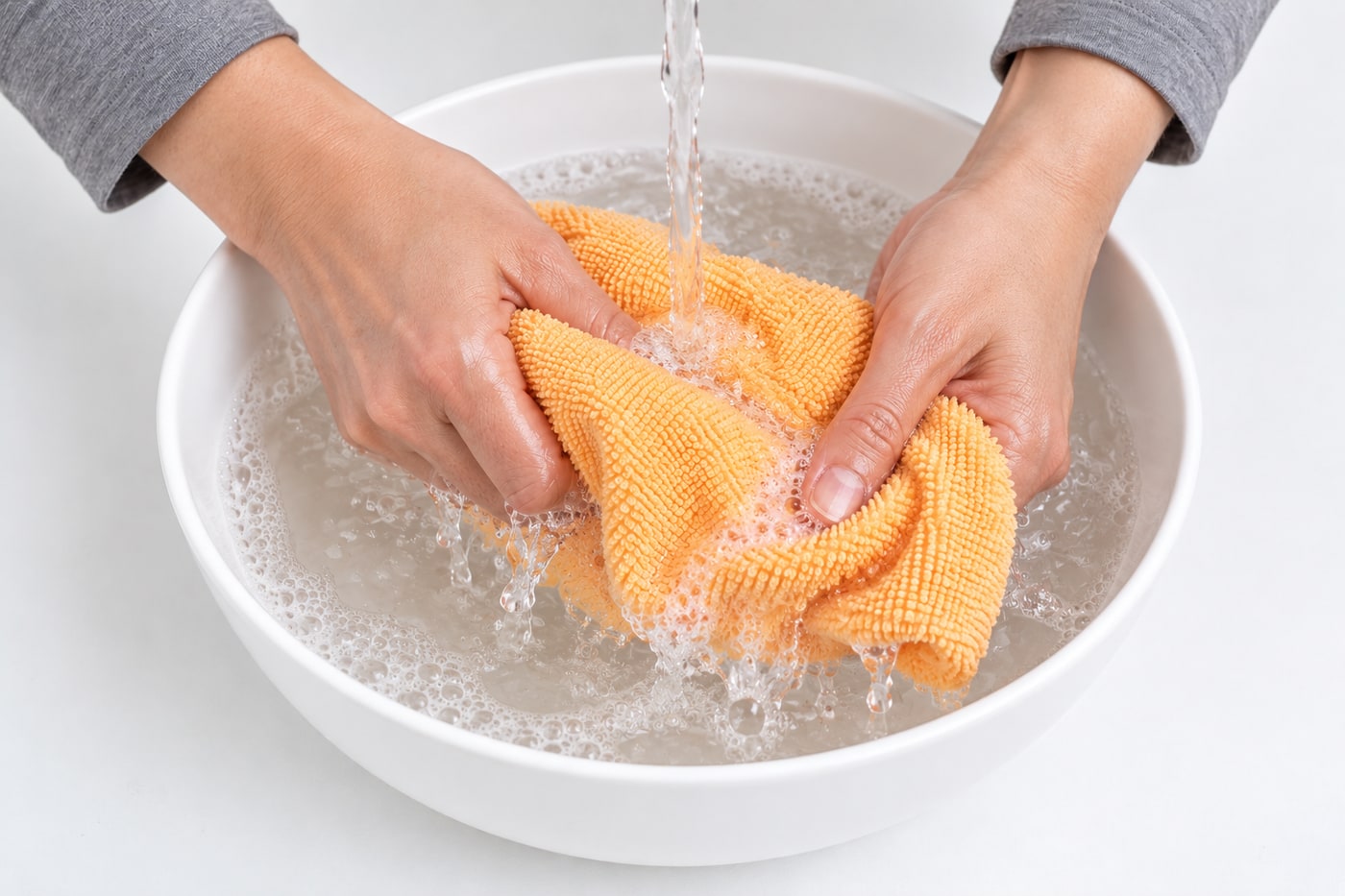
Rinse the cloth in clean water until detergent residue is removed, following the product’s care instructions. Keep it away from other laundry so lint is not transferred back onto the fine fibres. Squeeze out excess water without harsh twisting that strains an edge or seam. If ordinary dirt remains, follow the labelled washing method rather than adding an incompatible household chemical or claiming that extra foam makes the cloth hygienically safe.
Waey / anncapictures · AI-adapted illustration · Pixabay Content License · AI-adapted action from credited reference; resized and JPEG optimized
4. Air-dry unfolded and store by task
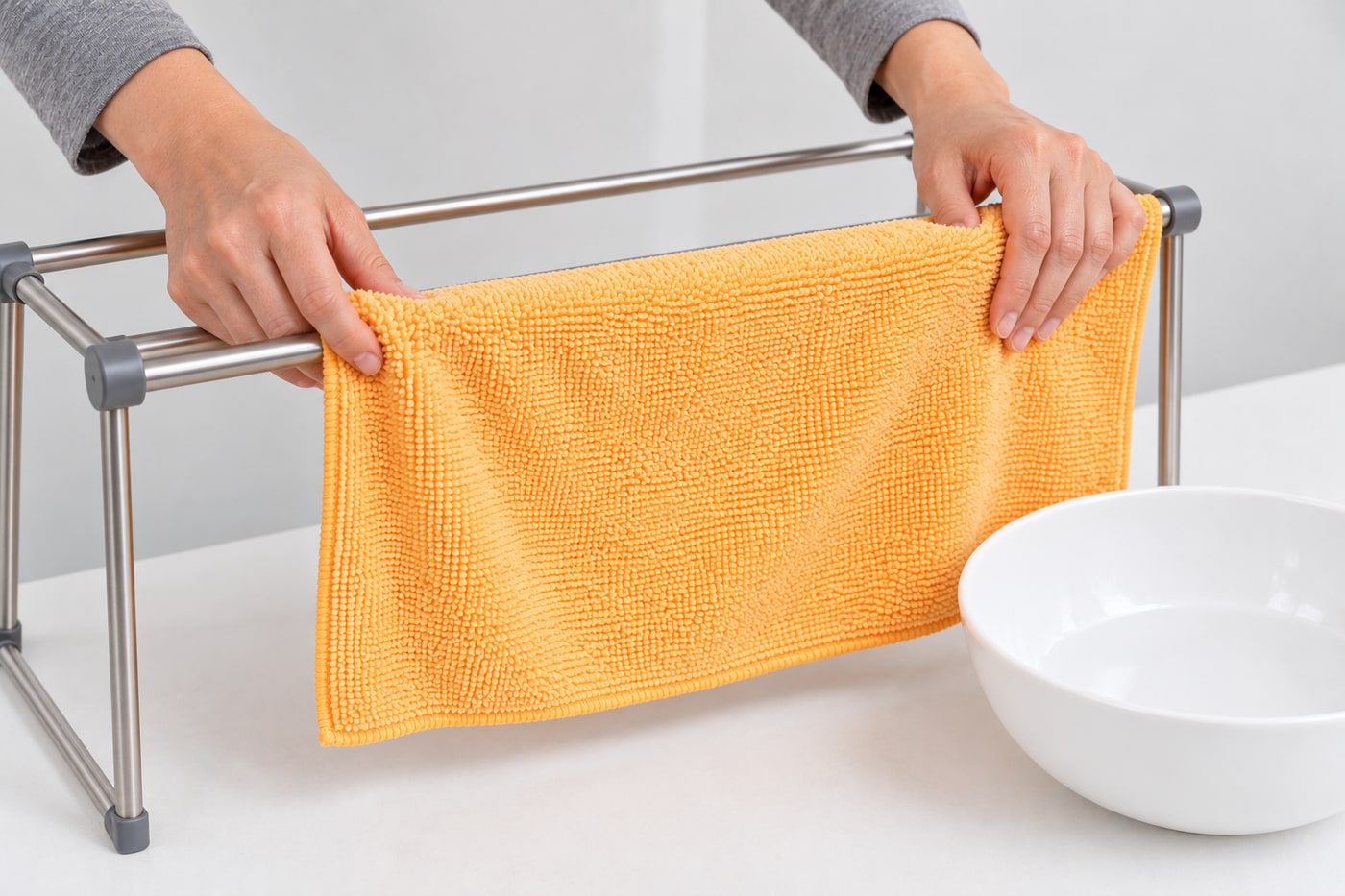
Spread the cloth open on a clean drying rail in a suitable ventilated place, keeping it away from direct heat unless the label specifically permits it. Do not leave it folded damp in a bucket or drawer. Once fully dry, store it with its task group so a floor or bathroom cloth is not casually switched to glass or kitchen work. Check that no grit remains before the next use on a delicate surface.
Final checks
A dry, clean-looking cloth is not a disinfection certificate. Follow the label and an appropriate hygiene procedure for the task, and replace damaged cloths.
Sources
Vileda: microfiber washing, no softener and unfolded drying ↗
Photographs are credited beside each image. Generated photorealistic illustrations by Waey; linked videos remain with their creators.