
Clean the exterior of a door lock
Wipe compatible exterior handle and lock surfaces gently without putting liquid inside the mechanism or electronics.
What will you learn?
Wipe compatible exterior handle and lock surfaces gently without putting liquid inside the mechanism or electronics.
Tools
- Soft non-abrasive white wipes or cloths; separate clean drying clothSearch Amazon Mexico ↗
Materials
- Mild dishwashing soap and water only if approved for the finishSearch Amazon Mexico ↗
Step by step
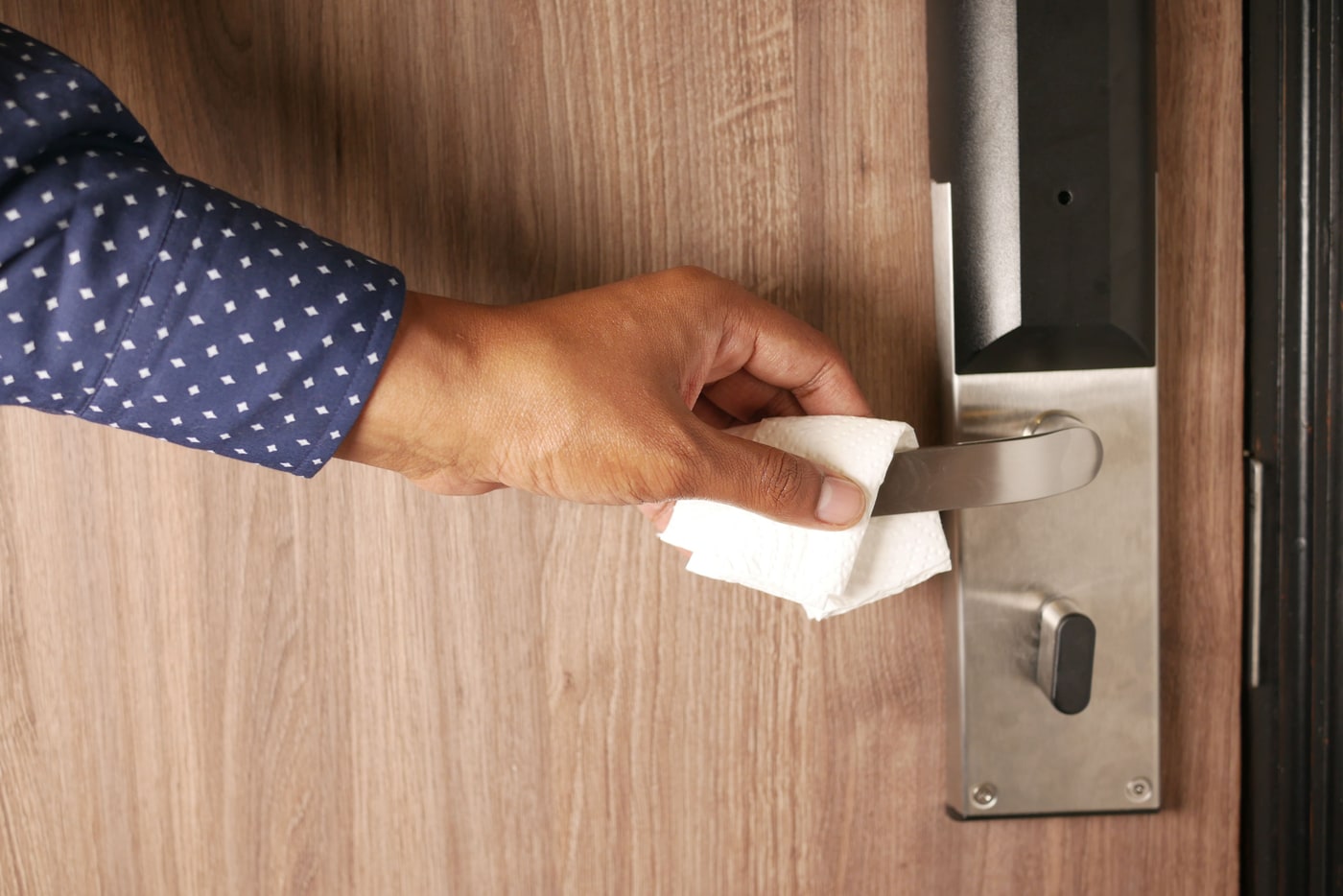
Towfiqu barbhuiya · Pexels License · Resized and JPEG optimized; original license retained
1. Identify the finish and check its care guidance
Find the care instructions for the lock and handle finish before adding a cleaning product. Brushed metal, plated finishes and electronic readers can have different restrictions even when they look similar. Remove loose surface dust gently with a soft dry wipe, keeping the door under control and access available. If the coating is flaking or the hardware is loose, arrange appropriate maintenance rather than trying to polish away the problem during cleaning.
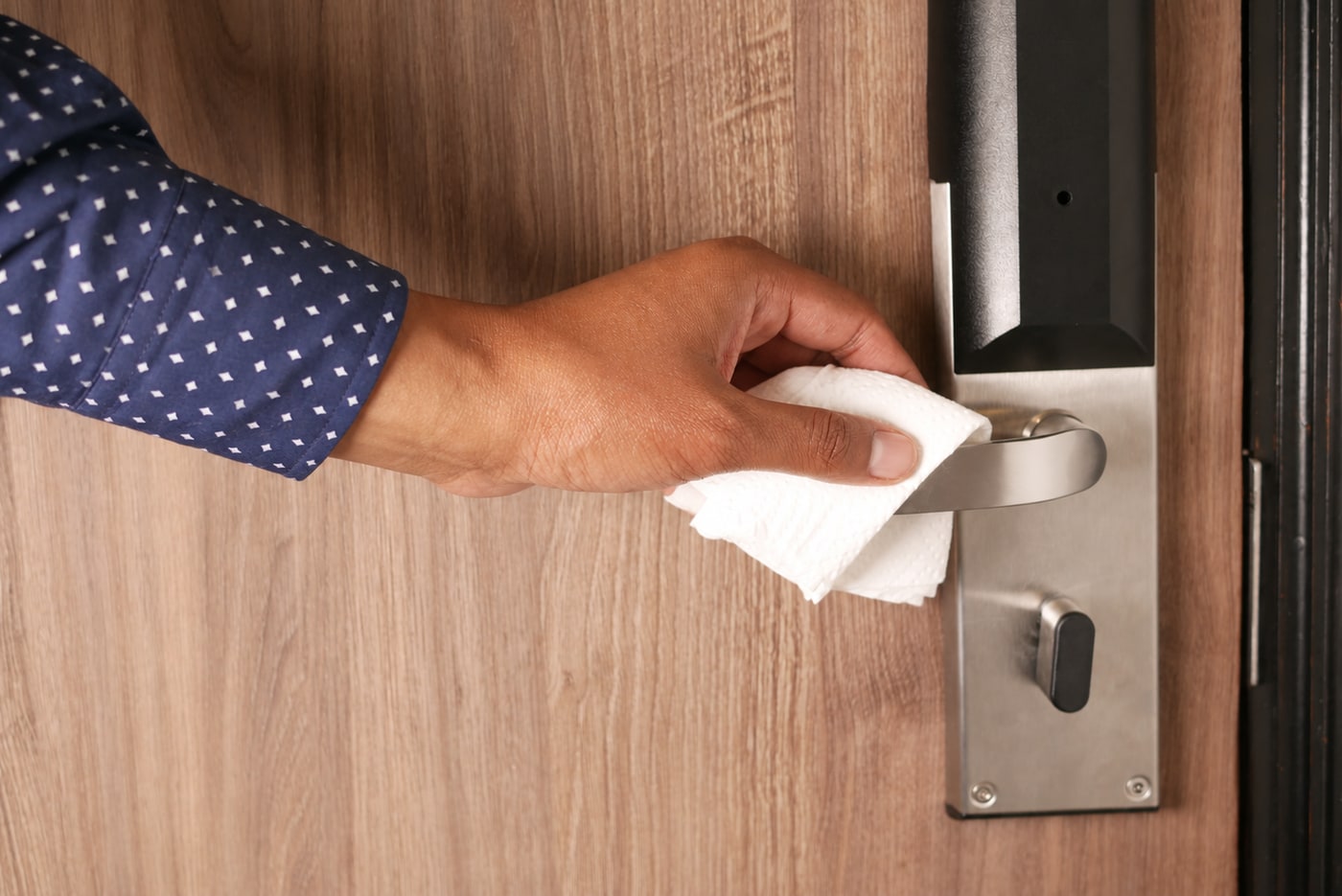
Waey / Towfiqu barbhuiya · AI-adapted illustration · Pexels License · AI-adapted action from credited reference; resized and JPEG optimized
2. Wipe approved surfaces with minimal moisture
If the maker permits mild soap and water, dampen a soft wipe with a small amount and wring it out so it cannot drip. Gently clean the outside handle and approved plate surfaces, using a fresh fold as dirt lifts. Apply the liquid to the wipe away from the lock, never spray the hardware. Keep moisture out of joints, the key opening and electronic gaps instead of soaking a stubborn mark.
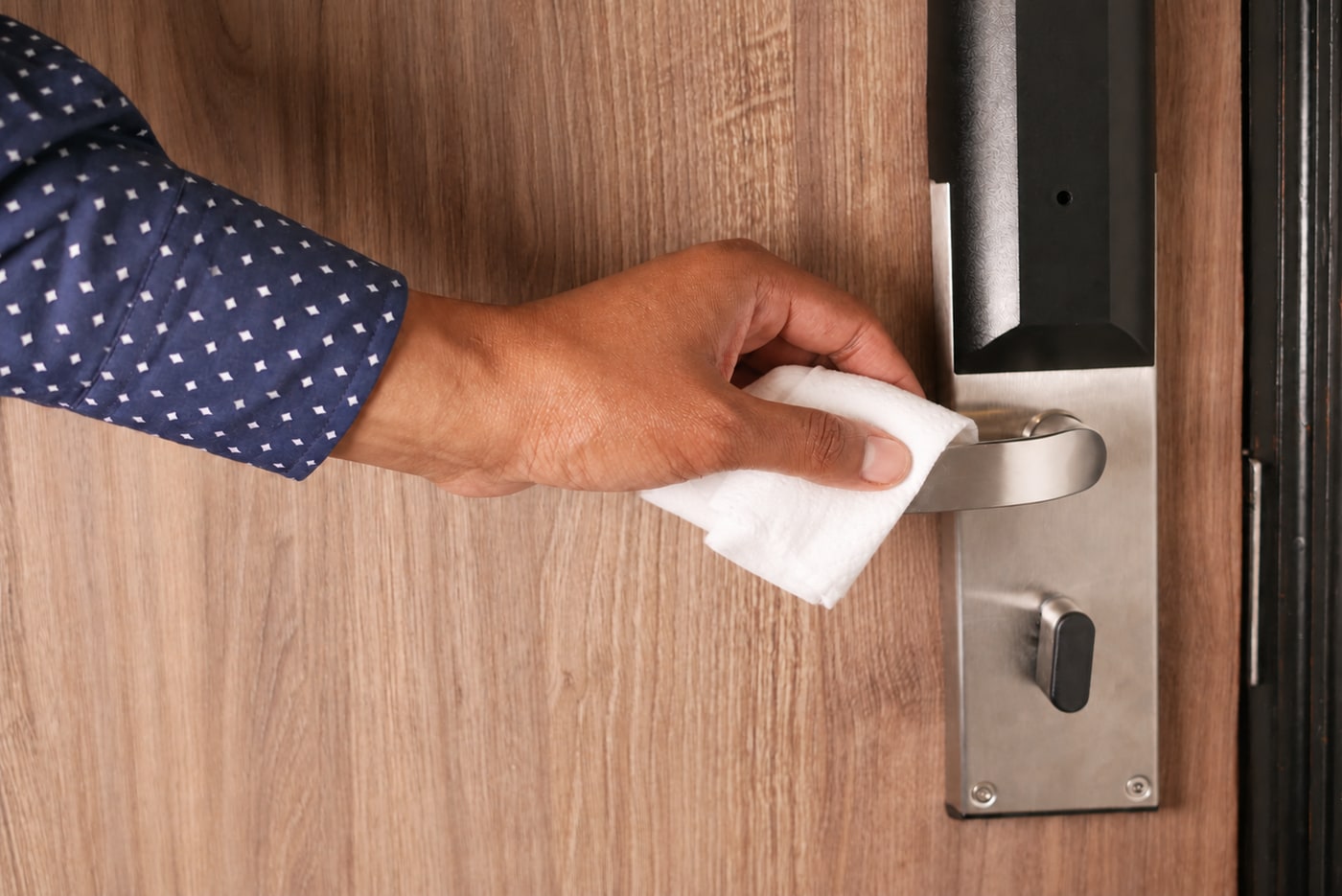
Waey / Towfiqu barbhuiya · AI-adapted illustration · Pexels License · AI-adapted action from credited reference; resized and JPEG optimized
3. Remove remaining soap with a fresh barely damp wipe
Use a fresh soft wipe lightly dampened with clean water to remove detergent from the permitted surfaces. Keep the same low-moisture approach and avoid carrying dirty liquid into crevices. Do not scrape around buttons or use a metal point to clean a narrow seam. If a mark does not lift by the approved method, leave it for finish-specific advice; a stronger household cleaner can damage a coating without improving the lock’s function.
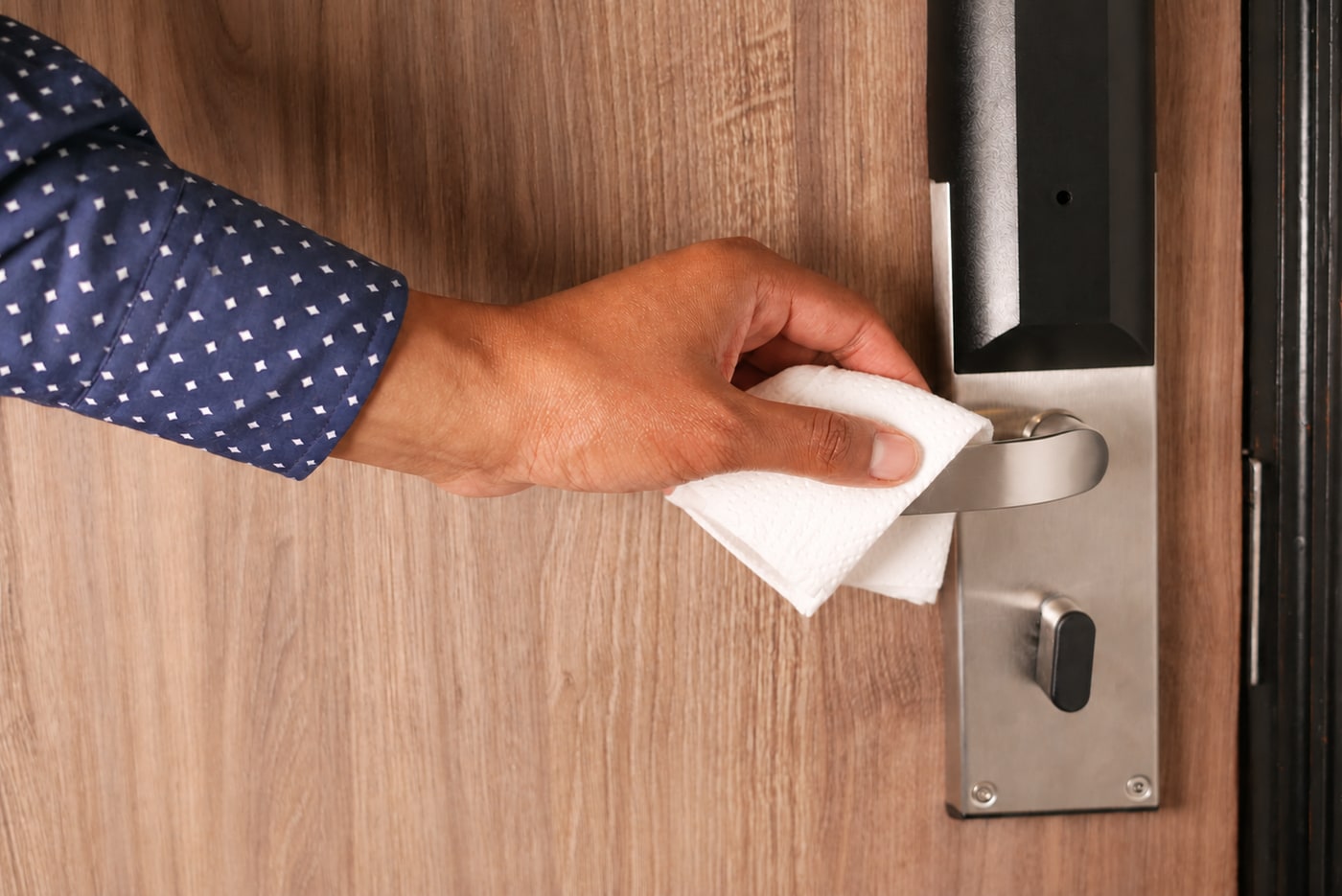
Waey / Towfiqu barbhuiya · AI-adapted illustration · Pexels License · AI-adapted action from credited reference; resized and JPEG optimized
4. Dry promptly and check ordinary operation
Dry the cleaned exterior immediately with a clean soft cloth, including the underside of the handle where moisture can remain. Remove cleaning items from the doorway and check the handle’s ordinary movement while maintaining access. Cleaning is complete when the approved surfaces are dry and free from residue; it does not establish the condition of internal parts. If locking remains unreliable, contact the responsible locksmith or hardware service rather than adding liquid or lubricant at random.
Final checks
Keep liquid outside the hardware. Seek model-specific help for sticking, damage or unreliable locking; exterior cleaning is not a mechanism repair or a disinfection guarantee.
Sources
Photographs are credited beside each image. Generated photorealistic illustrations by Waey; linked videos remain with their creators.