
Label and store leftover water-based paint
Keep a small amount of sound wall paint ready for future touch-ups by preserving its original label and adding clear project details.
What will you learn?
Keep a small amount of sound wall paint ready for future touch-ups by preserving its original label and adding clear project details.
Tools
- 1 permanent marker; old cloth; gloves required by the paint label; rubber mallet if the lid instructions permitSearch Amazon USA ↗
Materials
- Original paint tin and matching lid; additional label; protective tray or clothSearch Amazon USA ↗
Step by step
Photorealistic illustration · Waey
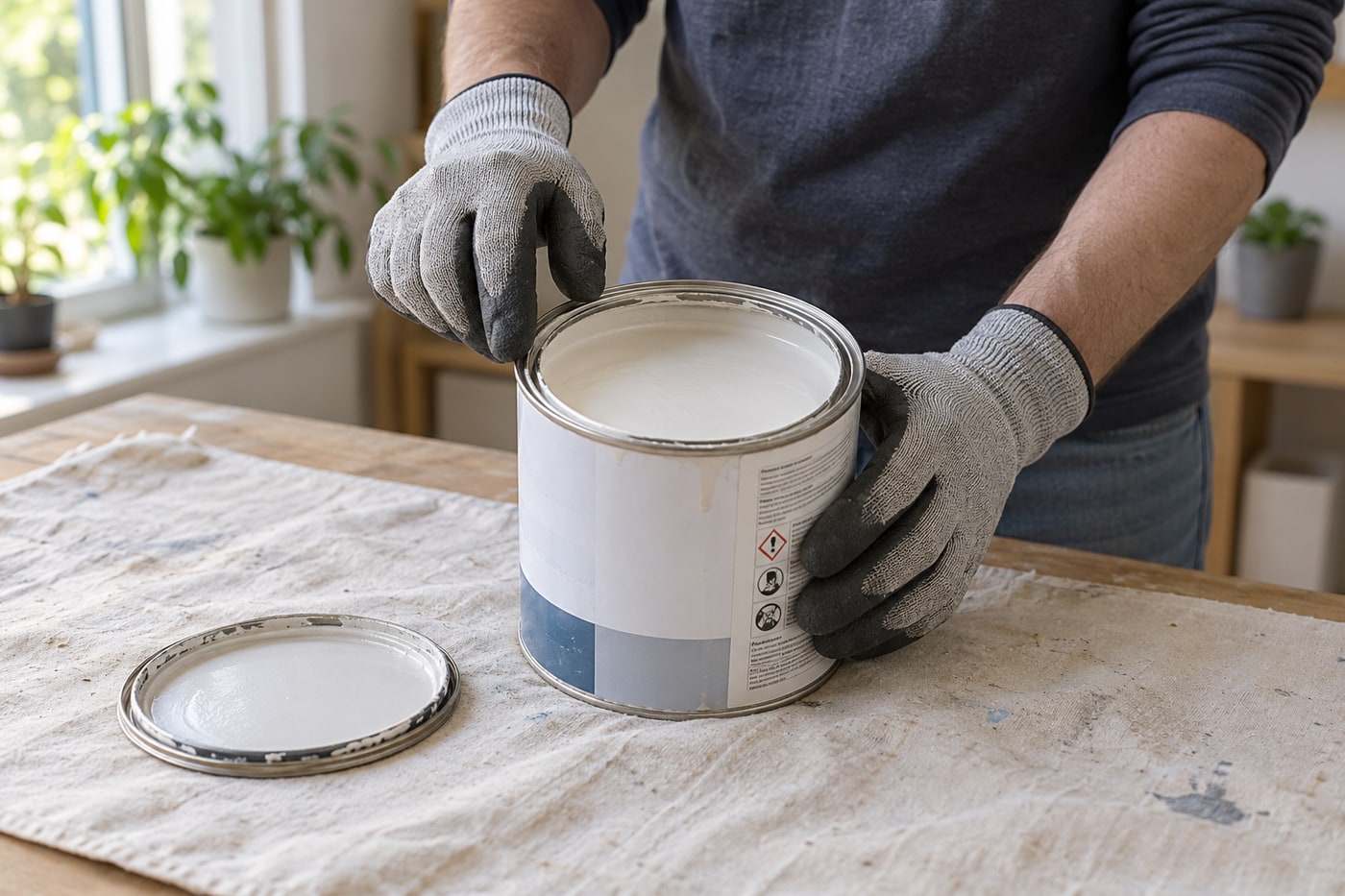
1. Identify what is worth keeping
Read the original tin to confirm the product type, colour and finish before opening it. Keep only paint you can identify in a container that is not leaking or badly rusted. Note where you used it and whether you realistically need it for a touch-up. Do not mix unknown leftovers to save space; a different sheen or product can dry differently even when the wet colour looks similar.
Photorealistic illustration · Waey
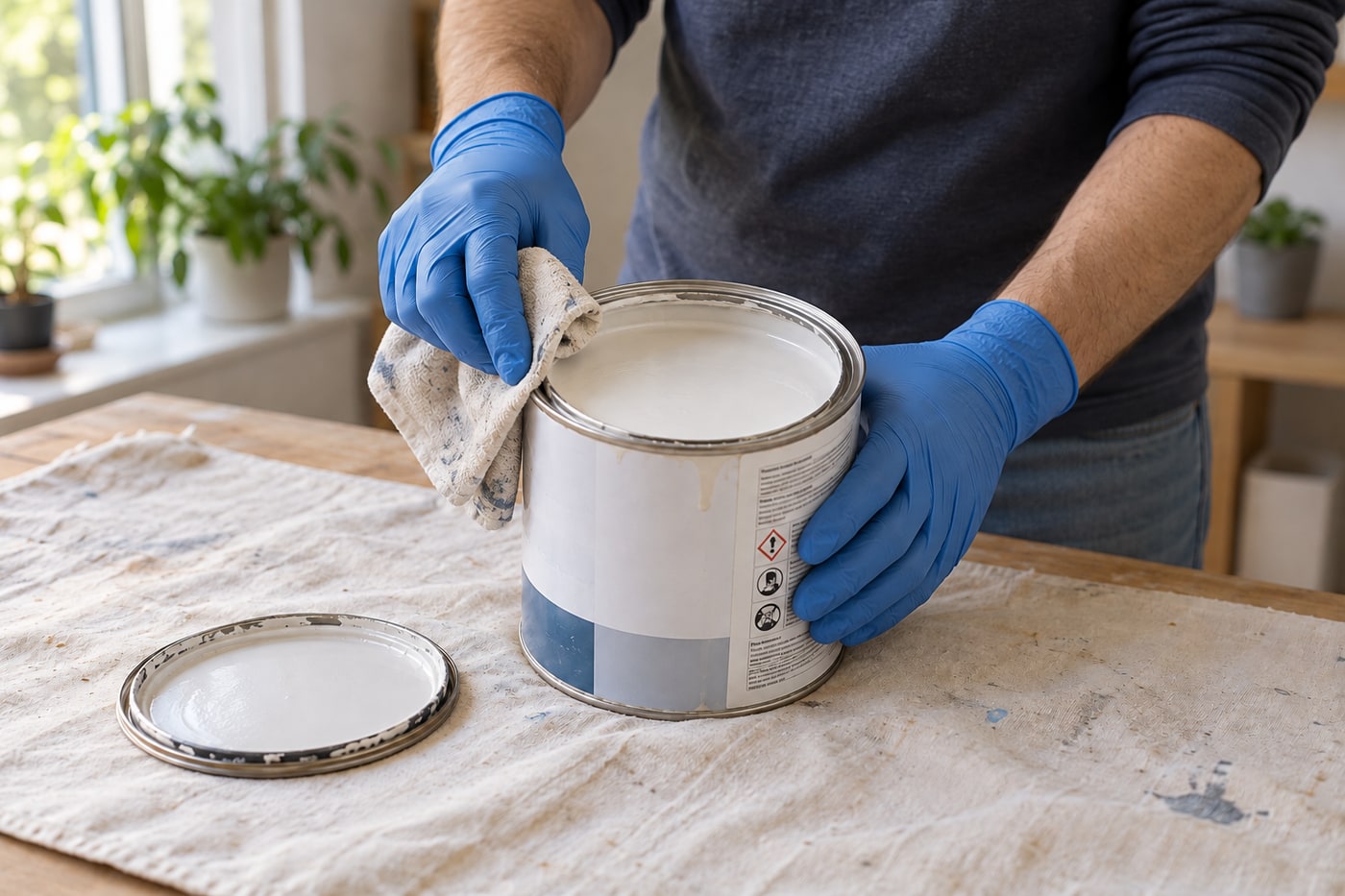
2. Clean the rim and close the matching lid
Work on a protected surface and wipe wet paint from the rim with an old cloth, following the product’s handling advice. Remove debris that would stop the matching lid seating evenly. Close it as the container instructions specify, using gentle, even pressure rather than denting one side. A damaged rim lets air in and can turn useful paint into a dried skin or a leaking container.
Photorealistic illustration · Waey
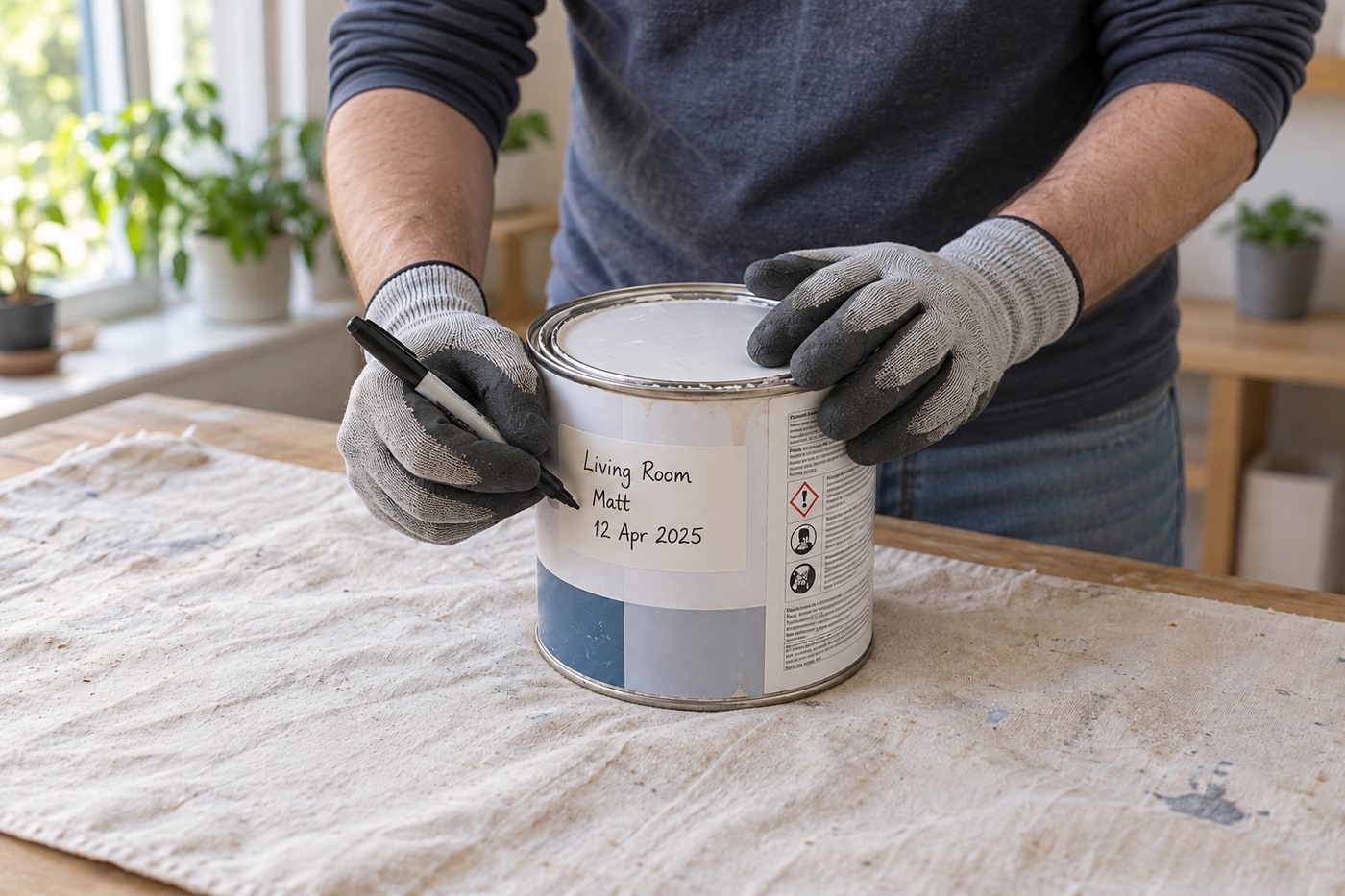
3. Add project details without hiding the original label
Write the room or surface, colour name and code, finish, product name and the date on an extra label. Keep the manufacturer’s safety and product information readable, and record the same details in a notebook or a photo for backup. Clear identification is more useful than a dab of dried colour alone: two similar-looking whites can have different finishes and show up differently on the wall.
Photorealistic illustration · Waey
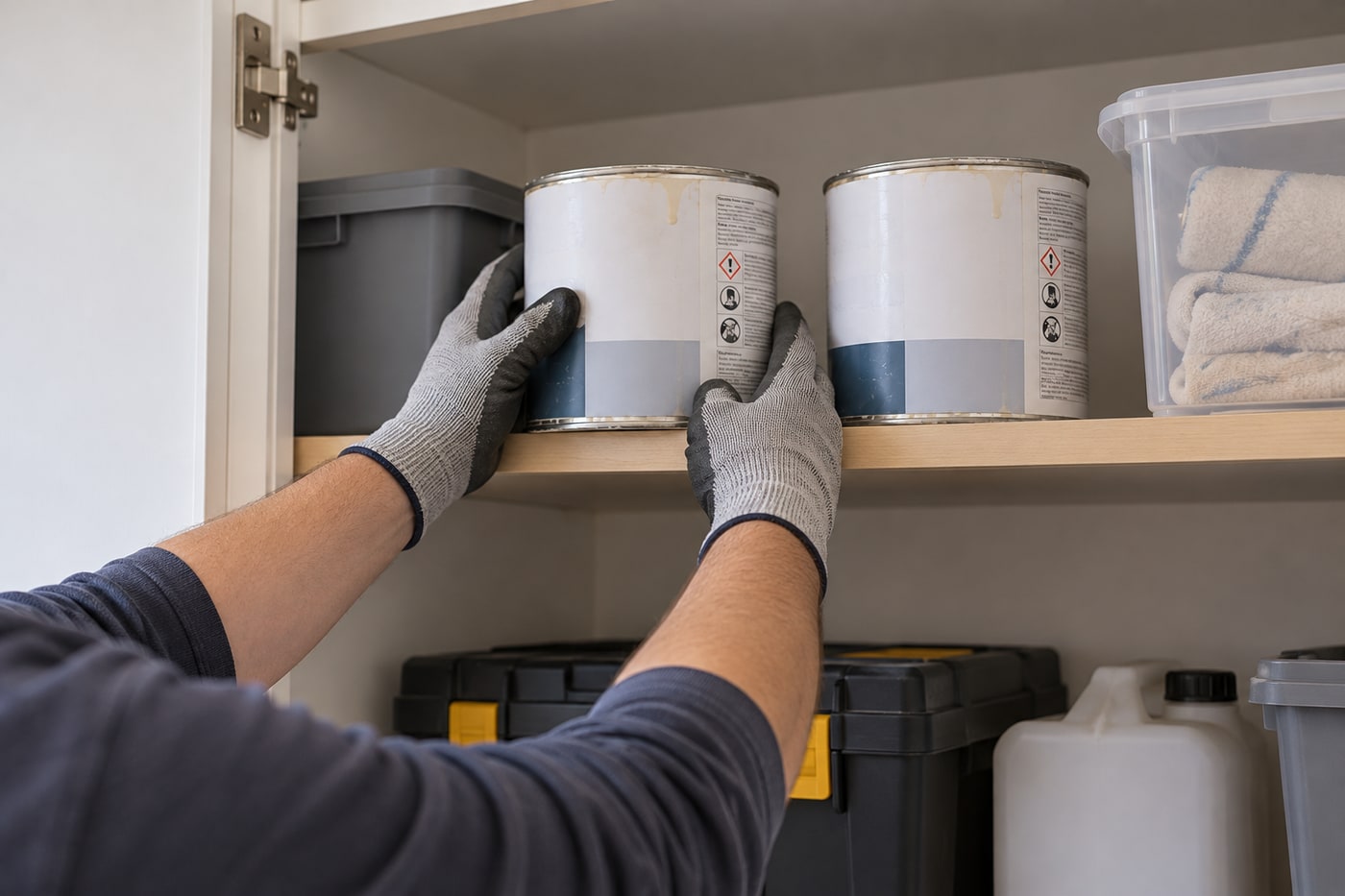
4. Store upright in a suitable secure place
Choose a dry, secure place within the temperature range on the tin, away from direct sun and sources of heat. Keep the sealed container upright where it cannot be knocked over, and separate it from food and household drinking containers. Before a later touch-up, check the paint and test on a discreet area. Ask your local waste service about unwanted paint; disposal rules differ by country and locality.
Final checks
The lid is properly seated, the original label remains readable and the storage place meets the tin’s instructions. Do not assume an old tin is usable just because it has been sealed.
Sources
Photographs are credited beside each image. Generated photorealistic illustrations by Waey; linked videos remain with their creators.