
Sweep a paved garden path gently
Remove loose leaves and surface grit with a broom while noticing drainage and trip problems that need separate attention.
What will you learn?
Remove loose leaves and surface grit with a broom while noticing drainage and trip problems that need separate attention.
Tools
- Suitable outdoor broom; dustpanSearch Amazon USA ↗
Materials
- Waste container for collected debrisSearch Amazon USA ↗
Step by step
Photorealistic illustration · Waey
1. Assess the path before starting
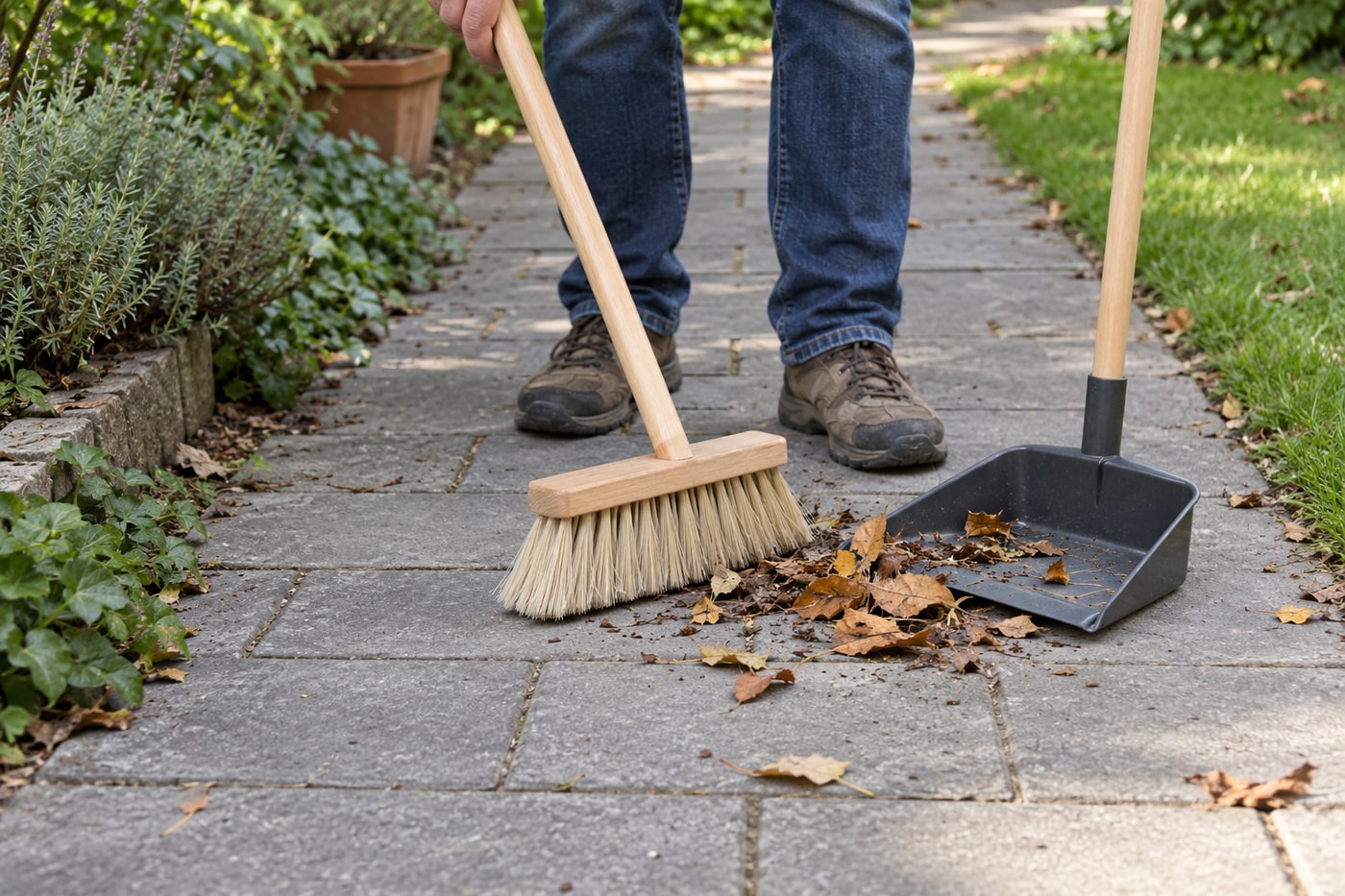
Walk along the accessible dry edge and look for slippery growth, loose slabs, sharp debris and changes in level. Move light movable objects out of the working area without blocking the exit. If a section feels unstable or is unsafe to approach, keep people away and arrange a separate assessment. Sweeping is for loose surface dirt; it will not fix settlement, damaged joints or a persistent drainage problem beneath the paving.
Photorealistic illustration · Waey
2. Sweep with light controlled strokes
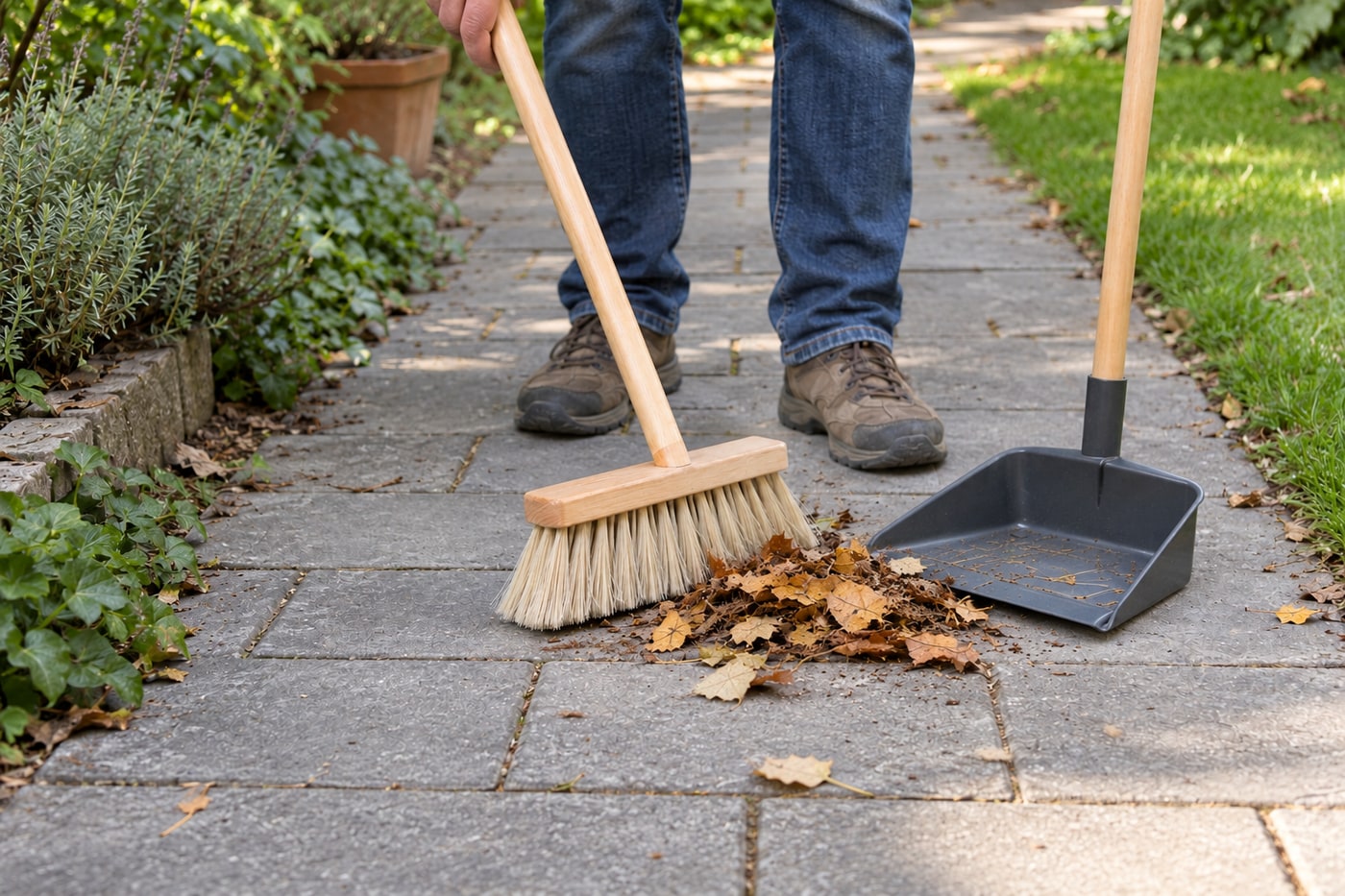
Start at one end and move loose leaves and grit into a small collection area, using a broom suitable for the surface. Keep strokes light enough that you are not digging out the joint material between pavers. Work with the layout so debris does not scatter into planted beds or drains. If dirt is stuck, pause and consult the paving care guidance rather than scraping aggressively with a metal edge.
Photorealistic illustration · Waey
3. Collect debris instead of pushing it away
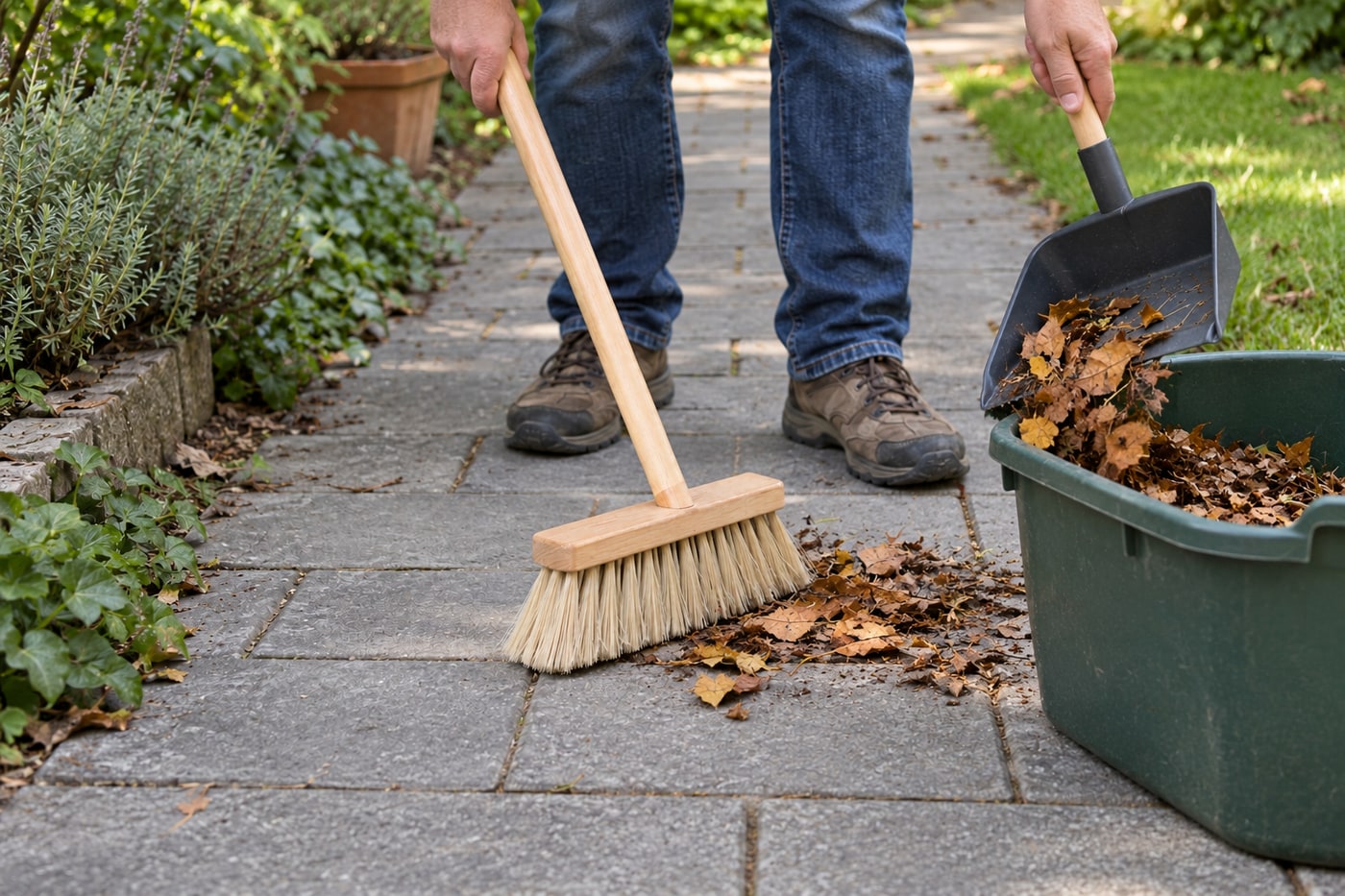
Lift the gathered leaves and grit with a dustpan and put them in the appropriate local waste stream. Do not sweep them into a surface-water drain, where they can collect and obstruct flow. Separate anything sharp without handling it directly. Check behind the dustpan for a remaining gritty line, then make one light finishing pass so loose particles do not remain where people step through the route.
Photorealistic illustration · Waey
4. Check the clear route and note defects
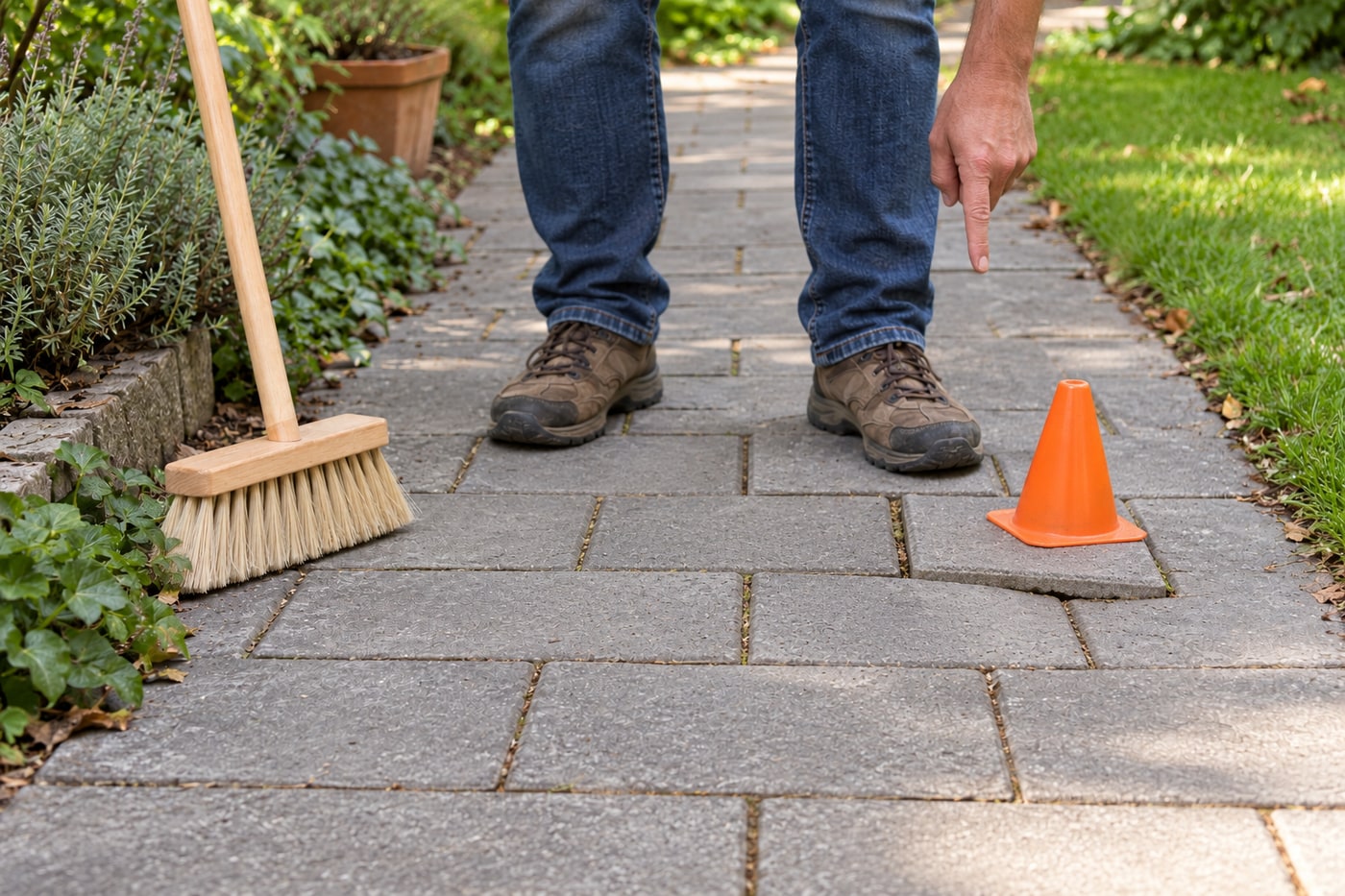
Once the loose debris is gone, look again for exposed uneven edges, damaged joints or water that repeatedly remains after rain. Record their location and keep a hazardous section out of use until it is properly addressed. Return furniture only where it leaves a clear walking route. A short regular sweep usually keeps leaves from building into a wet layer, making future checks easier without relying on aggressive cleaning.
Final checks
The finished path should be clear of loose debris. Algae, staining, unstable slabs and poor drainage require appropriate separate care rather than stronger sweeping.
Sources
Photographs are credited beside each image. Generated photorealistic illustrations by Waey; linked videos remain with their creators.