
Blot a fresh water-based upholstery spill
Lift a fresh liquid spill with dry absorbent cloths, then use the furniture’s care instructions to decide any further treatment.
What will you learn?
Lift a fresh liquid spill with dry absorbent cloths, then use the furniture’s care instructions to decide any further treatment.
Tools
- Clean white absorbent cloths or plain white paper towelsSearch Amazon South Africa ↗
Step by step
Photorealistic illustration · Waey
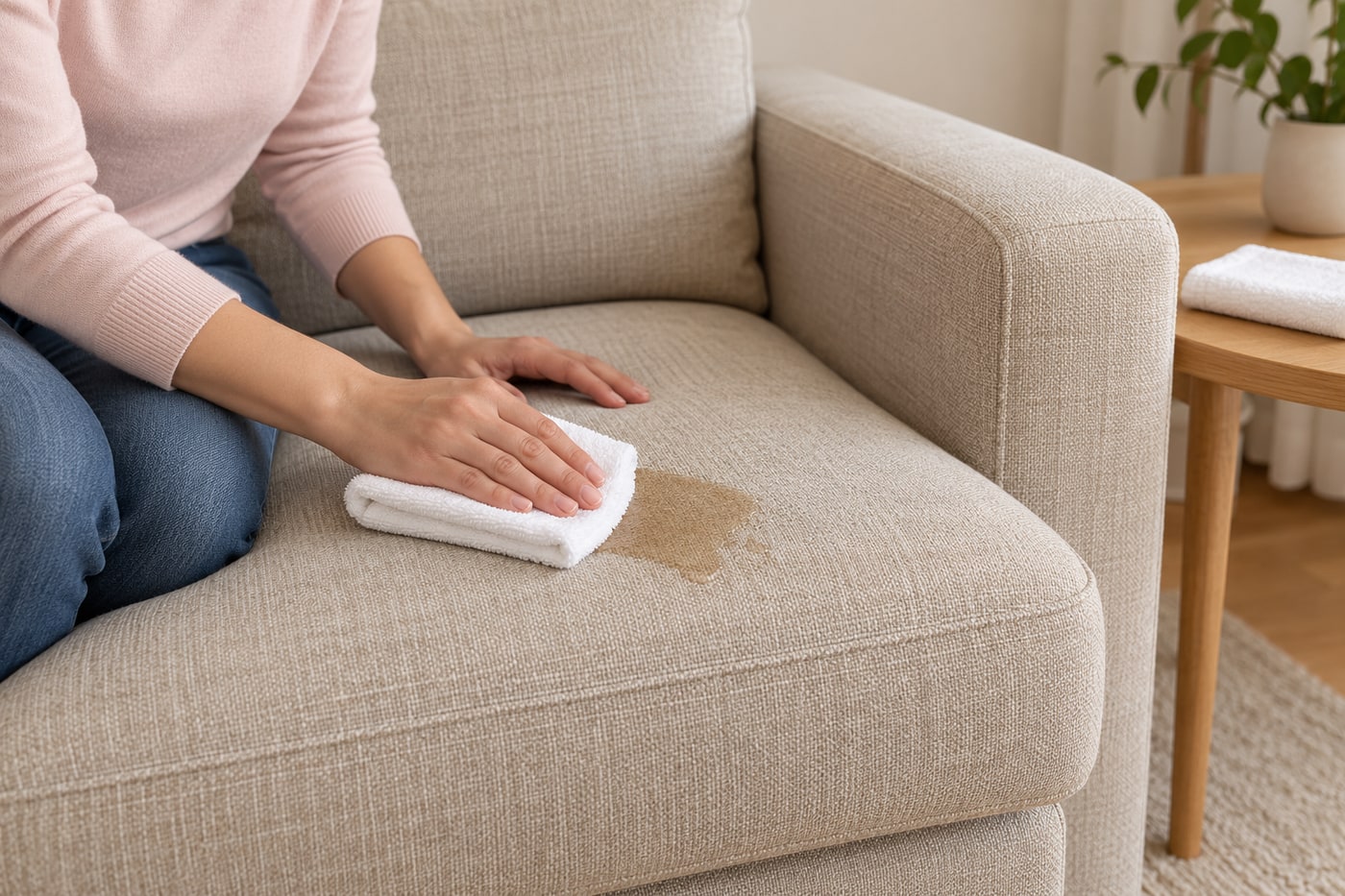
1. Blot fresh liquid immediately with a dry cloth
Place a clean white absorbent cloth over the fresh spill and press gently, lifting it between presses rather than rubbing across the fabric. Work from the outer edge toward the centre so liquid is not pushed farther outward. Change to a clean dry fold as moisture transfers into the cloth. This first response removes free liquid; it does not guarantee stain removal, especially when a drink contains colour, sugar or other ingredients.
Photorealistic illustration · Waey
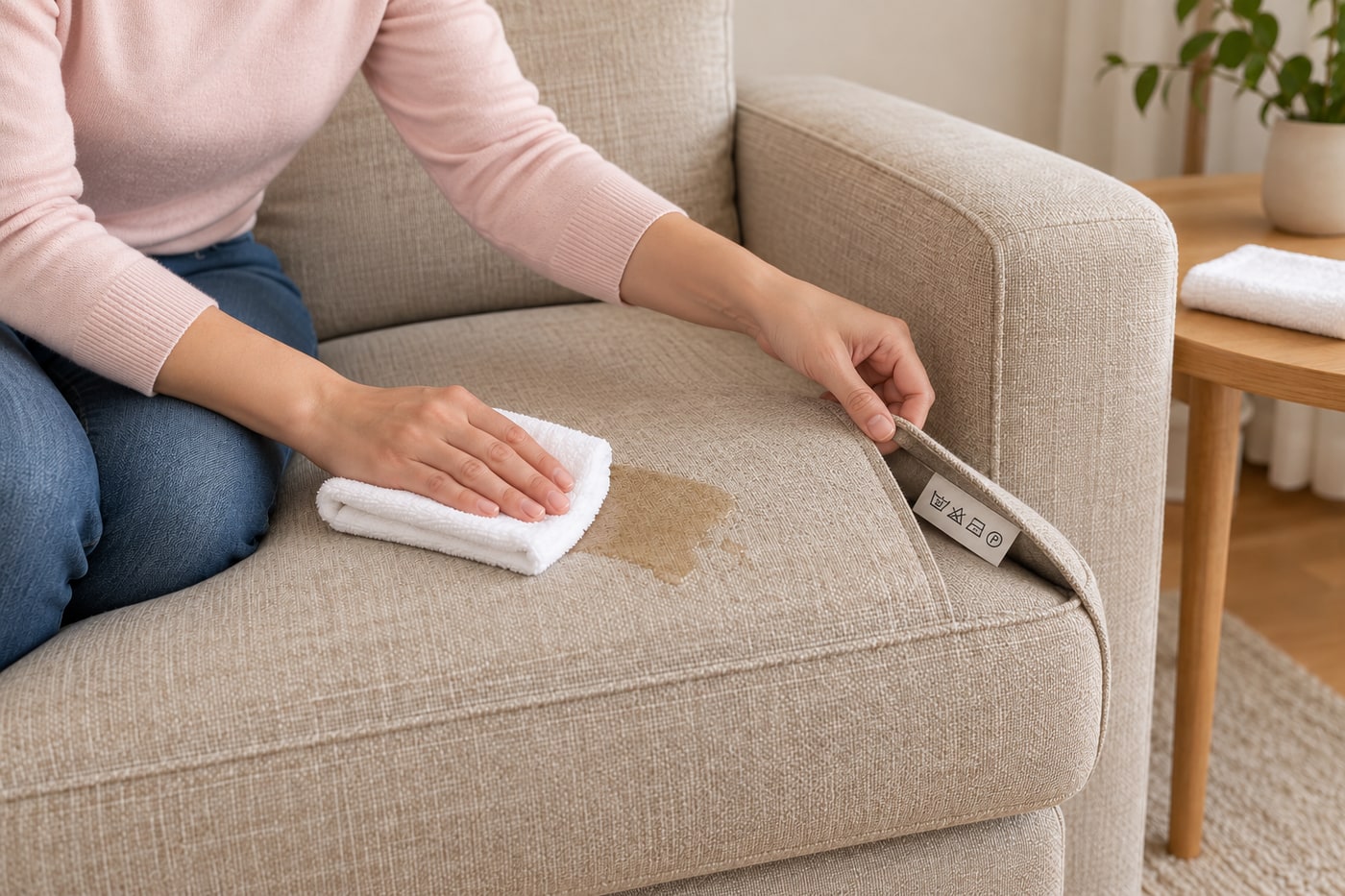
2. Check the furniture instructions before adding anything
Find the care tag and the maker’s cleaning guidance without dismantling the cushion. Codes such as W or W-S can allow specified water-based products, while S or X have different restrictions; the exact instructions take priority. Do not interpret an apparently washable-looking weave as permission to add water. Keep blotting gently with a dry cloth if appropriate while deciding the next step, and seek advice if the material or instructions are uncertain.
Photorealistic illustration · Waey
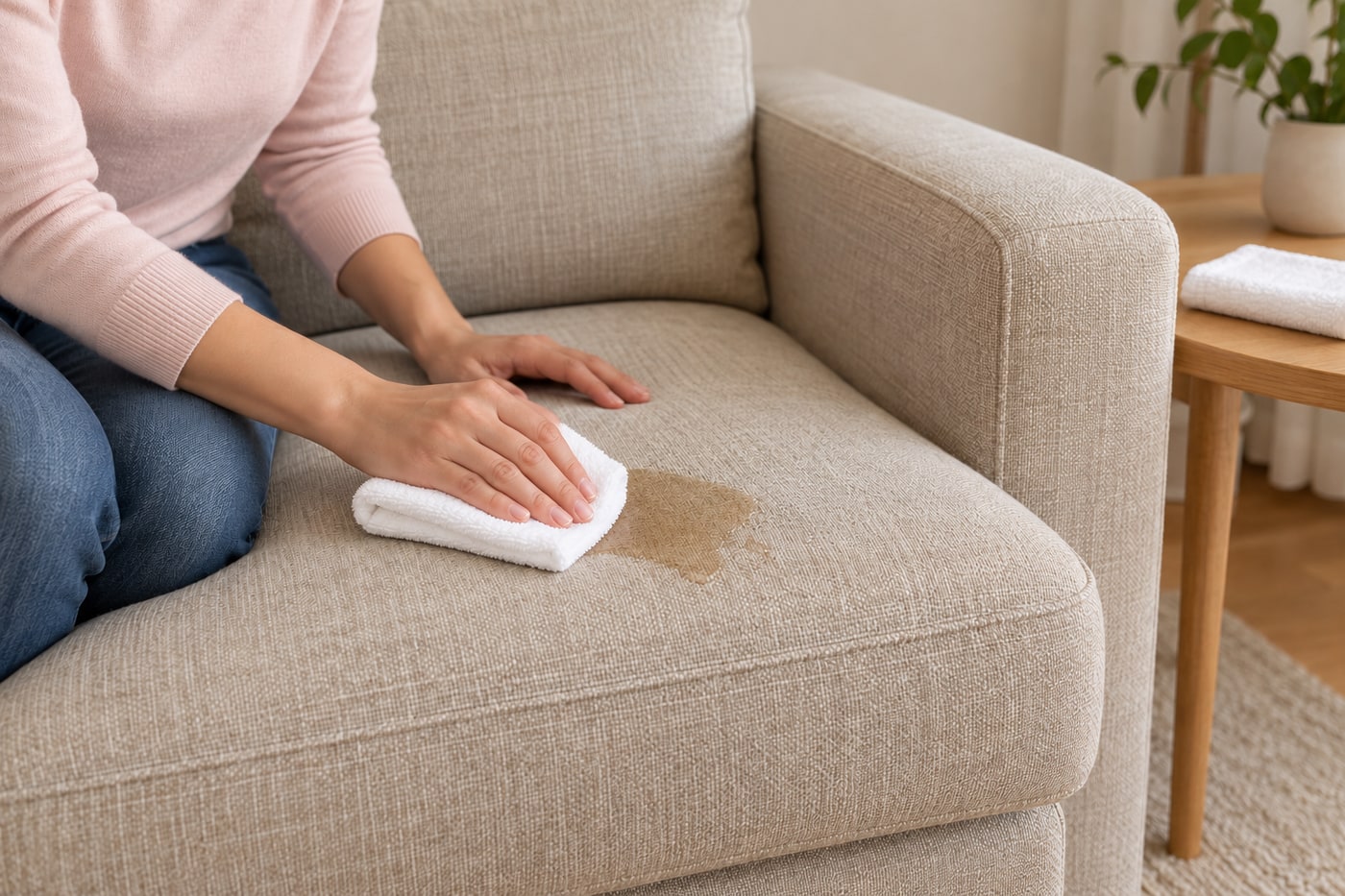
3. Use clean dry folds and stop spreading moisture
Continue gentle absorption only while the dry cloth is taking up visible liquid, keeping pressure light and the affected area small. Do not scrub, soak the cushion or apply a household mixture in the hope of removing a ring. If the maker permits a cleaning product and further treatment is needed, follow its separate directions and inconspicuous pretest first. Colour transfer, surface change or a persistent stain is a reason to stop and obtain suitable help.
Photorealistic illustration · Waey
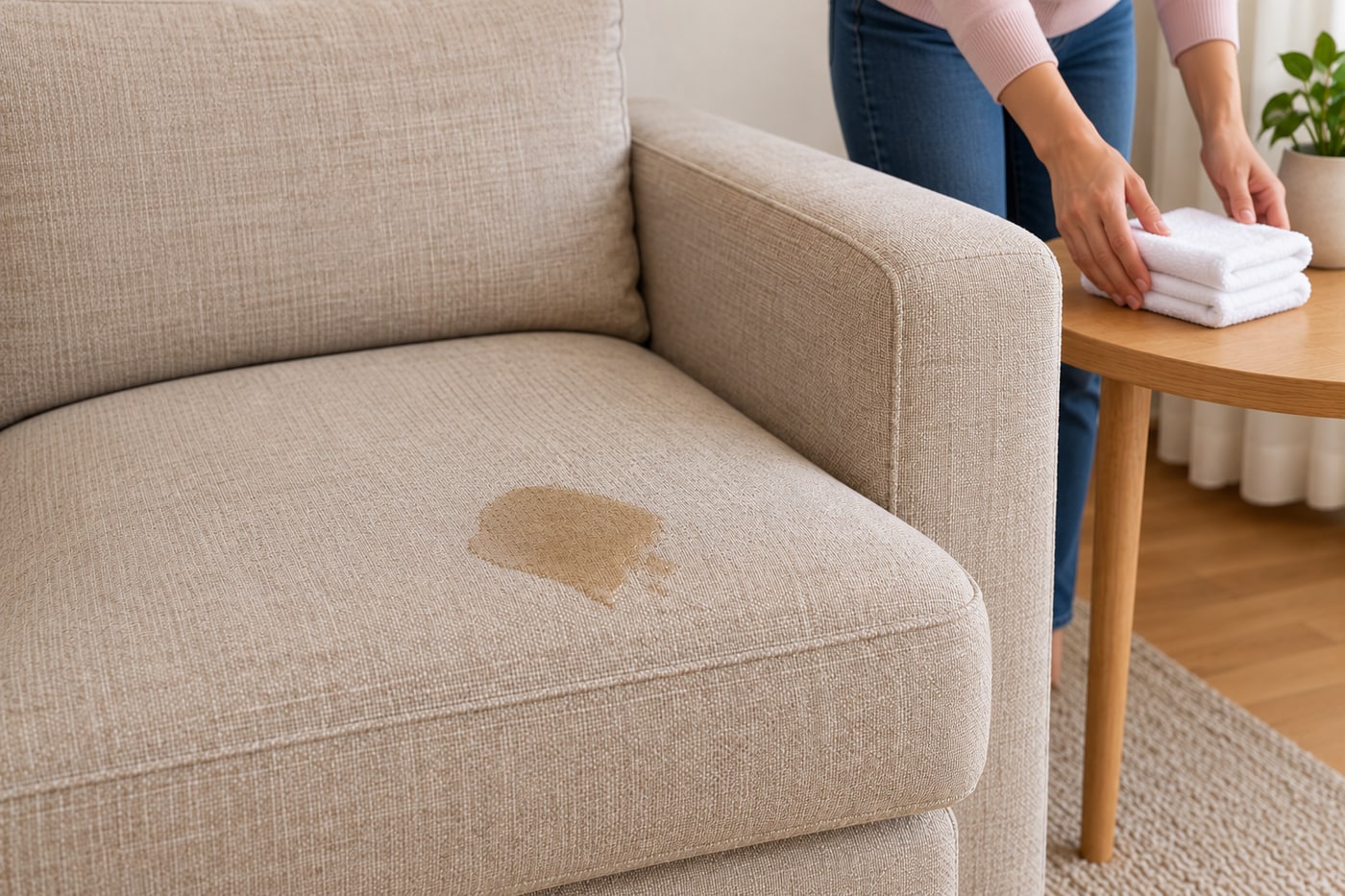
4. Let the area dry naturally and assess the result
Leave the cushion in its intended position with ordinary room ventilation and keep the seat unused while damp. Avoid a hairdryer, radiator or steam cleaner, which can change the fabric or set some stains. Once fully dry, check the area in the same light as the surrounding fabric. Record what spilled and any treatment used if professional help is needed; do not repeat wet treatments merely because a mark remains visible.
Final checks
Dry blotting can limit spread but may not remove a stain. Follow the exact care instructions for any further cleaning and seek specialist help for delicate or unknown upholstery.
Sources
Photographs are credited beside each image. Generated photorealistic illustrations by Waey; linked videos remain with their creators.