
Descale a matched Philips HD9350 kettle and rinse it for use
Follow the matched fill marks, unheated vinegar soak and two fresh-water rinse boils while keeping the electrical base dry.
What will you learn?
A complete descaling and recommissioning cycle for the HD9350/92 support-linked manual. It uses the pictured five-to-six-cup marks, a 30-minute soak and two fresh-water boil-and-discard cycles. Use the matching manual and actual water window; instructions for a different kettle can specify a different recipe.
Tools
- TimerSearch Amazon South Africa ↗
- Soft clothSearch Amazon South Africa ↗
- Water jug for filling off the baseSearch Amazon South Africa ↗
- Accessible sink separate from the electrical base
Materials
- Matched HD9350 kettle with original base and readable water marks
- Fresh drinking water for filling, rinsing and two boils
- White vinegar as specified by the matching manual; no concentrated cleaning-acid substituteSearch Amazon South Africa ↗
Step by step
Photorealistic illustration · Waey
1. Match the kettle and inspect the cold appliance
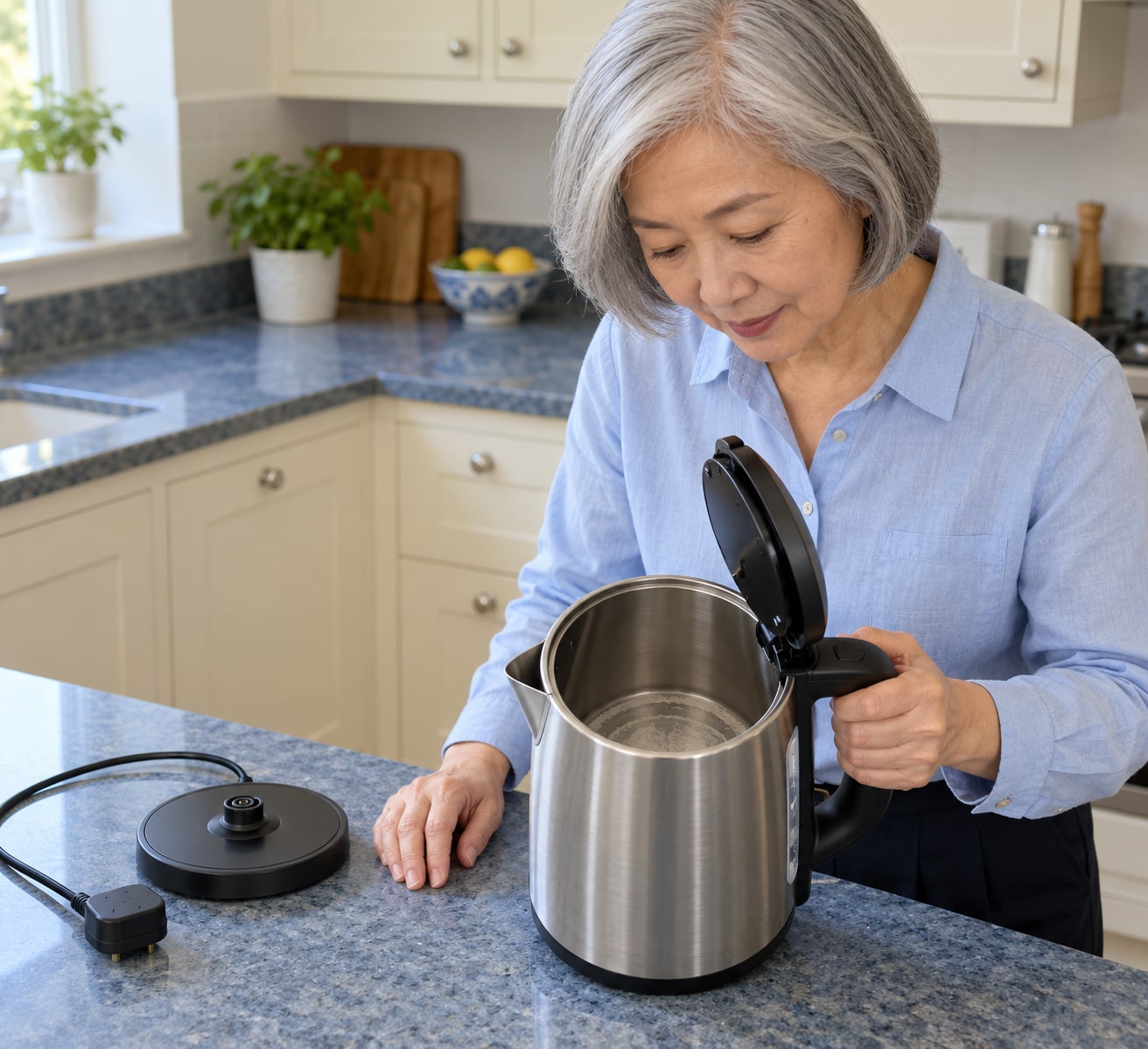
Read the label while the kettle is empty, cool and disconnected. This guide follows the manual linked from Philips HD9350/92 support, covering the HD9350 family pictured there. Check that your kettle has the same five- and six-cup water-window marks and original base. Stop for a damaged cord, cracked body, leaking vessel or unreliable switch. Descaling treats mineral deposits; it does not repair electrical faults, leaks or a lid that will not close.
Photorealistic illustration · Waey
2. Prepare a dry work area and the correct supplies
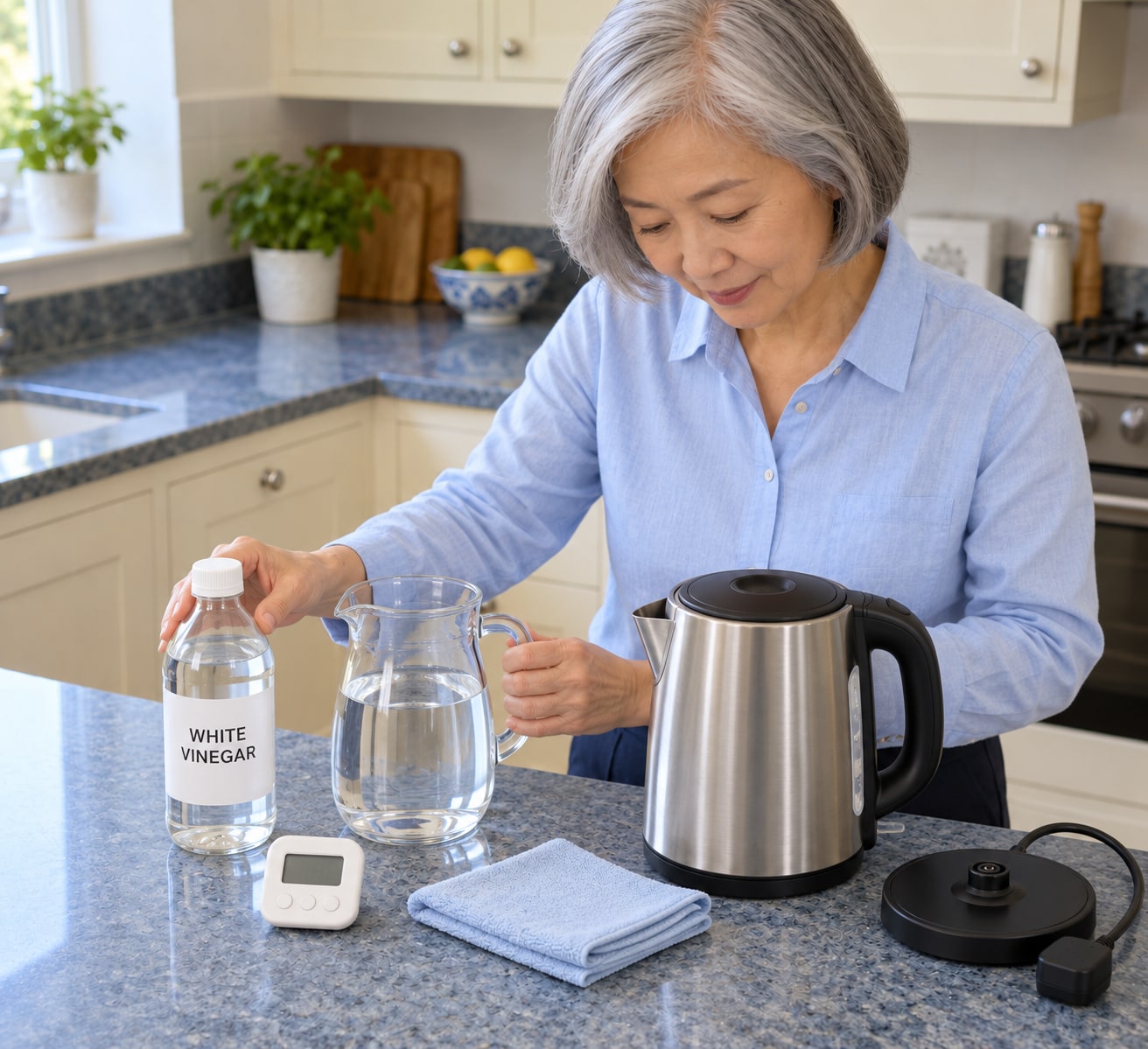
Put the kettle and its original base on a stable dry counter, clear of the edge and away from children. Keep the base, plug and connector away from the sink. Have fresh drinking water, white vinegar and a timer ready. Use the marks on this kettle rather than converting them into an arbitrary kitchen cup. Do not substitute concentrated cleaning acid, mix cleaners or copy an overnight recipe from another Philips model.
Photorealistic illustration · Waey
3. Boil the first plain-water fill
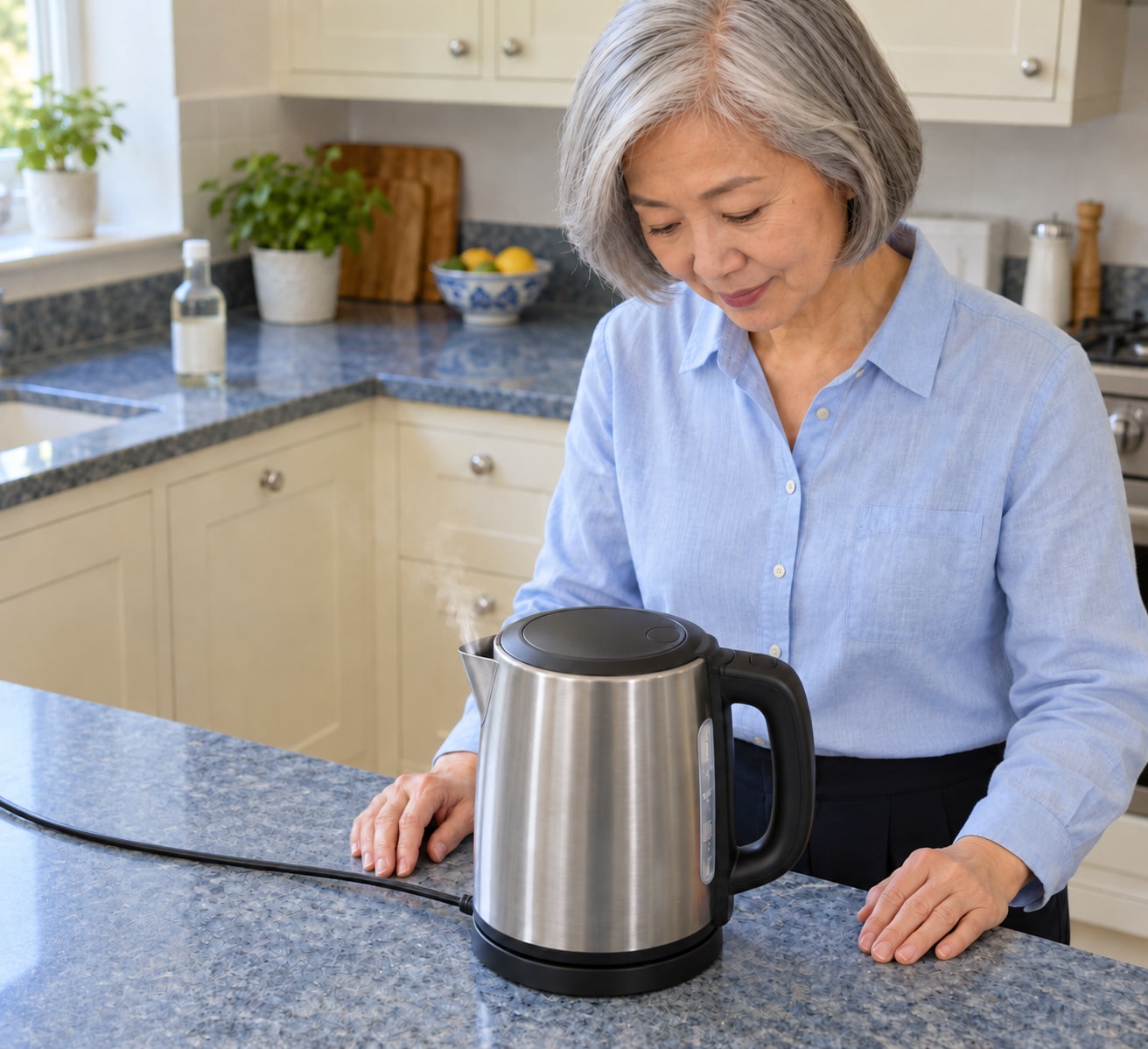
Lift the kettle off the base and fill it with plain water to the five-cup mark shown in Figure 3 of the matching manual. Close the lid fully and check the outside and underside are dry. Return it to its original base, connect the base to a suitable earthed outlet with dry hands and start a normal boil. Stay nearby and allow the automatic switch-off to occur. If it does not stop normally, disconnect safely and arrange service instead of continuing.
Photorealistic illustration · Waey
4. Switch off and add white vinegar to the indicated mark
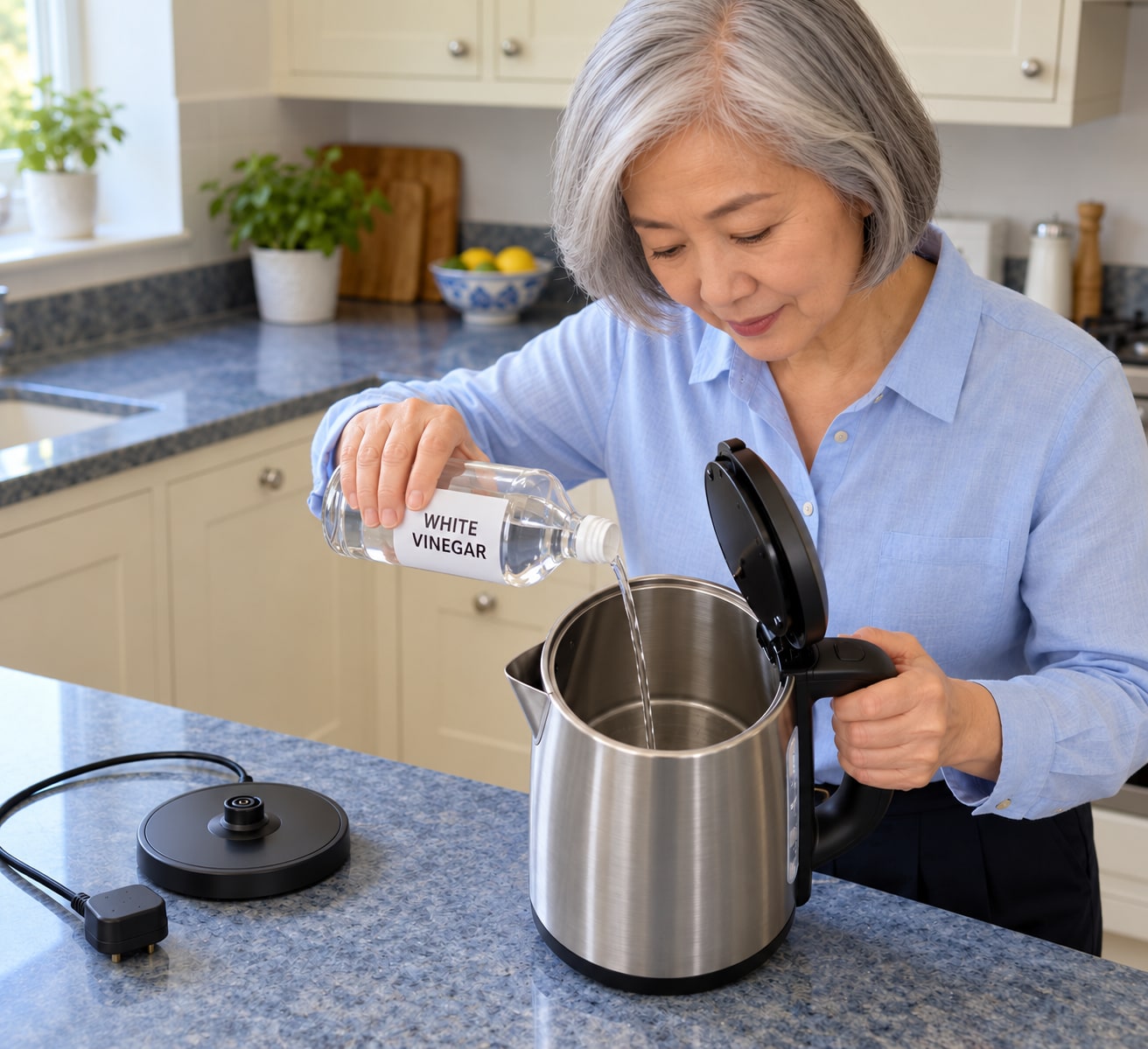
After automatic switch-off, unplug the base. Wait until steam has subsided and the lid can be opened safely; keep your face and hands away from the spout and opening. Hold only the handle and lift the kettle off its base for adding liquid. Carefully add white vinegar until the combined liquid reaches the six-cup mark shown in the manual, then close the lid. Do not heat the vinegar mixture, exceed the mark or spill liquid onto the electrical connector.
Photorealistic illustration · Waey
5. Leave the mixture for the specified half hour
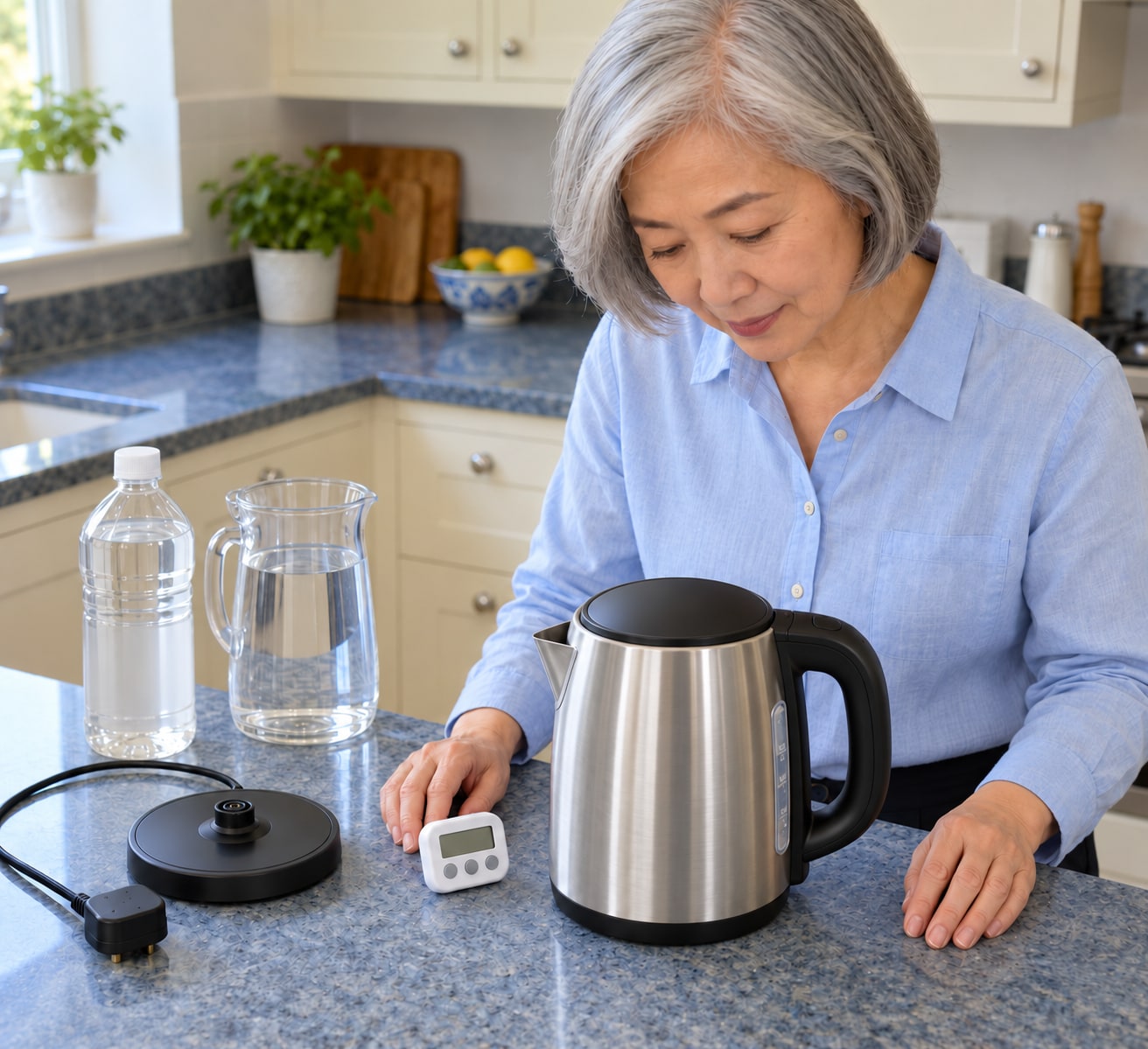
Leave the closed kettle securely on the dry counter or its disconnected original base for 30 minutes. Tell other people that its contents are for descaling and must not be used for drinks. Keep the base unplugged throughout the soak and avoid carrying the full kettle unnecessarily. Do not extend this into an overnight soak or repeatedly switch it on. The time here belongs to this specific pictogram sequence, not every electric kettle.
Photorealistic illustration · Waey
6. Empty and rinse the inside without wetting the base
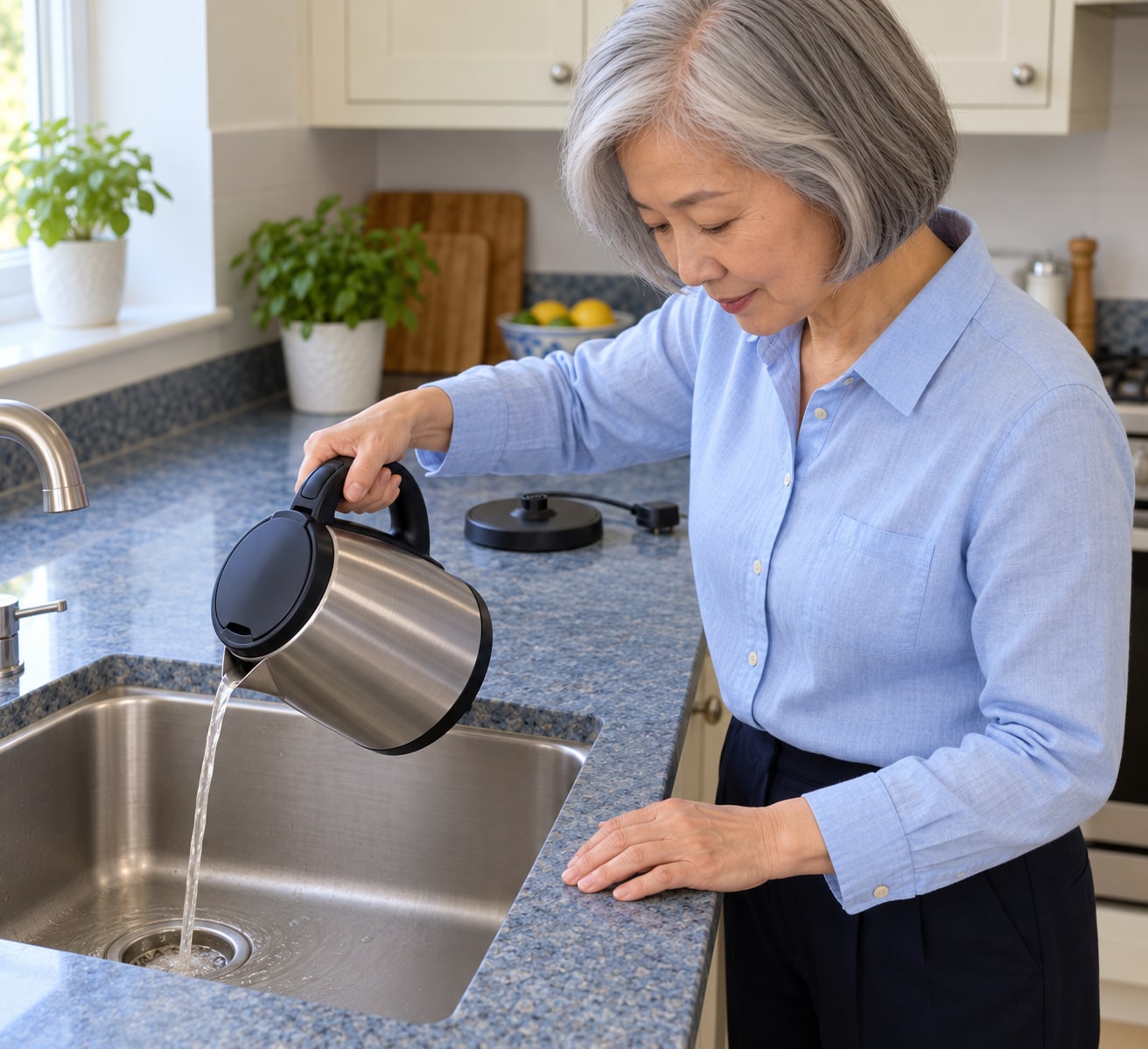
Once the mixture can be handled safely, pour it away carefully into the sink, holding the kettle by its handle and keeping the disconnected base away from splashes. Follow the rinse sequence: add fresh water off the base, move it gently inside the vessel and pour it out. Do not immerse the kettle, wash its underside under the tap or put a cloth inside the electrical connector. Avoid scraping the heating plate with metal tools.
Photorealistic illustration · Waey
7. Complete two fresh-water boil-and-discard cycles
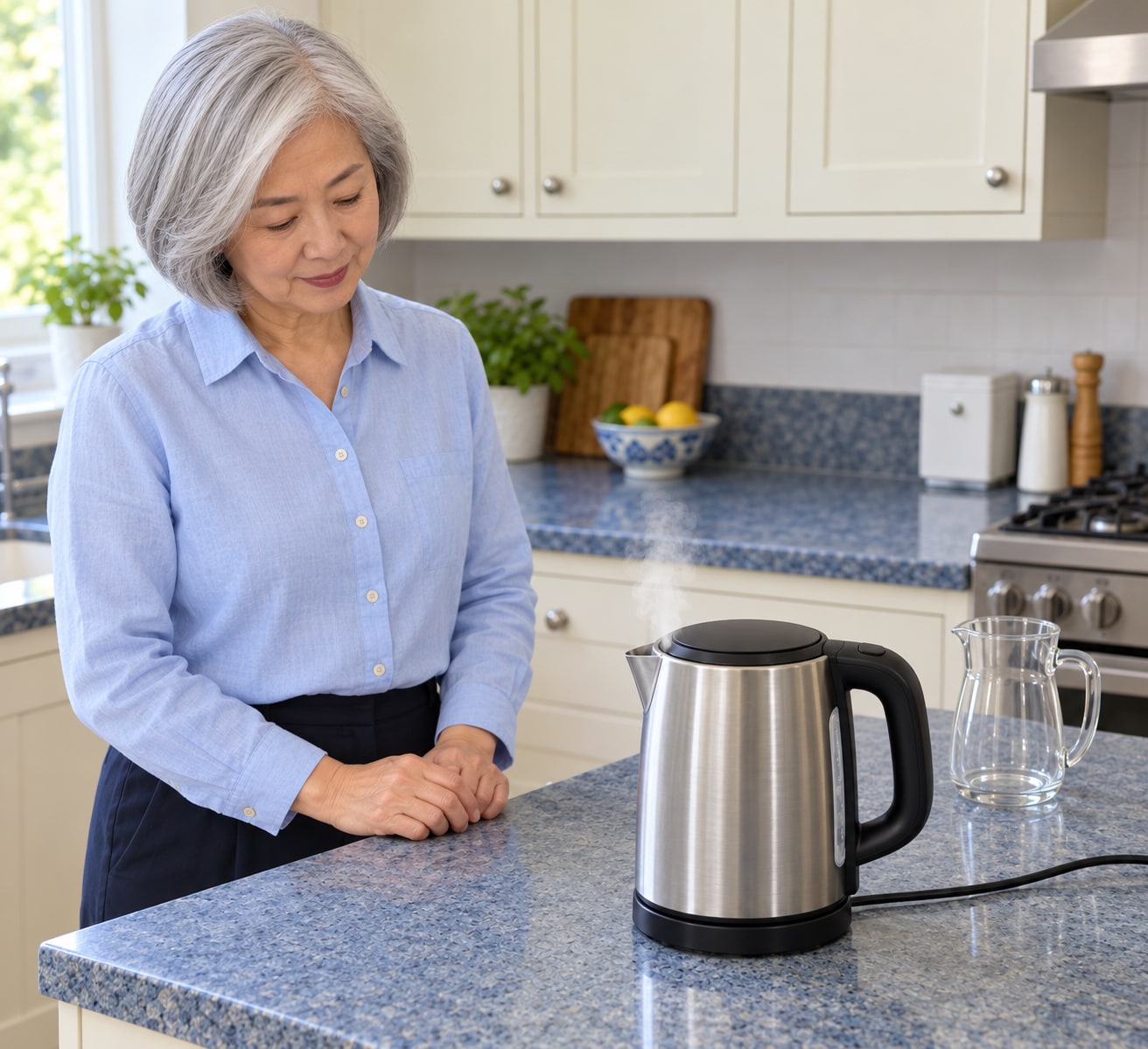
Fill off the base with fresh drinking water to this kettle’s MAX 1.7 L mark, close the lid and dry any exterior splashes. Reconnect the dry original base, boil and wait for automatic switch-off. Unplug before handling near the sink, allow steam to subside, then discard the water carefully. Repeat this entire fresh-fill, boil and discard sequence once more, giving two cycles in total. Neither rinse batch is for drinking; do not boil an empty or underfilled kettle.
Photorealistic illustration · Waey
8. Check the result and return the kettle to service
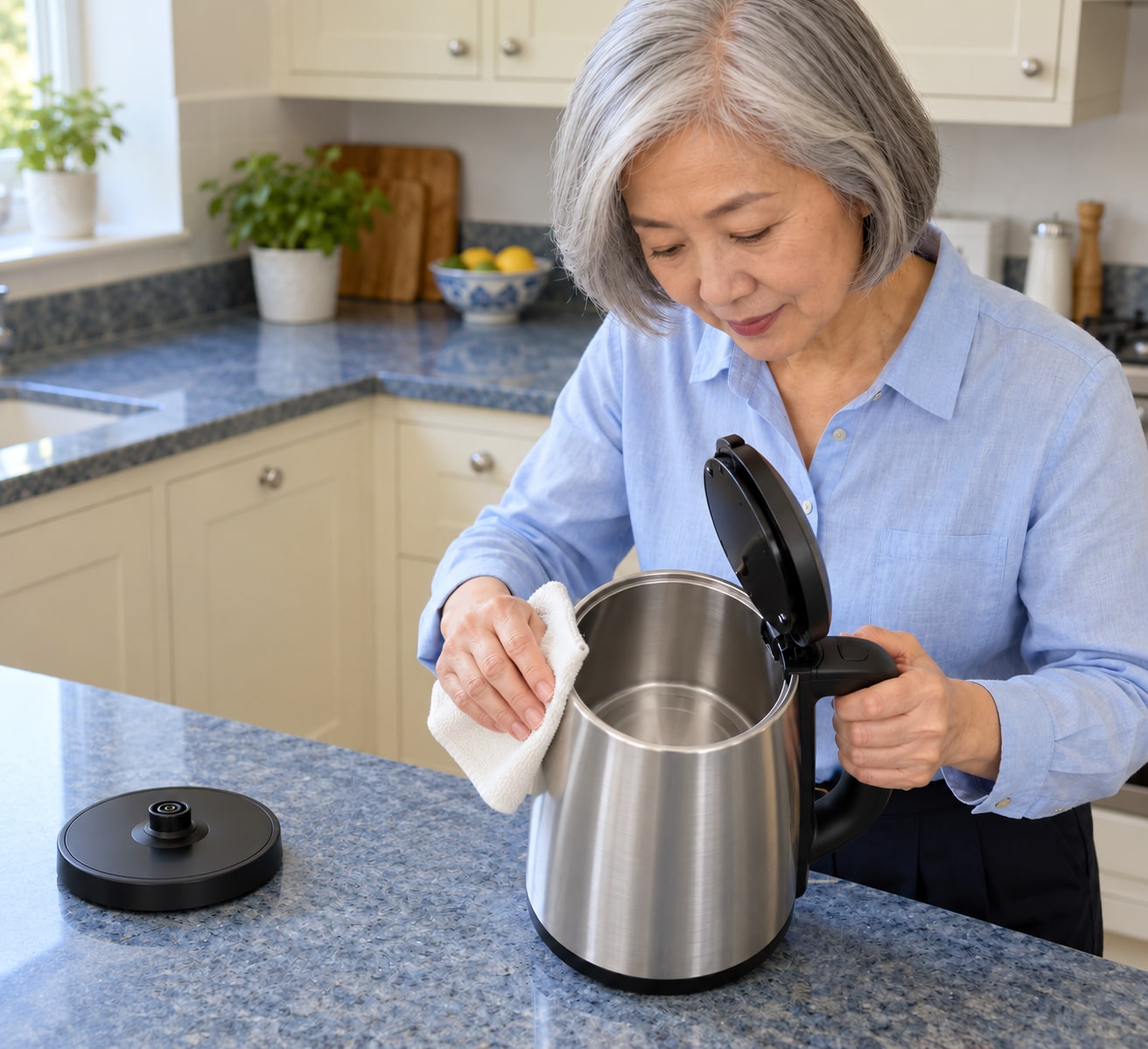
With the kettle unplugged and cool, inspect the interior for remaining deposits or loose flakes and check that the lid and filter sit normally without forcing them. Wipe the exterior with a soft lightly damp cloth while keeping the cord, plug, base connector and underside dry. Return it to use only when clean, thoroughly rinsed and dry outside, with normal shut-off observed during the rinse boils. If deposits remain substantial or smell persists, seek the model-specific support advice rather than increasing acid strength or heating the mixture.
Video demonstrations
Очистка чайника від накипу. Метод від компанії Philips. Очистка чайника от накипи. Способ Philips
A different Philips kettle: vinegar handling and two labelled post-treatment boils. Follow this guide’s HD9350/92 manual for fill marks, the unheated soak and rinsing.
Євген з Кривбасу · Ukrainian/Russian on-screen text
Watch on YouTube ↗Philips Kettle || Philips Kettle1.7Liter || Philips Kettle How To Use || Philips Kettle HD9350
Shows the HD9350 body and separate base. This is model context; follow the matched manual for descaling and keep electrical contacts dry.
Home Item · Bangla/English/Hindi automatic caption tracks listed; full speech not assessed
Watch on YouTube ↗Final checks
Two fresh-water boil/discard cycles completed; no liquid left on electrical surfaces, normal automatic shut-off observed, and the vessel is clean and ready for fresh drinking water. This is maintenance, not electrical repair or a test of protective safety devices.
Sources
Philips — exact HD9350/92 support and manufacturer manual link ↗
Philips/Versuni — support-linked HD9350/HD9351/HD9352 manual, Figure3 and safety ↗
Original generated instruction illustrations created for Waey. Videos belong to their credited creators.