
Press small flowers in a book
Preserve a few small flowers and thin leaves between absorbent sheets, using books for gentle, even pressure.
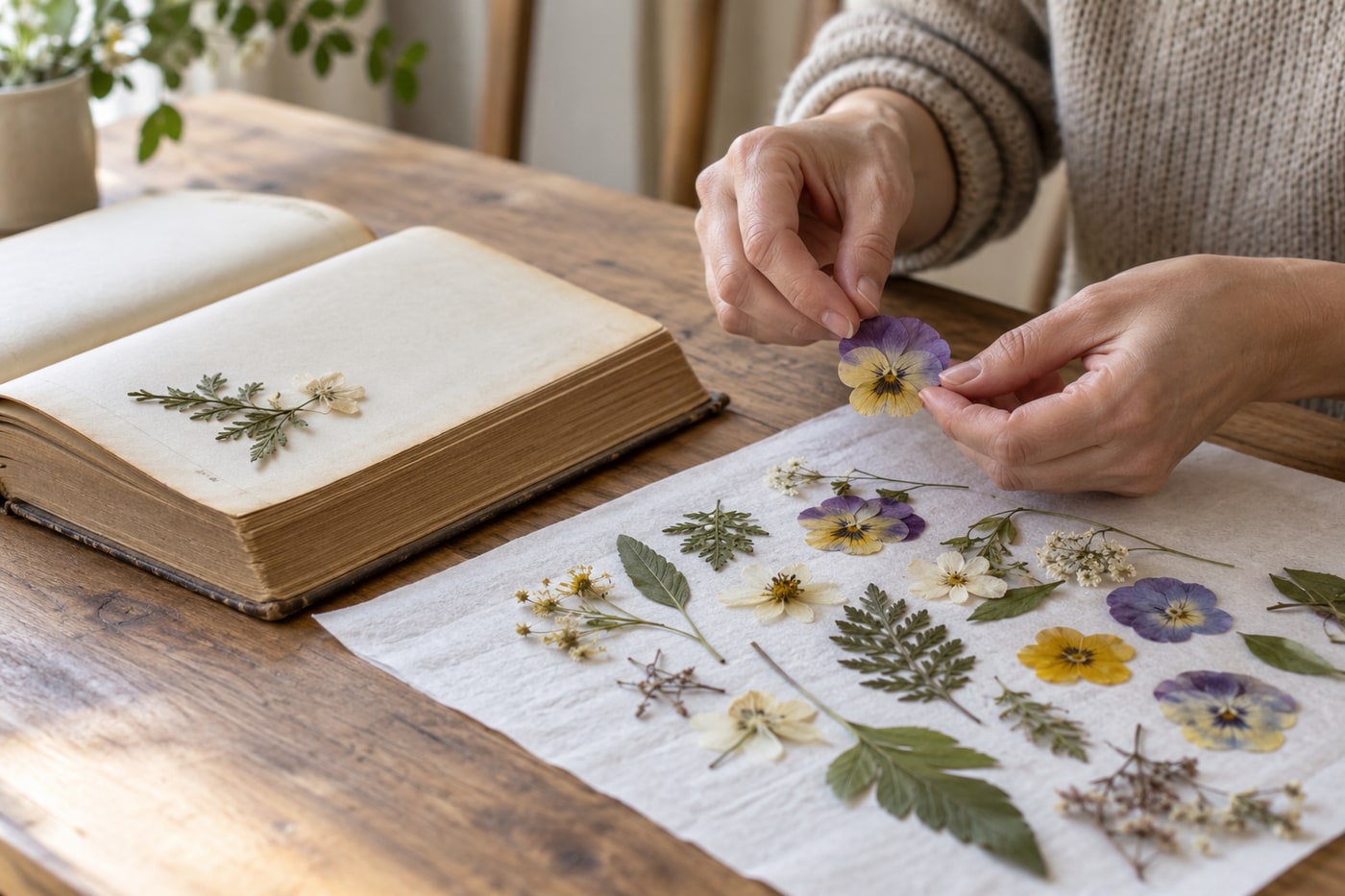
What will you learn?
Preserve a few small flowers and thin leaves between absorbent sheets, using books for gentle, even pressure.
Tools
- 1 old heavy book; 2–3 additional heavy books; tweezersSearch Amazon South Africa ↗
Materials
- A few dry small flowers or thin leaves; clean absorbent paper; card for storing the resultSearch Amazon South Africa ↗
Step by step
Photorealistic illustration · Waey
1. Choose dry, thin specimens
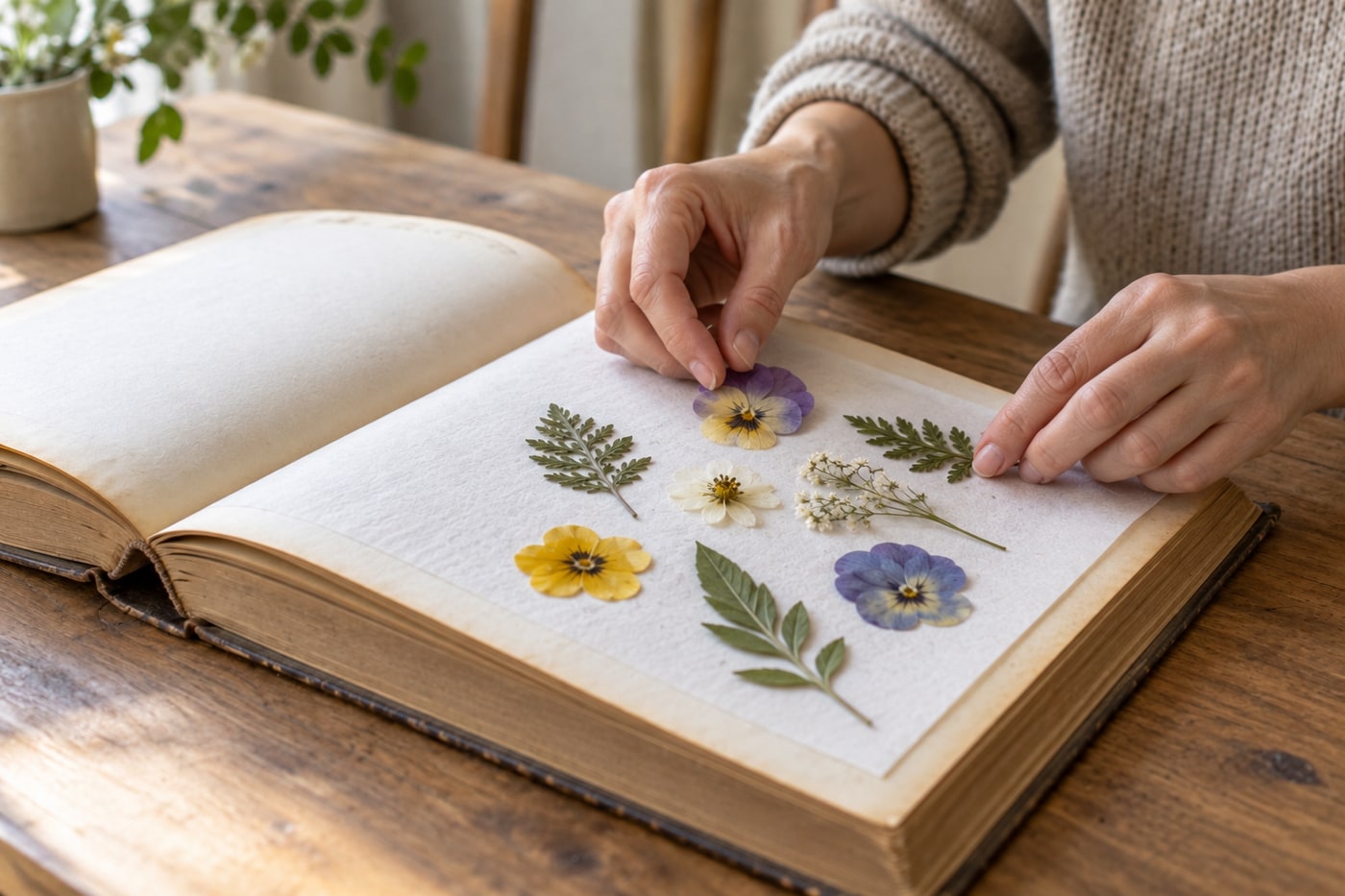
Collect a small amount of clean material after surface moisture has dried. Small flat flowers and thin leaves are easier to press than thick, juicy stems. Check for insects and damaged areas before bringing them to your table. Arrange the flowers as you would like them to appear when flat; once they dry, delicate petals will be harder to reposition without breaking.
Photorealistic illustration · Waey
2. Separate the flowers with absorbent paper
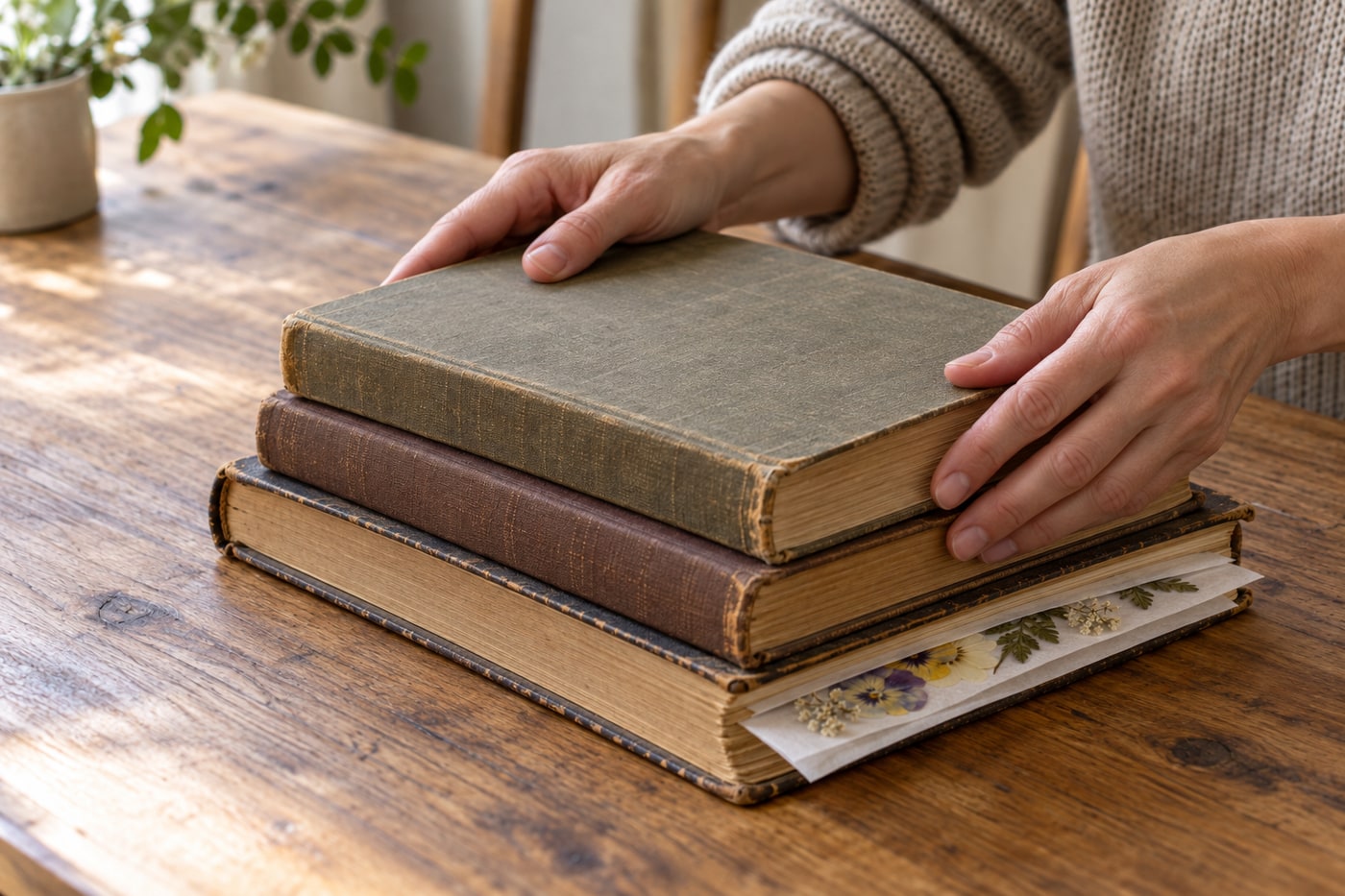
Open the old book near its middle and lay clean absorbent paper over the pages. Space the flowers in a single layer, spreading petals gently so they do not overlap. Cover with another sheet before closing. The paper draws moisture away and separates the plants from the book; crowded or folded material dries unevenly and may stick together. Keep thick stems out of this first attempt.
Photorealistic illustration · Waey
3. Apply even weight in a dry place
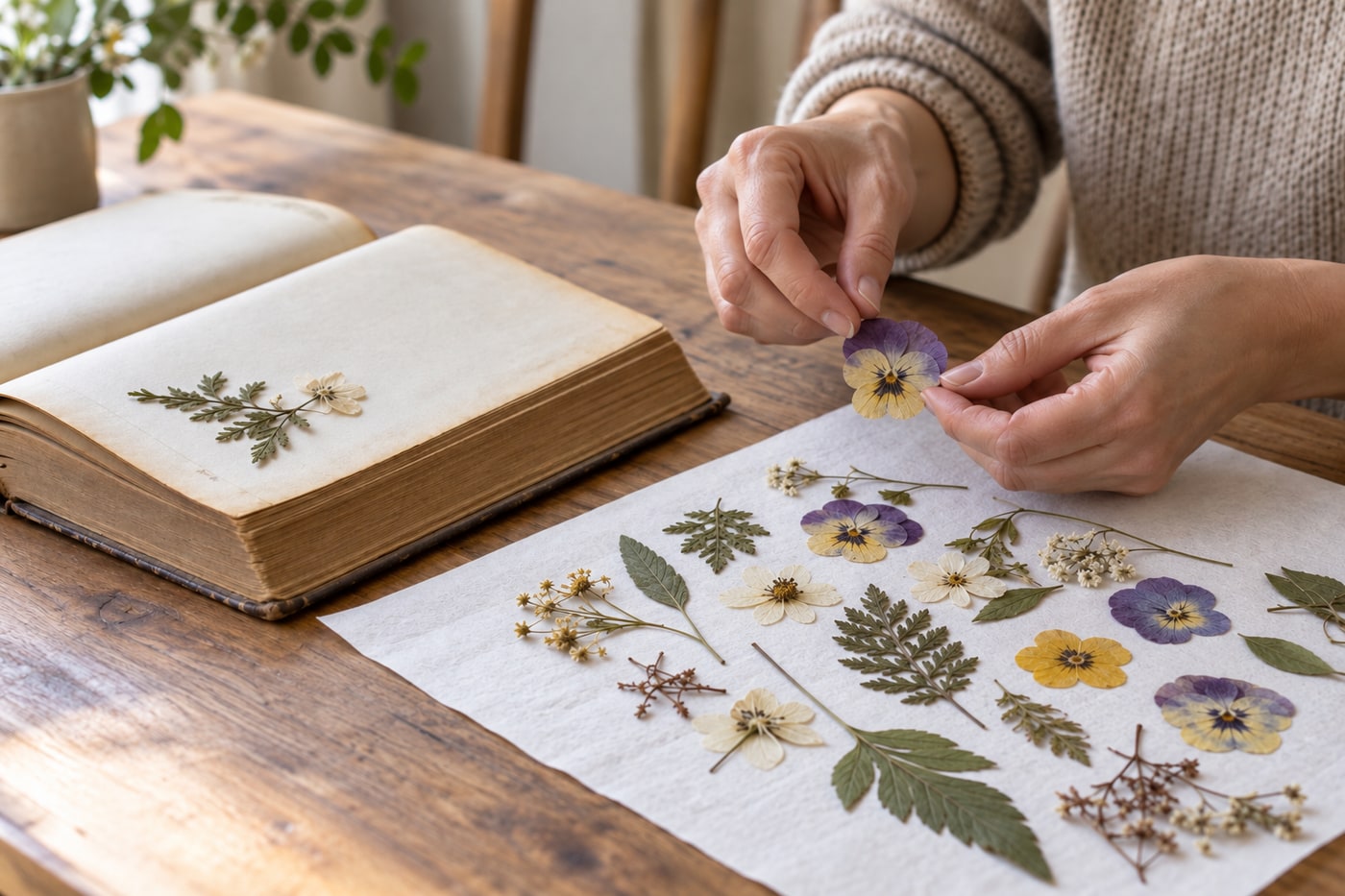
Close the book slowly so the specimens do not slide, then place two or three heavy books flat on top. Keep the stack on a low, level surface in a warm, dry room with normal airflow. Check after the first day and replace damp absorbent sheets carefully if needed. Even contact helps the specimens flatten, while dry paper helps moisture escape rather than stay trapped.
Photorealistic illustration · Waey
4. Check dryness before using the result
Allow roughly two to four weeks, checking gently rather than pulling the flowers free early. A finished specimen should feel dry and papery, with no cool damp patches. Lift it by the stem or slide a thin sheet underneath instead of pinching the petals. Store flat between dry paper or mount on card. If anything smells musty or shows mould, discard it rather than sealing it into a craft.
Watch the method
Watch the method
Shows collecting, pressing and using flowers. This guide uses only the book method, without heat or drilling.
Natural History Museum · English
Watch on YouTube ↗Final checks
Drying time depends on thickness and humidity. Keep finished flowers away from moisture and strong sunlight; their colours may change naturally as they dry.
Sources
RHS: pressing flowers and leaves ↗
Photographs are credited beside each image. Generated photorealistic illustrations by Waey; linked videos remain with their creators.