
Check cold tyre pressure against the vehicle label
Measure tyre pressure while the tyres are cold and compare each reading with the vehicle maker’s recommendation.
What will you learn?
Measure tyre pressure while the tyres are cold and compare each reading with the vehicle maker’s recommendation.
Tools
- Suitable accurate tyre-pressure gauge; vehicle handbook; notebookSearch Amazon UAE ↗
Step by step
Photorealistic illustration · Waey
1. Find the recommended cold pressures
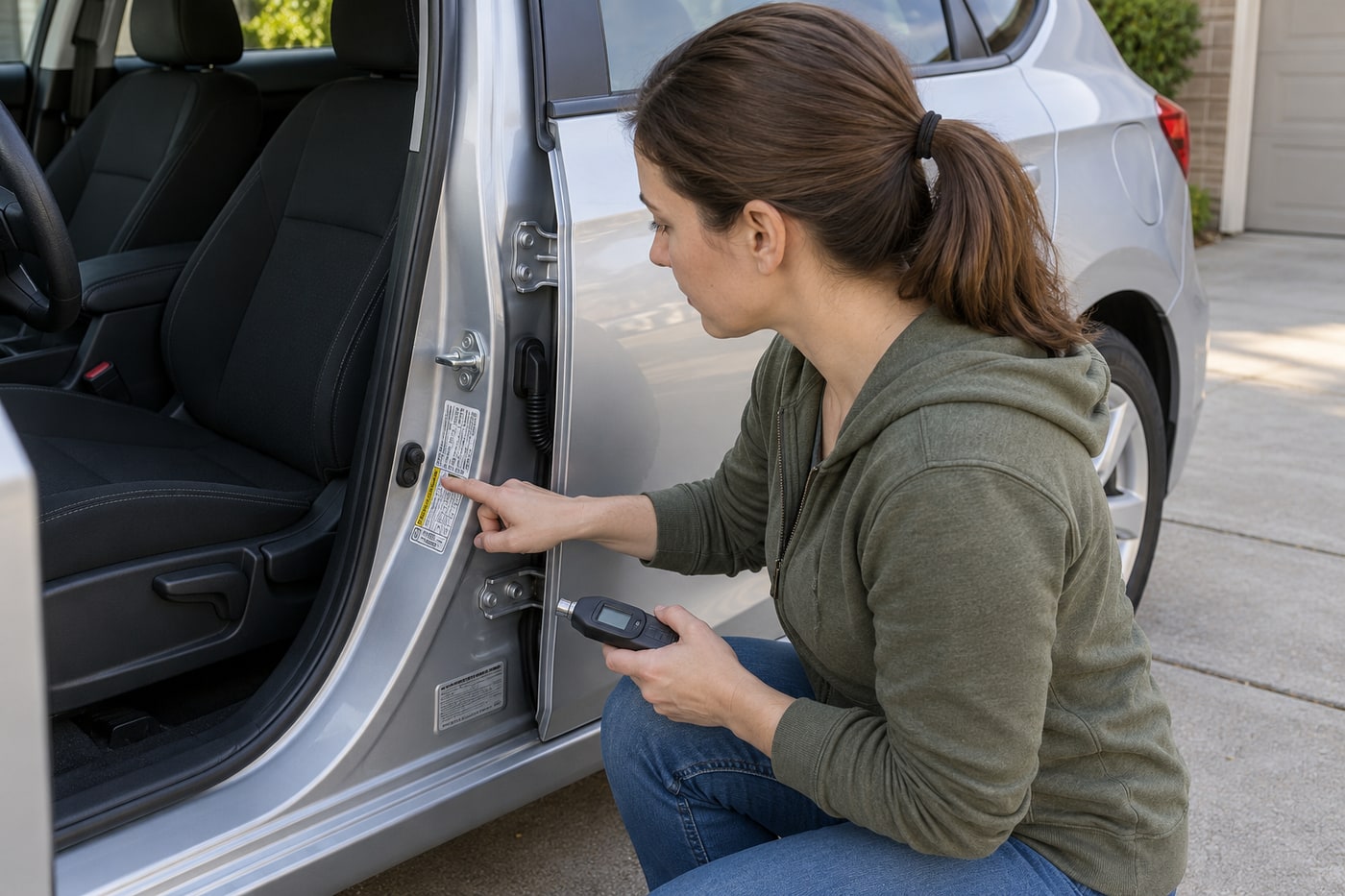
Before measuring, find the vehicle’s tyre-pressure label, often in the driver’s door opening, and confirm the correct figures in the handbook. Front and rear pressures may differ, and a loaded vehicle or spare tyre may have separate instructions. Use these vehicle-specific cold recommendations rather than the maximum moulded into a tyre sidewall. Check the units shown, such as bar, kPa or psi, so the gauge reading can be compared correctly.
Photorealistic illustration · Waey
2. Start with cold tyres and remove one cap
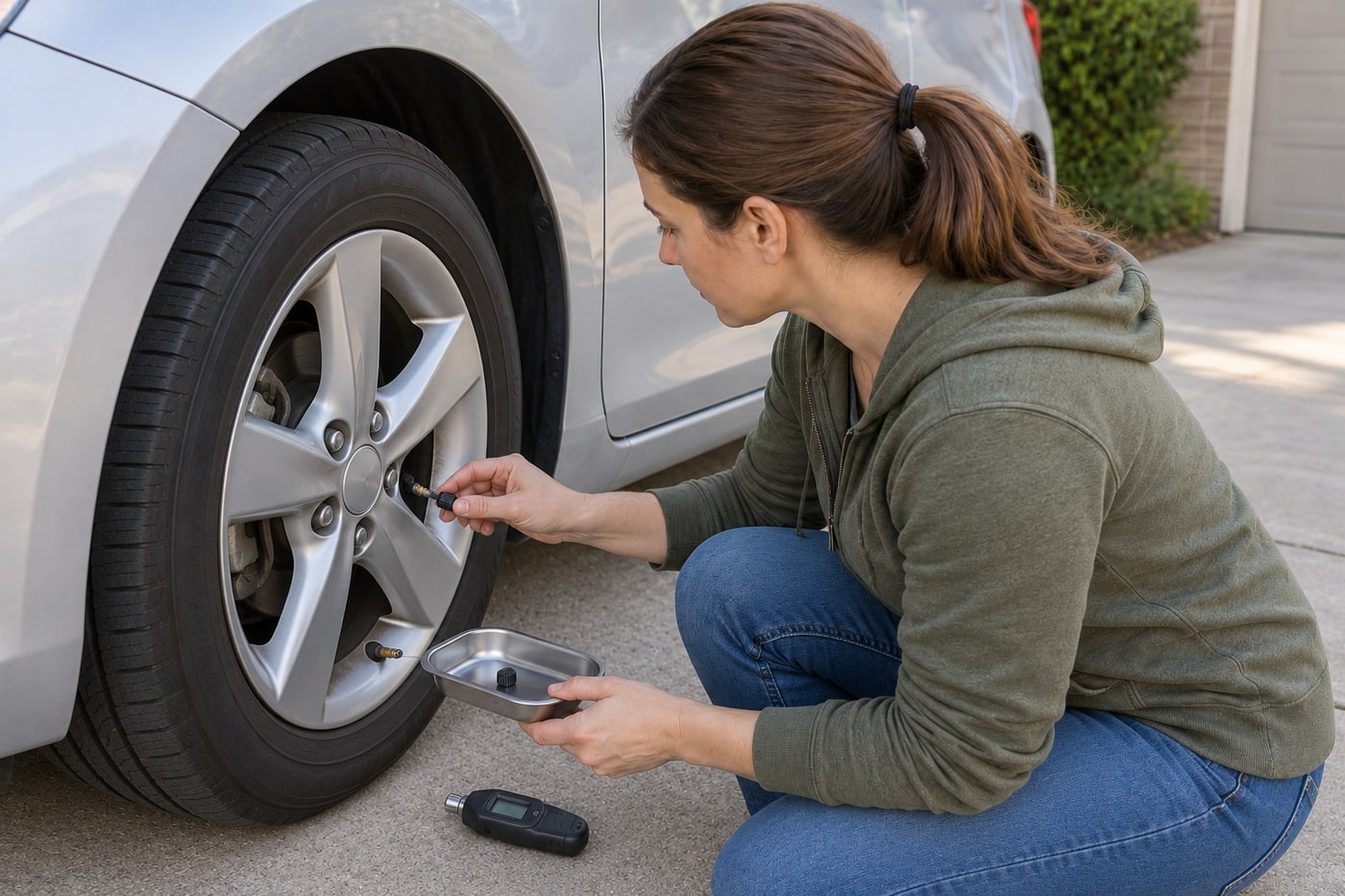
Check before driving, after the vehicle has stood for at least three hours, following its handbook. Driving warms tyres and raises pressure, so bleeding a warm tyre down to a cold figure can leave it underinflated later. Find the first valve, remove its small cap and put the cap somewhere clean and secure. Look for obvious damage without removing the wheel or crawling underneath the vehicle.
Photorealistic illustration · Waey
3. Seat the gauge and record the reading
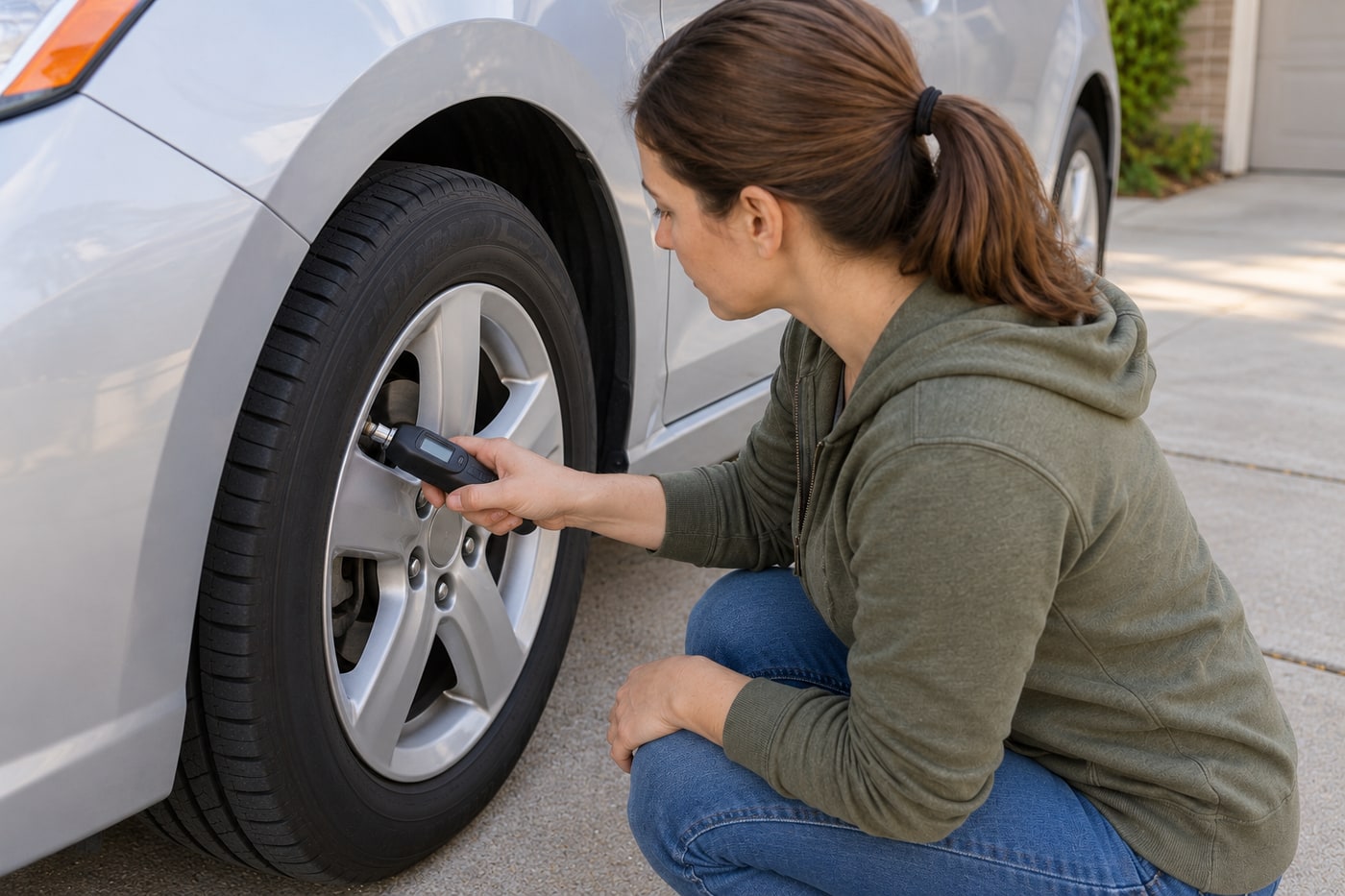
Press the gauge squarely onto the valve so it seals rather than continually hissing. Read the result in the same units as the vehicle label, then remove the gauge. If air escaped or the reading looks doubtful, reseat it and take a second measurement. Write down the wheel position and pressure immediately; remembering several similar numbers can lead to confusing a front-wheel reading with the different rear-wheel target.
Photorealistic illustration · Waey
4. Replace caps and decide the next action
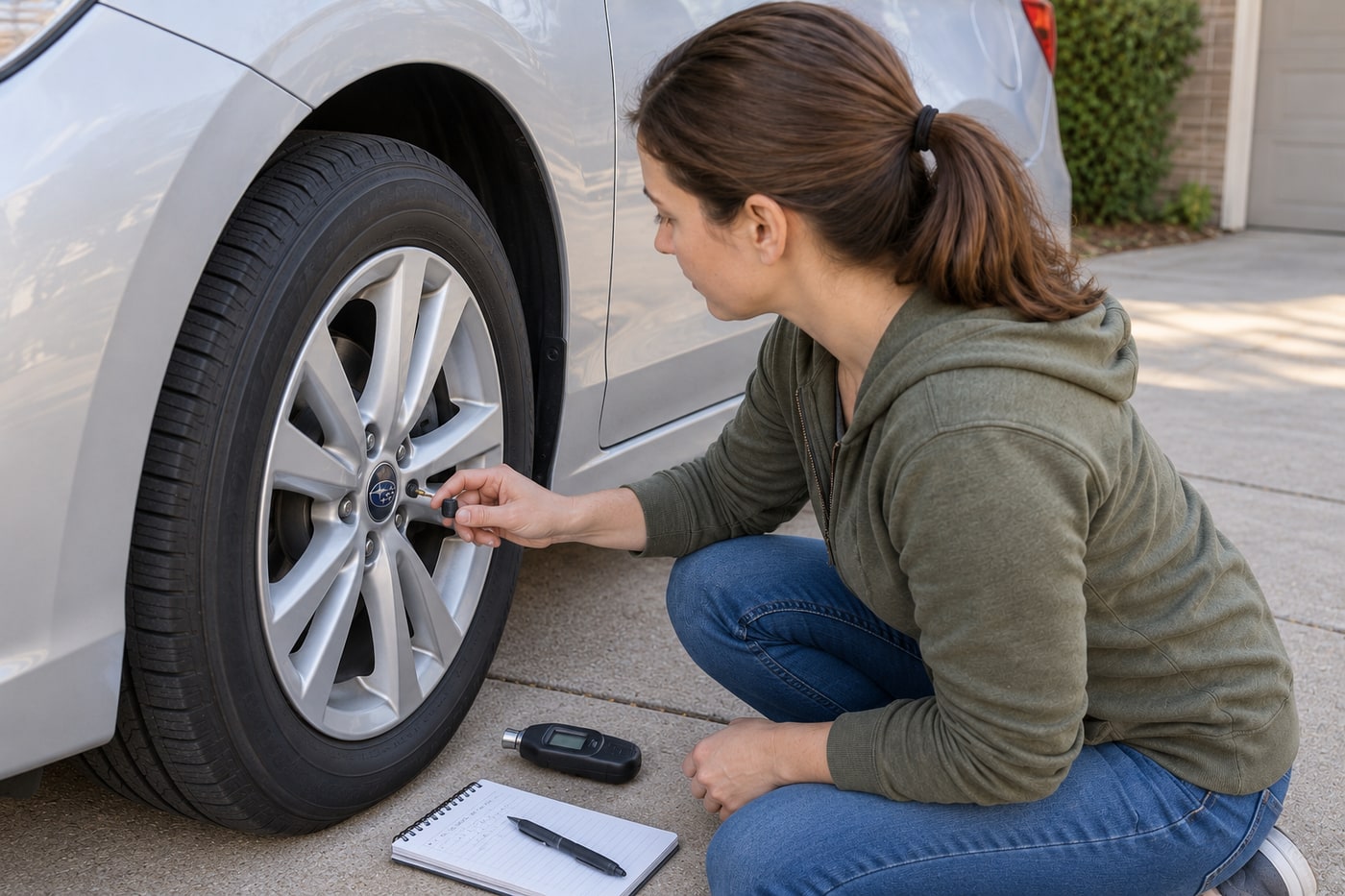
Refit the valve cap gently and repeat for the other tyres and the spare where accessible and specified. Compare each result with its correct cold target. Arrange suitable inflation if needed, using the handbook and approved equipment, or ask a tyre professional. Repeated loss needs investigation rather than endless topping up. Keep the readings and date so a gradual change is easier to identify at the next regular check.
Final checks
Pressure monitoring systems do not replace regular gauge checks. Seek professional help for repeated pressure loss, visible damage or a tyre that cannot safely support the vehicle.
Sources
Photographs are credited beside each image. Generated photorealistic illustrations by Waey; linked videos remain with their creators.